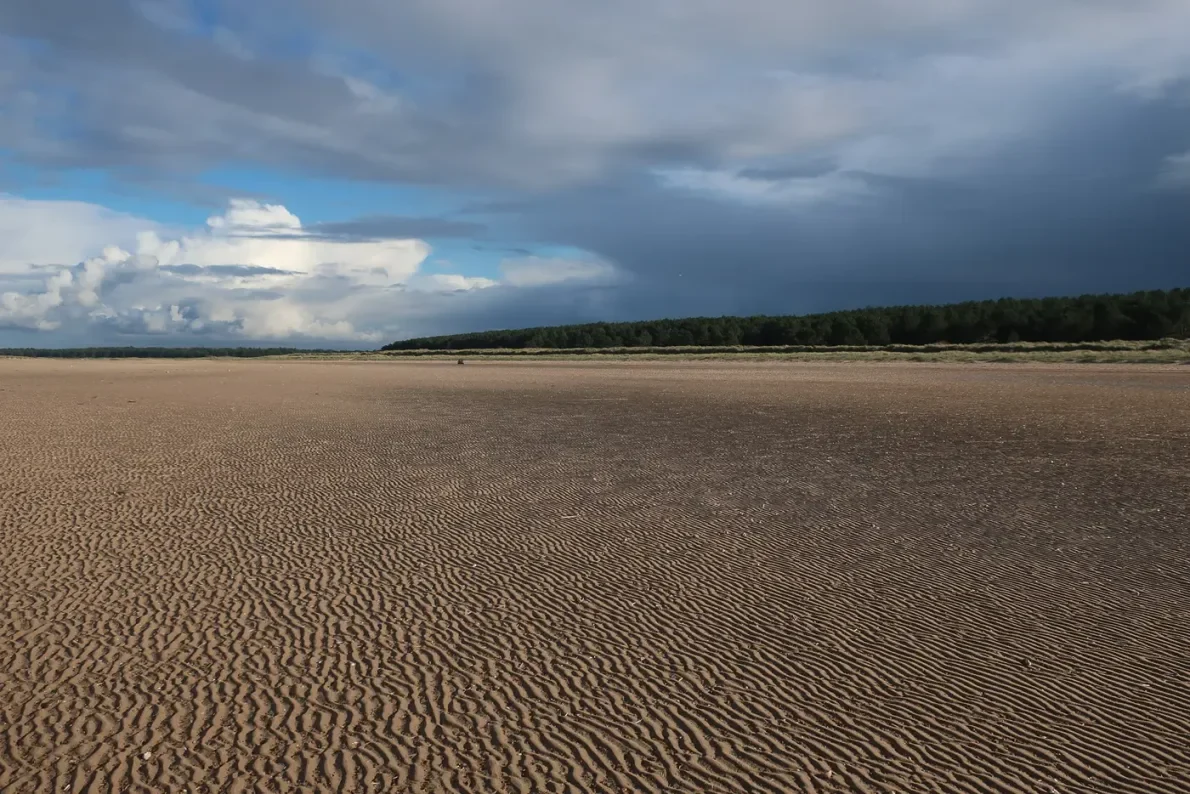
Choose a Norfolk birding day around the coast, the Broads or inland woods and heath. Find a main reserve, then add a smaller public site nearby for a shorter stop.
Norfolk is easiest to explore when you choose a landscape for the day. The north coast offers a chain of saltmarshes, shingle, dunes and shallow pools, while the Wash opens into wide tidal feeding grounds. East of Norwich, the Broads bring reedbeds, open water and grazing marsh close together. Inland, woodland and heath provide a different pace: listening and patient scanning can matter more than a large view. For a first visit, make one substantial reserve your main destination and use a smaller place nearby for a contrasting hour. Our suggestion is to stay within one part of the county each day, leaving enough time to learn the birds in front of you.
A short stop can be a very good birdwatching visit. A small wetland may let you follow the behaviour of a few ducks closely, while a wooded common can reward a slow walk with familiar resident birds. Bigger reserves offer more extensive routes and visitor facilities, but the best choice depends on your time, mobility and interests. Read the access details alongside the bird list: a place reached by a public footpath may require a different sort of preparation from a staffed visitor centre. Match the walking route to your group before deciding how many destinations to include.
Winter: the coast, the Wash and inland water
Winter is a strong choice for a first Norfolk trip built around waterbirds. The full guides to Snettisham, Titchwell, Cley, Holkham and Welney offer different ways to watch geese, ducks, swans and waders. Use each guide’s species months to decide which experience interests you most. The tidal shore and an inland pool can behave very differently on the same day, so a nearby freshwater alternative is useful when a coastal watch becomes uncomfortable. Take warm layers even for a short excursion: standing still behind binoculars is much colder than walking between stops.
Keep winter plans compact enough for the available daylight. One settled session can be more useful than arriving at a third reserve as the light disappears. If the weather is clear, pay attention to glare across open water and choose a public watching place that gives you a comfortable view. In wind, support your elbows or use a sheltered position rather than increasing magnification until the image becomes difficult to hold. Our preference is a morning at the main reserve, a proper break and one shorter afternoon stop close to the return journey.
Spring: birdsong and changing coastal flocks
Spring usually brings a different emphasis, with more time spent listening as summer visitors return. Woodland, scrub and reedbed paths become especially rewarding when you move slowly enough to separate calls. The Broads’ established reserves offer public routes beside wetland habitats; smaller commons and woodland sites can be useful additions without another long drive. Start with birds that the site’s own guide names, then choose the best part of the season from the table below. A spring morning does not need a rare bird to be memorable: hearing several familiar songs and finding their singers can fill a visit.
Passage on the coast can change the mixture of birds through the season. Scan pools carefully before walking on, and compare the shape and feeding action of birds that look similar at first. Leave space around other watchers and keep a narrow path clear when you stop. Breeding birds need particular care, so remain on authorised routes, follow seasonal signs and avoid playback. Choose a broad view from an official facility rather than searching for a nest. If a bird repeatedly alarms or changes its behaviour because of your presence, give it more room and move away.
Summer: patient wetland watching and woodland shade
Summer suits a slower approach around the Broads, with long sessions comparing the edges of reeds, pools and open water. Strumpshaw and Hickling provide substantial days; nearby smaller sites can add a different view when you have only a morning or an evening available. Early and late daylight is often comfortable for a walk, but opening hours and any locked access still determine when a particular route can be used. Carry water and protection from sun and biting insects. On a warm day, a shorter shaded woodland visit may suit your group better than an exposed bank.
Give common birds time to reveal their habits. Watch how a duck feeds, how a warbler moves through cover or how a swallow turns over water before trying to extend your list. At a hide, begin with the nearest clear view and work outwards, leaving the farthest shapes until you have a steady telescope view. Keep doors and shutters quiet and follow the operator’s instructions. Paths through reeds and grazing land are also working conservation routes; closures and livestock notices need to shape your walk even when the map suggests a convenient circuit.
Autumn: migration and a flexible itinerary
Autumn can combine coastal migration with the gradual return of winter waterbirds. A small coastal site may become an interesting addition to a familiar main reserve, particularly when you can revisit it without a long diversion. The seasonal bird lists describe typical opportunities; use the linked operator and county sources when choosing a particular day. Give yourself enough flexibility to stay where watching is productive. Returning to the same public viewpoint in different light can be more revealing than moving on quickly because another destination appears on the map.
Use the weather as part of your practical plan. An open headland, a marsh bank and a sheltered woodland path feel very different in the same forecast. Choose clothing for the most exposed stop and keep an easier alternative close to your base. Coastal paths can be muddy or affected by erosion; follow current signs and any diversions. A report of an unusual visitor does not change the boundaries of public access. Watch from an authorised route, avoid blocking a road or entrance, and accept that a bird may have moved before you arrive.
Build a manageable day from your base
Norwich is a practical place to investigate for a trip centred on the Broads and city-edge wetlands. Cromer suits a north-east coastal break, while Wells-next-the-Sea places a visitor near the central north coast. King’s Lynn is our suggested starting point to consider for the western side and the Wash. These are editorial base choices, not promises of a particular journey time. Compare the actual route from your accommodation to the first site, including walking approaches and any public transport connection, before booking. A cheaper room farther away may use time you would prefer to spend watching birds.
For a car-free day, begin with the arrival details for one site rather than assuming every place on the same map is easily connected. Some reserves have a useful station or bus approach; others need a longer walk or a prearranged taxi. Check both the outward and return journey, especially on Sundays and in the evening. When driving, use the operator’s designated parking and keep village gateways clear. The distances in the nearby search are measured in a straight line, so rivers, coastal roads and the shape of the Broads can make the road journey substantially longer.
Use the map and this month’s birds together
The numbered map helps you choose a cluster, while the site lists put full guides before shorter visits. Read the best-month information as typical seasonal guidance and decide which birds or habitats matter most to your day. The current-month panel draws together named species from the individual places, giving you direct links back to their visit details. You can also search from a town or postcode and narrow the results by habitat, bird or type of visit. Keep the final plan small enough that there is time to stop, listen and look again.
Bring binoculars, a charged phone and the clothing needed for the least sheltered part of the route. A telescope is useful for distant waterbirds, though it need not be the first purchase for someone starting out. The optics and fieldcraft guides can help you decide what to carry. Before leaving, follow the operator’s latest visitor instructions and check the tide information where a coastal guide calls for it. At the end of a visit, note what you enjoyed and what you would do differently. That makes the next nearby outing easier to choose.
What to see in October
Typical seasonal birds at public sites in Norfolk. Select a place for its visitor information.
Abbey Farm's public bird hide offers a short, sheltered visit beside a working farm at Flitcham. It overlooks wetland, pasture, scrub and the surrounding arable landscape.
Gadwall — Typically year-round; Shelduck — Typically year-round; Lapwing — Typically year-round; Tree Sparrow — Typically year-round; Buzzard — Typically year-round.
Typical birding months: Jan, Feb, Mar, Apr, May, Jun, Jul, Aug, Sep, Oct, Nov, Dec.
Near Hoveton, Norfolk Broads · Reedbeds · Woodland · Lakes
Alderfen offers a short Broadland walk through wet woodland and fen, with a small screen overlooking open water. It suits a visitor who wants to listen for birds as well as scan a broad: Cetti’s Warbler calls throughout the year, while Reed and Sedge Warblers bring extra song in summer.
Cetti’s Warbler — All year; Reed Warbler — Typically spring and summer; Sedge Warbler — Typically spring and summer; Siskin — Winter; Lesser Redpoll — Winter.
Typical birding months: Jan, Feb, Mar, Apr, May, Jun, Jul, Aug, Sep, Oct, Nov, Dec.
Aylmerton · Village pond, reedbed and waterside vegetation
Aylmerton’s village pond is a former carters’ pond restored with help from local volunteers. The surviving public boardwalk, dipping platform and reedbed provide a compact waterside stop away from the coast.
Mallard — Typically all year; Moorhen — Typically all year; Gadwall — Typically autumn to spring; Chiffchaff — Typically spring and summer.
Typical birding months: Jan, Feb, Mar, Apr, May, Jun, Jul, Aug, Sep, Oct, Nov, Dec.
Bacton Wood, also known as Witton Wood, offers mixed woodland close to North Walsham. Conifers sit beside broadleaved trees and veteran oaks, giving an enjoyable setting for listening to woodland birds.
Coal Tit — Typically year-round; Goldcrest — Typically year-round; Nuthatch — Typically year-round; Garden Warbler — Typically April to June.
Typical birding months: Jan, Feb, Mar, Apr, May, Jun, Jul, Aug, Sep, Oct, Nov, Dec.
Matlaske and Barningham Park · wetland · woodland · grassland
Barningham Hall lake and estate are private, but the county club describes limited views from an established public footpath near the northern end. This entry covers that path and its views across the wet ground, rather than access to the lake shore, Hall or grounds.
Teal — Typically August–April; Gadwall — Typically October–April; Canada Goose — Typically October–May; Greylag Goose — Typically year-round.
Typical birding months: Jan, Feb, Mar, Apr, May, Jun, Jul, Aug, Sep, Oct, Nov, Dec.
Irstead and Neatishead, near Hoveton · Lakes · Woodland · Reedbeds
Barton Broad combines an accessible woodland approach with an open-water view across one of the Norfolk Broads. A boardwalk passes through wet alder carr before reaching a viewing platform, making this a useful option for a short visit with binoculars.
Common Tern — Summer; Reed Warbler — Summer; Kingfisher — Spring and autumn; Goldeneye — Winter; Pochard — Winter.
Typical birding months: Jan, Feb, Mar, Apr, May, Jun, Jul, Aug, Sep, Oct, Nov, Dec.
Beeston Bump is a coastal hill on the eastern side of Sheringham, with a broad outlook over the sea, town and surrounding countryside. It is a useful short stop for watching birds moving along the coast, especially during migration, and for following seabirds across an open horizon.
Fulmar — Typically spring and summer; Meadow Pipit — Typically year-round; Linnet — Typically year-round; Whitethroat — Typically spring and summer.
Typical birding months: Jan, Feb, Mar, Apr, May, Jun, Jul, Aug, Sep, Oct, Nov, Dec.
Between Sheringham and Beeston Regis · wetland · grassland · woodland
Beeston Common is a small but varied green space between Sheringham and Beeston Regis, with marsh, pools, scrub and trees. The county club documents a useful range of woodland birds here, including Treecreeper, Bullfinch, Marsh Tit and both Green and Great Spotted Woodpeckers.
Treecreeper — Typically year-round; Bullfinch — Typically year-round; Marsh Tit — Typically year-round; Green Woodpecker — Typically year-round.
Typical birding months: Jan, Feb, Mar, Apr, May, Jun, Jul, Aug, Sep, Oct, Nov, Dec.
Blackborough End is a public-path watching area overlooking private gravel pits, streams and woodland near the village. The changing mixture of water and trees provides bird interest through the year, with Kingfisher, Great Crested Grebe and Little Grebe named by NarVOS.
Kingfisher — Typically year-round; Great Crested Grebe — Typically year-round; Little Grebe — Typically year-round; Goldeneye — Typically winter; Cuckoo — Typically spring and summer.
Typical birding months: Jan, Feb, Mar, Apr, May, Jun, Jul, Aug, Sep, Oct, Nov, Dec.
Blakeney Freshes combines freshwater grazing marsh with the higher grass, gorse and trees of Friary Hills. The raised ground gives a broad outlook, while the perimeter coast path offers an easy way to enjoy the wetland without entering the grazed fields.
Lapwing — Typically year-round; Avocet — Typically spring and summer; Brent Goose — Winter; Pink-footed Goose — Winter.
Typical birding months: Jan, Feb, Mar, Apr, May, Jun, Jul, Aug, Sep, Oct, Nov, Dec.
Blickling, near Aylsham · woodland · wetland · grassland
Blickling Park brings woodland, meadows and open water together around a substantial historic estate. For birdwatchers the appeal lies in moving between the lake and mature trees, where local club observations include Great Crested Grebe, Kingfisher and Nuthatch.
Great Crested Grebe — Typically year-round; Kingfisher — Typically year-round; Nuthatch — Typically year-round; Reed Warbler — Typically April to August.
Typical birding months: Jan, Feb, Mar, Apr, May, Jun, Jul, Aug, Sep, Oct, Nov, Dec.
Booton, near Reepham · wetland · grassland · woodland
Booton Common lies in a small tributary valley of the River Wensum, combining damp grassland and scrub with mixed deciduous woodland. The operator emphasises its plants and varied habitats, while the county bird club records winter Snipe and Woodcock and familiar woodland species.
Snipe — Typically winter; Woodcock — Typically winter; Bullfinch — Typically year-round; Green Woodpecker — Typically year-round.
Typical birding months: Jan, Feb, Mar, Apr, May, Jun, Jul, Aug, Sep, Oct, Nov, Dec.
Near Boughton and Stoke Ferry · Fen, reedbed and grassland
Boughton Fen is a parish-owned common with a mixture of reedbed, scrub and grassland near Stoke Ferry. A signposted Wildlife Walk follows the perimeter, giving visitors a way to experience the fen without entering the reedbed.
Water Rail — Typically year-round; especially winter; Marsh Harrier — Typically year-round; Bearded Tit — Typically year-round; Cetti’s Warbler — Typically year-round; Brambling — Typically winter; Hobby — Typically summer.
Typical birding months: Jan, Feb, Mar, Apr, May, Jun, Jul, Aug, Sep, Oct, Nov, Dec.
Brancaster and Brancaster Staithe · coast · wetland · grassland
Brancaster combines a wide sandy beach, harbour-side saltmarsh and the grassy ground of Branodunum. The variety makes it a useful coastal birding stop, with Skylark in the open grassland and Brent Goose and Oystercatcher among the birds named on the National Trust’s harbour walk.
Skylark — Typically year-round; Brent Goose — Typically autumn and winter; Oystercatcher — Typically year-round.
Typical birding months: Jan, Feb, Mar, Apr, May, Jun, Jul, Aug, Sep, Oct, Nov, Dec.
Near Little Snoring, northeast of Fakenham · Woodland · Heathland
Brett’s Wood is a former conifer plantation where woodland restoration and new heathland clearings are changing the character of a compact site. The circuit follows rides through the trees, giving a different birding experience from Norfolk’s exposed coast.
Goldcrest — Typically all year; Coal Tit — Typically all year; Garden Warbler — Summer; Blackcap — Typically spring and summer; Woodcock — Winter.
Typical birding months: Jan, Feb, Mar, Apr, May, Jun, Jul, Aug, Sep, Oct, Nov, Dec.
Briningham offers a short countryside circuit through a largely arable landscape with parkland, hedges and scattered woodland. The county club describes a walk of just over an hour from near the church, using the roads and lanes around Briningham House and Mill Lane.
Fieldfare — Typically December–April; Red Kite — Typically September–March; Swallow — Typically April–August; Buzzard — Typically year-round.
Typical birding months: Jan, Feb, Mar, Apr, May, Jun, Jul, Aug, Sep, Oct, Nov, Dec.
Between Horsford and Felthorpe · Woodland · Heathland · Grassland
Broadland Country Park gives visitors north of Norwich a choice of woodland walks and views over restored heath. It is funded by Broadland District Council and managed by Norfolk Wildlife Trust.
Marsh Tit — All year; Great Spotted Woodpecker — All year; Mistle Thrush — All year; Siskin — Autumn; Crossbill — Autumn.
Typical birding months: Jan, Feb, Mar, Apr, May, Jun, Jul, Aug, Sep, Oct, Nov, Dec.
Church Fen is a small wet woodland beside the River Yare at Brundall, with fen vegetation and alder carr on an old floodplain. The parish council’s bird survey documents Blackcap, Cetti’s Warbler, Marsh Tit and Treecreeper using the reserve.
Blackcap — Typically spring and summer; Cetti’s Warbler — Typically all year; Marsh Tit — Typically all year; Treecreeper — Typically all year.
Typical birding months: Jan, Feb, Mar, Apr, May, Jun, Jul, Aug, Sep, Oct, Nov, Dec.
Brundall · Young woodland, orchard and flower-rich grassland
Brundall Countryside Park is a village green space created in 2014, with young native woodland, a community orchard and flower-rich grassland. More than 1,600 trees and shrubs were planted as the park developed.
Robin — Typically all year; Blue Tit — Typically all year; Goldfinch — Typically all year; Blackcap — Typically spring and summer.
Typical birding months: Jan, Feb, Mar, Apr, May, Jun, Jul, Aug, Sep, Oct, Nov, Dec.
Buxton Heath brings dry sandy heath and a wetter valley mire together north of Norwich. Its footpaths loop through a landscape of heather, gorse and patches of woodland, giving a broad public-path birding visit rather than a hide-based session.
Castle Acre gives visitors several public approaches to the River Nar and its surrounding meadows. The river's flowing water, scrub, mature trees and nearby woodland create a varied inland birdwatching walk below the historic village.
Buzzard — Typically year-round; Kestrel — Typically year-round; Snipe — Typically autumn and winter; Cuckoo — Typically spring and summer.
Typical birding months: Jan, Feb, Mar, Apr, May, Jun, Jul, Aug, Sep, Oct, Nov, Dec.
Near Hockham, viewed from the Great Eastern Pingo Trail · Reedbeds · Woodland · Lakes
Cranberry Rough is a wet woodland and fen basin that can be watched from the raised Great Eastern Pingo Trail along its western edge. The reserve itself is inaccessible because of treacherous ground, so this is a public-trail viewing stop rather than a walk into the wetland.
Snipe — Typically spring and winter; Teal — Winter — operator’s February 2024 guide; Gadwall — Winter — operator’s February 2024 guide; Pochard — Winter — operator’s February 2024 guide; Shoveler — Winter — operator’s February 2024 guide.
Typical birding months: Jan, Feb, Mar, Apr, May, Dec.
Cremer’s Meadow is a small, publicly owned wildlife reserve reached from Blofield Road in Brundall. Its mixture of meadow, pond and scrub gives a visitor a chance to watch ordinary local birds within a compact site.
Blackcap — Typically spring and summer; Chiffchaff — Typically spring and summer; Goldfinch — Typically all year; Blue Tit — Typically all year.
Typical birding months: Jan, Feb, Mar, Apr, May, Jun, Jul, Aug, Sep, Oct, Nov, Dec.
Cromer’s east cliffs give a public walking route with sea views, grassy ground and patches of coastal scrub. The lighthouse area links towards Overstrand, while paths nearer the town provide alternative angles for a shorter visit.
Gannet — Typically spring, summer and autumn; Kittiwake — Typically spring and summer; Razorbill — Typically year-round; Sandwich Tern — Typically spring and summer.
Typical birding months: Jan, Feb, Mar, Apr, May, Jun, Jul, Aug, Sep, Oct, Nov, Dec.
Cromer Pier puts a seawatching stop within reach of the town centre and public transport. The county club recommends its buildings and shelters for protection while looking offshore, a useful feature on an exposed stretch of coast.
Great Skua — Typically August–November; Pintail — Typically August–January; Little Gull — Typically September–March.
Stone Hill provides an elevated landscape viewpoint southwest of Cromer, distinct from the wooded Beeston Regis ridge farther west. The county club recommends the large A148 lay-by for visible migration and raptor watching.
Buzzard — Typically September–January; Kestrel — Typically year-round; Chaffinch — Typically year-round; Robin — Typically year-round.
Typical birding months: Jan, Feb, Mar, Apr, May, Jun, Jul, Aug, Sep, Oct, Nov, Dec.
Crostwight Heath has birch and oak around a central heathland area, crossed by public footpaths. The county guide describes a varied woodland bird community, including Treecreeper, and its combined Ridlington and northern heath recording area includes tits, Goldcrest and Jay.
Treecreeper — Typically year-round; Blue Tit — Typically year-round; Great Tit — Typically year-round; Jay — Typically year-round.
Typical birding months: Jan, Feb, Mar, Apr, May, Jun, Jul, Aug, Sep, Oct, Nov, Dec.
Marston Lane, Norwich · Broadleaved woodland on former chalk workings
Danby Wood is a small woodland beside Marston Marsh, where the uneven ground records an earlier life as a chalk quarry and mine. Banks, hollows and mature trees make it a useful change of habitat after a riverside walk.
Jay — Typically all year; Chaffinch — Typically all year; Wren — Typically all year; Green Woodpecker — Typically all year.
Typical birding months: Jan, Feb, Mar, Apr, May, Jun, Jul, Aug, Sep, Oct, Nov, Dec.
Wolferton, near King’s Lynn · heathland · woodland · wetland
Dersingham Bog offers a striking change from the Wash coast: open heath and wet mire beneath a wooded escarpment on the Sandringham estate. Natural England documents Nightjar, Woodlark, Tree Pipit and Stonechat here, making the public paths useful for listening as well as watching.
Nightjar — Typically late spring and summer; Woodlark — Typically spring; Tree Pipit — Typically spring and summer; Stonechat — Typically year-round.
Typical birding months: Jan, Feb, Mar, Apr, May, Jun, Jul, Aug, Sep, Oct, Nov, Dec.
The canal corridor around Spa Common offers waterside birding close to North Walsham, with reeds, scrub and trees along the old navigation. The local bird club records Cetti’s, Sedge and Reed Warblers, with Kingfisher also reported.
Cetti’s Warbler — Typically year-round; Sedge Warbler — Typically spring and summer; Reed Warbler — Typically April to August; Kingfisher — Typically year-round.
Typical birding months: Jan, Feb, Mar, Apr, May, Jun, Jul, Aug, Sep, Oct, Nov, Dec.
These adjoining water meadows follow the Yare along Norwich’s western edge, bringing together grazing marsh, ditches, flooded ground and riverside scrub. The Wensum Valley Birdwatching Society describes summer warblers, resident Kingfisher and herons, and winter ducks along the combined walk.
Kingfisher — Typically all year; Little Egret — Typically all year; Reed Warbler — Typically summer; Teal — Typically winter.
Typical birding months: Jan, Feb, Mar, Apr, May, Jun, Jul, Aug, Sep, Oct, Nov, Dec.
East Winch, east of King’s Lynn · Heathland · Woodland · Grassland
East Winch Common is a remnant of the heathland that once covered much more of west Norfolk. Several sandy paths divide the reserve, so it works well as a short open-country walk with time to look through gorse and woodland edges.
Northeast of Thetford, off the A1075 · Heathland · Woodland · Lakes
East Wretham Heath offers a varied Breckland circuit through short grassland, small lakes and old Scots pines. It is particularly appealing in spring and summer, when the operator identifies Woodlark, Nightjar, Redstart and Spotted Flycatcher among its birds.
Woodlark — Typically spring and summer; Nightjar — Typically late spring and summer; Redstart — Typically spring and summer; Spotted Flycatcher — Typically late spring and summer.
Typical birding months: Mar, Apr, May, Jun, Jul, Aug.
Edgefield offers a village wildlife pond and a choice of nearby permissive farmland walks. The county club describes the pond as managed by the Edgefield Environmental Group and the paths as provided by Stody Estate, with quiet minor roads adding further options.
Greenfinch — Typically year-round; Song Thrush — Typically year-round; Swift — Typically May–September; House Martin — Typically April–September.
Typical birding months: Jan, Feb, Mar, Apr, May, Jun, Jul, Aug, Sep, Oct, Nov, Dec.
Felbrigg, near Cromer · woodland · wetland · grassland
Felbrigg is a varied estate walk with mixed woodland, open pastures, restored heath and a lake edged by reeds. Woodland birds provide interest throughout the year, while the water and wet meadow broaden the possibilities.
Great Spotted Woodpecker — Typically year-round; Green Woodpecker — Typically year-round; Skylark — Typically year-round; Yellowhammer — Typically year-round; Tufted Duck — Typically autumn and winter.
Typical birding months: Jan, Feb, Mar, Apr, May, Jun, Jul, Aug, Sep, Oct, Nov, Dec.
The Weavers’ Way through Felmingham follows an old railway alignment on the south side of the village, offering a green lane through the inland countryside. The county club recommends it for birds and butterflies and identifies parking off Church Road, making this a practical short walk between North Walsham and Aylsham.
Blue Tit — Typically year-round; Great Tit — Typically year-round; Wren — Typically year-round; Fieldfare — Typically October–February.
Typical birding months: Jan, Feb, Mar, Apr, May, Jun, Jul, Aug, Sep, Oct, Nov, Dec.
Foxley Wood is an ancient woodland choice for birdsong, broadleaf trees and a walk along open glades. Nuthatch, Treecreeper and Marsh Tit occur here, while Garden Warbler and the declining Spotted Flycatcher add summer interest.
Nuthatch — Typically all year; Treecreeper — Typically all year; Marsh Tit — Typically all year; Garden Warbler — Summer; Spotted Flycatcher — Summer.
Typical birding months: Jan, Feb, Mar, Apr, May, Jun, Jul, Aug, Sep, Oct, Nov, Dec.
Downham Market · River, relief channel and riverside grassland
The Great Ouse and its parallel Relief Channel give a waterside birding option on the western side of Downham Market. NarVOS identifies public paths and bridge viewpoints along this river system, with Goldeneye and Goosander in winter and Great Crested Grebe and passing terns in the warmer months.
Goldeneye — Typically winter; Goosander — Typically winter; Great Crested Grebe — Typically spring and summer; Common Tern — Typically spring and summer.
Typical birding months: Jan, Feb, Mar, Apr, May, Jun, Jul, Aug, Dec.
Lower Gresham · Arable farmland, hedgerows and beck
This is a roadside birdwatching stop beside a fenced sewage works south of Gresham, rather than a reserve that visitors enter. The local club highlights Pied and Grey Wagtails around the works, while the adjoining arable land, hedges and beck broaden the interest.
Grey Wagtail — September–May in club records; Pied Wagtail — Typically all year; Kestrel — Typically all year; Redwing — October–February in club records.
Typical birding months: Jan, Feb, Mar, Apr, May, Jun, Jul, Aug, Sep, Oct, Nov, Dec.
Happisburgh, Cart Gap and Walcott · coast · grassland
Happisburgh offers open sea, coastal fields and exposed paths, with the county club documenting both seawatching and passage migrants. The neighbouring Doggetts Lane route from Cart Gap adds another public walking option, so the two club recording locations are treated here as one coastal destination.
Wheatear — Typically March–October; Sand Martin — Typically March–September; Snow Bunting — Typically October–February; Brent Goose — Typically November–April.
Typical birding months: Jan, Feb, Mar, Apr, May, Jun, Jul, Aug, Sep, Oct, Nov, Dec.
Heydon · Historic parkland, woodland, meadows and pond
Heydon’s historic park offers a gentle mix of parkland, grazing meadows and woodland around a small village. The bird club describes a range of habitats to explore and records Nuthatch, Great Spotted Woodpecker, Great Tit and Greenfinch regularly.
Nuthatch — Typically all year; Great Spotted Woodpecker — Typically all year; Great Tit — Typically all year; Greenfinch — Typically all year.
Typical birding months: Jan, Feb, Mar, Apr, May, Jun, Jul, Aug, Sep, Oct, Nov, Dec.
Holme Bird Observatory brings together sea, dunes, pines, scrub and marsh at a coastal migration watchpoint. The combination makes it an absorbing place to watch ordinary movements as well as occasional autumn visitors.
Holme-next-the-Sea, near Hunstanton · Coast · Grassland · Woodland
Holme Dunes sits where The Wash meets the North Sea, with beach, dunes, saltmarsh, pines and grazing marsh giving a wide range of birding habitats. It is especially rewarding for visitors interested in migration: NWT describes Wryneck, Yellow-browed Warbler and Barred Warbler as almost annual visitors.
Little Tern — Spring; Wryneck — Typically autumn passage; Yellow-browed Warbler — Typically autumn passage; Barred Warbler — Typically autumn passage.
Typical birding months: Mar, Apr, May, Aug, Sep, Oct, Nov.
Holt Country Park offers mixed woodland birding on the edge of Holt, with Scots pine, native broadleaved trees and a network of waymarked walks. Goldcrests and Great Spotted Woodpeckers are among the birds highlighted by the council; its wildlife inventory also includes Nuthatch and Treecreeper.
Goldcrest — Typically all year; Great Spotted Woodpecker — Typically all year; Nuthatch — Typically all year; Treecreeper — Typically all year.
Typical birding months: Jan, Feb, Mar, Apr, May, Jun, Jul, Aug, Sep, Oct, Nov, Dec.
Holt, reached through Holt Country Park · Heathland · Woodland
Holt Lowes is a heathland and woodland reserve reached on foot through Holt Country Park. Its mixture of wet ground, gorse and open heath rewards a slow walk, with Woodlark associated with spring and Nightjar with summer.
Horsey Windpump stands beside a Broadland mere and open grazing marsh, making a convenient place to start a waterside birding visit. The surrounding wetland is particularly valued for winter wildfowl; county reports document Gadwall, Teal and Mallard on the mere.
Gadwall — Typically winter; Teal — Typically winter; Mallard — Typically year-round.
Typical birding months: Jan, Feb, Mar, Apr, May, Jun, Jul, Aug, Sep, Oct, Nov, Dec.
Hoveton Great Broad gives boat-borne visitors a way into the wet woodland and fen of Bure Marshes. The landscape combines shallow open water, reedbeds and alder carr, with the reserve’s bird interest including Marsh Harrier and summer reedbed warblers.
Marsh Harrier — Typically year-round; Reed Warbler — Typically spring and summer; Sedge Warbler — Typically spring and summer.
Typical birding months: Jan, Feb, Mar, Apr, May, Jun, Jul, Aug, Sep, Oct, Nov, Dec.
How Hill combines riverside marsh, reedbeds, woodland and gardens beside the River Ant near Ludham. Public riverside walking can be paired with the seasonal wildlife trail, whose tickets are sold at Toad Hole Cottage.
Marsh Harrier — Typically all year; Wigeon — Typically winter; Teal — Typically autumn and winter; Redwing — Typically autumn and winter.
Typical birding months: Jan, Feb, Mar, Apr, May, Jun, Jul, Aug, Sep, Oct, Nov, Dec.
Between East and West Runton, Norfolk · Heathland · Scrub · Grassland
Incleborough Hill rises on the south side of the coast road between East and West Runton. Its open high ground offers a change from the shoreline, and the local bird club identifies it as a place to watch migrating birds of prey.
Willow Warbler — Typically spring and summer; Blackcap — Typically spring and summer; Chaffinch — Typically year-round; Sparrowhawk — Typically year-round.
Typical birding months: Jan, Feb, Mar, Apr, May, Jun, Jul, Aug, Sep, Oct, Nov, Dec.
Kay Cliffs is a small clifftop reserve at East Runton with blackthorn scrub and an outlook over the North Sea. Its main birding appeal is seawatching, and NWT particularly recommends winter visits with a telescope.
Near Kelling and Weybourne · heathland · woodland · scrub
Kelling Heath offers open heath, pine and birch woodland, with elevated views towards the coast. The local bird club describes a varied place for migrants as well as characteristic heathland and woodland birds.
Stonechat — Typically year-round; Linnet — Typically year-round; Yellowhammer — Typically year-round; Siskin — Typically autumn and winter.
Typical birding months: Jan, Feb, Mar, Apr, May, Jun, Jul, Aug, Sep, Oct, Nov, Dec.
Lion Wood is a mature woodland escape within Norwich, with large oak and sycamore trees and an area thought to be ancient woodland. Jays, Blackcaps, Green Woodpeckers and Great Spotted Woodpeckers are documented by Natural England, and the council highlights the wood’s birdlife and spring bluebells.
Jay — Typically all year; Blackcap — Typically spring and summer; Green Woodpecker — Typically all year; Great Spotted Woodpecker — Typically all year.
Typical birding months: Jan, Feb, Mar, Apr, May, Jun, Jul, Aug, Sep, Oct, Nov, Dec.
Litcham, near Dereham · Heath, acid grassland and oak-birch woodland
Litcham Common offers a change from Norfolk’s coast: a mixture of open heath, grassy clearings and oak-birch woodland beside the village. The Nar Valley Way crosses the common, and the management group maintains paths and a public car park.
Great Spotted Woodpecker — Typically all year; Barn Owl — Typically all year; Woodcock — Typically autumn and winter.
Typical birding months: Jan, Feb, Mar, Apr, May, Jun, Jul, Aug, Sep, Oct, Nov, Dec.
Low Farm Wood is an F-shaped strip of woodland on the north side of Postwick Lane, almost opposite Brundall Countryside Park. A permissive path runs through and around it, giving a visitor a small woodland walk within the village’s wider network of green spaces.
Robin — Typically all year; Blue Tit — Typically all year; Blackbird — Typically all year; Blackcap — Typically spring and summer.
Typical birding months: Jan, Feb, Mar, Apr, May, Jun, Jul, Aug, Sep, Oct, Nov, Dec.
Lower Wood at Ashwellthorpe is an ancient woodland with coppice, mature trees and paths crossing a flower-rich floor. Spring brings bluebells and wild garlic, while summer butterflies and autumn fungi add interest beyond birdwatching.
Blackcap — Summer — operator’s February 2024 guide; Chiffchaff — Summer — operator’s February 2024 guide; Willow Warbler — Summer — operator’s February 2024 guide; Nuthatch — All year — operator’s February 2024 guide; Marsh Tit — All year — operator’s February 2024 guide; Great Spotted Woodpecker — All year — operator’s February 2024 guide.
Typical birding months: Jan, Feb, Mar, Apr, May, Jun, Jul, Aug, Sep, Oct, Nov, Dec.
Near Ludham and the River Thurne · wetland · grassland
Ludham and Potter Heigham Marshes preserves a landscape of grazed wet fields, dykes and riverside views in the Broads. The public footpaths offer a way to look across this working wetland without entering its sensitive marsh compartments.
Lapwing — Typically year-round; Redshank — Typically year-round; Oystercatcher — Typically spring and summer; Snipe — Typically autumn and winter.
Typical birding months: Jan, Feb, Mar, Apr, May, Jun, Jul, Aug, Sep, Oct, Nov, Dec.
Lynford Arboretum is a quiet woodland stop with a varied collection of trees and a strong birdwatching following. Three marked trails give a choice of walks, and the mixture of mature trees and more open ground suits slow scanning and listening.
Hawfinch — Typically winter and early spring; Brambling — Winter; Nuthatch — Typically year-round; Coal Tit — Typically year-round.
Typical birding months: Jan, Feb, Mar, Apr, May, Jun, Jul, Aug, Sep, Oct, Nov, Dec.
Lynn Point gives an estuary outlook where the River Babingley meets the Great Ouse on the edge of the Wash. Tidal mud and saltmarsh make it a useful winter watching place, with Wigeon, Pintail and several waders highlighted by NarVOS.
Wigeon — Typically winter; Pintail — Typically winter; Knot — Typically winter; Dunlin — Typically winter; Oystercatcher — Typically winter; Bar-tailed Godwit — Typically winter.
Mannington, near Itteringham · woodland · wetland · grassland
Mannington combines lakes, marsh, grazing meadows and woodland around a historic estate. That mixture offers waterbirds and woodland species in the same outing: the county club records Little Grebe, Moorhen, Gadwall, Marsh Tit and Nuthatch.
Little Grebe — Typically year-round; Moorhen — Typically year-round; Marsh Tit — Typically year-round; Nuthatch — Typically year-round.
Typical birding months: Jan, Feb, Mar, Apr, May, Jun, Jul, Aug, Sep, Oct, Nov, Dec.
Between Marsham and Cawston · heathland · woodland
These adjoining heaths offer an inland alternative to the north coast, with gorse, heather, grass and woodland edges. Marsham has an extensive path network, while the club describes regenerated heath, conifers and deciduous boundaries at Cawston.
Stonechat — Typically year-round; Meadow Pipit — Typically October–January at Marsham; Willow Warbler — Typically April–July at Cawston; Jay — Typically year-round.
Typical birding months: Jan, Feb, Mar, Apr, May, Jun, Jul, Aug, Sep, Oct, Nov, Dec.
Marston Marsh follows the River Yare on Norwich’s southern outskirts, combining grazing marsh, dykes, ponds, wet woodland and scattered willows. Kingfisher, Cetti’s Warbler, Cuckoo and woodpeckers are documented in Natural England’s reserve account.
Kingfisher — Typically all year; Cetti’s Warbler — Typically all year; Cuckoo — Typically spring and early summer; Green Woodpecker — Typically all year.
Typical birding months: Jan, Feb, Mar, Apr, May, Jun, Jul, Aug, Sep, Oct, Nov, Dec.
West Somerton, near Winterton-on-Sea · Lakes · Reedbeds · Grassland
Martham Broad is a clear-water Broadland landscape where reedbeds, marsh and the River Thurne support a varied range of birds. Public walking is limited to a path around the edge, so plan for an outward-looking visit rather than a circuit through the whole reserve.
Marsh Harrier — Spring and summer; Bearded Tit — Typically all year; Bittern — Summer and winter; Common Tern — Summer; Tufted Duck — Winter.
Typical birding months: Jan, Feb, Mar, Apr, May, Jun, Jul, Aug, Sep, Oct, Nov, Dec.
Massingham Heath is now largely farmland south and west of Great Massingham, with little of the original heath remaining. Winter is the main attraction for birdwatching, with Buzzard, Marsh Harrier and Short-eared Owl among the birds listed by NarVOS.
Buzzard — Typically winter; Marsh Harrier — Typically winter; Short-eared Owl — Typically winter.
Morston Quay offers a short, practical introduction to the creeks and saltmarsh of the North Norfolk coast. You can watch from the public quay area and coast path, with Brent Goose, Little Egret, Spoonbill and Marsh Harrier among the birds named by the National Trust.
Brent Goose — Typically autumn and winter; Little Egret — Typically year-round; Spoonbill — Typically spring to autumn; Marsh Harrier — Typically year-round.
Typical birding months: Jan, Feb, Mar, Apr, May, Jun, Jul, Aug, Sep, Oct, Nov, Dec.
Between Saxthorpe and Little Barningham · woodland
Mossymere is an ancient mixed wood that can be enjoyed from its public footpath. The county club highlights Marsh Tit and a range of familiar woodland birds, including Nuthatch, Treecreeper and Great Spotted Woodpecker.
Marsh Tit — Typically year-round; Nuthatch — Typically year-round; Treecreeper — Typically year-round; Great Spotted Woodpecker — Typically year-round.
Typical birding months: Jan, Feb, Mar, Apr, May, Jun, Jul, Aug, Sep, Oct, Nov, Dec.
Mousehold Heath gives Norwich visitors a large area of woodland, remnant heath, scrub and grassland to explore north of the centre. The council’s biodiversity trail introduces Jays, Tawny Owls and Blackcaps, and its main visitor page also names Sparrowhawk and Kestrel.
Jay — Typically all year; Blackcap — Typically spring and summer; Sparrowhawk — Typically all year; Kestrel — Typically all year.
Typical birding months: Jan, Feb, Mar, Apr, May, Jun, Jul, Aug, Sep, Oct, Nov, Dec.
Muckleburgh Hill offers woodland birding on the climb and a more open outlook at the top. The county club describes a seat and views over the coast towards Kelling and Weybourne, with passage migrants supplementing the regular woodland birds.
Garden Warbler — Typically April–September; Willow Warbler — Typically April–October; Blackcap — Typically spring and summer; Chiffchaff — Typically spring and summer.
Typical birding months: Mar, Apr, May, Jun, Jul, Aug, Sep, Oct.
Mundesley is an accessible east coast seawatching stop with town parking close to the front. The club identifies seawatching and visible migration as its main birding strengths.
Great Skua — Typically July–February; Arctic Skua — Typically July–October; Kittiwake — Typically April–January; Brent Goose — Typically September–February.
Former gravel workings beside the River Nar have become a group of privately owned fishing lakes. Birdwatching for visitors without a permit is restricted to the view from the Nar Valley Way public path.
Goldeneye — Typically winter; Goosander — Typically winter; Hobby — Typically spring and summer; Cuckoo — Typically spring and summer; Cetti's Warbler — Typically spring and summer.
Typical birding months: Jan, Feb, Mar, Apr, May, Jun, Jul, Aug, Dec.
South of Narborough village, off Chalk Lane · Grassland · Woodland
Narborough Railway Line is a former railway embankment where chalk grassland and scrub now provide a short wildlife walk. It is particularly known for butterflies and flowers, but birders can also listen for Yellowhammer in spring and Whitethroat in summer.
New Buckenham village, south Norfolk · Grassland · Woodland · Lakes
New Buckenham Common offers cattle-grazed grassland, scattered scrub and pools beside a south Norfolk village. It is a spring and early-summer choice for listening to songbirds, with Garden Warbler and Blackcap in the thickets and Nightingale listed by NWT.
Garden Warbler — Typically spring and summer; Blackcap — Typically spring and summer; Nightingale — Typically spring and early summer.
Nunnery Lakes offers lakes, riverside walking and several Breckland habitats within reach of Thetford. Former gravel workings sit alongside wet woodland, flood meadow and dry sandy ground, allowing a varied birding walk without a long cross-country drive.
Kingfisher — Typically year-round; Gadwall — Typically autumn and winter; Tufted Duck — Typically year-round; Siskin — Typically autumn and winter.
Typical birding months: Jan, Feb, Mar, Apr, May, Jun, Jul, Aug, Sep, Oct, Nov, Dec.
Overstrand provides another convenient north coast seawatching point, with the beach car park highlighted by the county club as a place to watch from. Gannet and Sandwich Tern feature in its seasonal records, alongside familiar coastal gulls and Cormorant.
Gannet — Typically April–November; Sandwich Tern — Typically May–September; Cormorant — Typically year-round; Great Black-backed Gull — Typically year-round.
Typical birding months: Jan, Feb, Mar, Apr, May, Jun, Jul, Aug, Sep, Oct, Nov, Dec.
Paston’s birding interest centres on the coastal fields between the Mundesley holiday village and the Bacton terminal. The county guide describes a public walking circuit that links the coast with inland field edges and woodland, creating variety within a relatively short outing.
Wheatear — Typically April–October; Stonechat — Typically March–November; Whitethroat — Typically April–September; Meadow Pipit — Typically September–May.
Typical birding months: Jan, Feb, Mar, Apr, May, Jun, Jul, Aug, Sep, Oct, Nov, Dec.
Pensthorpe combines a wild nature reserve with gardens and family attractions in the Wensum Valley. For birding, follow the reserve trails through wetland, woodland, riverbank and water meadow, with hides overlooking the managed scrape.
Wigeon — Winter; Teal — Winter; Sedge Warbler — Summer; Avocet — Typically spring and summer; Blackcap — Spring and summer.
Typical birding months: Jan, Feb, Mar, Apr, May, Jun, Jul, Aug, Dec.
Knapton, northeast of North Walsham · Woodland · Reedbeds · Heathland
Pigneys Wood shows how young woodland, restored fen and grassland can create a useful birding stop near North Walsham. It sits beside the Dilham canal and joins a section of the Paston Way walking route.
Nuthatch — Typically all year; Treecreeper — Typically all year; Great Spotted Woodpecker — Typically all year; Woodcock — Typically autumn and winter.
Typical birding months: Jan, Feb, Mar, Apr, May, Jun, Jul, Aug, Sep, Oct, Nov, Dec.
Pretty Corner combines broadleaved and conifer woodland, small heathland areas, grassland and ponds on the Cromer Ridge near Sheringham. The council identifies Bullfinch and Kingfisher among its wildlife, while its annual inventory adds Nuthatch, Treecreeper and Great Spotted Woodpecker.
Bullfinch — Typically all year; Kingfisher — Typically all year; Nuthatch — Typically all year; Great Spotted Woodpecker — Typically all year.
Typical birding months: Jan, Feb, Mar, Apr, May, Jun, Jul, Aug, Sep, Oct, Nov, Dec.
Ranworth village, Norfolk Broads · Lakes · Woodland · Reedbeds
Ranworth combines a boardwalk through wet woodland and reeds with open-water views from a floating visitor centre. It is an approachable Broadland stop for someone new to the area, with Marsh Harrier and Kingfisher among the birds present throughout the year.
Marsh Harrier — All year; Kingfisher — All year; Common Tern — Spring and summer; Reed Warbler — Typically spring and summer; Great Crested Grebe — Typically all year.
Typical birding months: Jan, Feb, Mar, Apr, May, Jun, Jul, Aug, Sep, Oct, Nov, Dec.
Low Common Road, South Lopham; reserve spans Norfolk and Suffolk · Fen · Grassland · Woodland · Heathland
Redgrave and Lopham Fen is a broad valley wetland at the headwaters of the River Waveney, shared by Norfolk and Suffolk. Its open fen is mixed with grassland, woodland and heath, giving a visiting birder several habitats to explore from one arrival point.
Hobby — Summer; Barn Owl — Summer — highlighted by the operator; Starling — Winter.
Redwell Marsh is a small coastal wetland of cattle-grazed fields, ditches and shallow scrapes beside the River Hun. Its water levels change through the year, attracting passing waders when muddy margins appear.
Cetti’s Warbler — Year-round; Snipe — Typically autumn and winter; Green Sandpiper — Typically spring and autumn passage; Common Sandpiper — Typically spring and autumn passage.
Typical birding months: Jan, Feb, Mar, Apr, May, Jun, Jul, Aug, Sep, Oct, Nov, Dec.
Between Ringstead and Hunstanton · Grassland · Woodland
Ringstead Downs is a steep-sided chalk valley with flower-rich grassland and a public bridleway linking Ringstead towards Hunstanton. It offers a different landscape from the nearby coast, with views through scrub and along the valley rather than over open water.
Yellowhammer — Summer — operator’s March 2024 guide; Whitethroat — Summer — operator’s March 2024 guide; Linnet — Typically all year; operator’s March 2024 guide; Blackcap — Spring — operator’s March 2024 guide; Chiffchaff — Spring — operator’s March 2024 guide.
Typical birding months: Jan, Feb, Mar, Apr, May, Jun, Jul, Aug, Sep, Oct, Nov, Dec.
The River Bure corridor between Burgh, Brampton, Oxnead and Buxton offers public walks through water meadows, river edges, ditches and farmland. The county club describes connected routes using the riverside paths and Bure Valley Path, so these neighbouring village recording areas are combined as one walking destination.
Little Egret — Typically year-round; Grey Heron — Typically year-round; Sedge Warbler — Typically April–August; Reed Warbler — Typically April–September.
Typical birding months: Jan, Feb, Mar, Apr, May, Jun, Jul, Aug, Sep, Oct, Nov, Dec.
The River Wissey at Hilborough runs past wet meadows and mature woodland near a ford. Reeds and other wetland vegetation add variety to a compact riverside birdwatching stop.
Grey Wagtail — Typically year-round; Grey Heron — Typically year-round; Kingfisher — Typically year-round; Green Woodpecker — Typically year-round; Great Spotted Woodpecker — Typically year-round.
Typical birding months: Jan, Feb, Mar, Apr, May, Jun, Jul, Aug, Sep, Oct, Nov, Dec.
Rockland St Mary · Reedbeds, grazing marsh, wet woodland and open water
Rockland Marshes gives a compact Broadland outing beside Rockland Broad and the River Yare. Reedbeds, wet grassland, wet woodland and small pools sit close together, so a slow walk can combine open-water watching with birds moving through the margins.
Great Crested Grebe — Typically spring and summer; Kingfisher — Typically spring and summer; Barn Owl — Typically year-round.
Typical birding months: Jan, Feb, Mar, Apr, May, Jun, Jul, Aug, Sep, Oct, Nov, Dec.
East of King’s Lynn, near Roydon and Grimston · Heathland · Grassland · Woodland
Roydon Common brings dry heath, acid bog, wet woodland and grassland together in an extensive west Norfolk landscape. The adjoining Tony Hallatt Memorial Reserve and restored plantation areas broaden the habitat mix.
Woodlark — Typically spring and summer; Tree Pipit — Typically spring and summer; Nightjar — Typically late spring and summer; Redshank — Typically spring and summer; Snipe — Typically spring and summer.
Typical birding months: Mar, Apr, May, Jun, Jul, Aug.
Roydon, near Diss in the Waveney Valley · Fen · Wet woodland · Reedbeds
Roydon Fen combines restored open fen, reedbeds and wet woodland close to Diss. The woodland at its western end gives way to mown fen, with a viewing platform offering an outlook across the reeds.
Fieldfare — Early spring — recorded March 2013; Siskin — Early spring — recorded March 2016; Chiffchaff — Spring — recorded March 2017.
Northwest edge of Dereham · Reedbeds · Grassland · Woodland
Rushmeadows is a wetland beside Dereham where fen, wet grassland and alder carr support birds and specialist plants. The operator names Snipe and Reed Bunting, with Yellow Wagtail also listed among its species.
Snipe — Spring and summer; Reed Bunting — Spring and summer; Yellow Wagtail — Typically spring and summer.
Typical birding months: Mar, Apr, May, Jun, Jul, Aug.
Sadlers Wood is a compact woodland visit on the eastern side of North Walsham, with Scots pine planted in the 1950s and older oak, sweet chestnut and hornbeam. The council’s wildlife inventory lists Nuthatch, Treecreeper, Great Spotted Woodpecker and several common songbirds.
Nuthatch — Typically all year; Treecreeper — Typically all year; Great Spotted Woodpecker — Typically all year; Blackcap — Typically spring and summer.
Typical birding months: Jan, Feb, Mar, Apr, May, Jun, Jul, Aug, Sep, Oct, Nov, Dec.
Sandringham, near King's Lynn · Mixed woodland and parkland
Sandringham Royal Parkland is a useful woodland alternative to the north Norfolk coast, with conifers, broadleaved trees and a mixed understorey beside public walking trails. Nuthatch, Treecreeper and Marsh Tit are among the birds identified by NarVOS, which recommends autumn through spring for woodland watching.
Nuthatch — Typically year-round; Treecreeper — Typically year-round; Marsh Tit — Typically year-round.
Typical birding months: Jan, Feb, Mar, Apr, May, Jun, Jul, Aug, Sep, Oct, Nov, Dec.
Western fringe of Dereham, off Fen Road · Reedbeds · Grassland · Woodland
Scarning Fen is a small and fragile wetland on the edge of Dereham, best explored from its single public right of way. The main attraction is its rare fen plants and insects, but the Nar Valley Ornithological Society also lists Marsh Tit, Great Spotted Woodpecker and Bullfinch in its guide to Scarning Fen and neighbouring Rush Meadow.
Marsh Tit — Typically all year; Great Spotted Woodpecker — Typically all year; Bullfinch — Typically all year.
Typical birding months: Jan, Feb, Mar, Apr, May, Jun, Jul, Aug, Sep, Oct, Nov, Dec.
Scolt Head is an offshore barrier island of sand, shingle, dunes and saltmarsh, reached on a planned boat trip from the North Norfolk coast. It offers a very different experience from a roadside reserve: a broad coastal landscape with internationally important birdlife and tidal channels all around.
Sculthorpe, near Fakenham · wetland · woodland · grassland
Sculthorpe Moor offers boardwalks and hides through woodland, meadow, fen and wetland in the Wensum Valley. Its visitor facilities and accessible paths make it a useful first birding stop near Fakenham.
Kingfisher — Typically year-round; Marsh Harrier — Summer; Barn Owl — Typically year-round.
Typical birding months: Jan, Feb, Mar, Apr, May, Jun, Jul, Aug, Sep, Oct, Nov, Dec.
Lower Bodham, between High Kelling and Hempstead · wetland · woodland
Selbrigg Pond is a compact waterbird stop on a minor road, with alders and surrounding woodland adding variety beyond the open water. The county guide describes swans, ducks, Coot and Moorhen, and singles out Grey Wagtail around the outlet.
Coot — Typically year-round; Grey Wagtail — Typically year-round; Siskin — Typically winter; Mute Swan — Typically year-round.
Typical birding months: Jan, Feb, Mar, Apr, May, Jun, Jul, Aug, Sep, Oct, Nov, Dec.
Sheringham · Cemetery trees, shrubs, grassland and neighbouring open ground
Sheringham Cemetery provides a quiet inland birding stop at the western end of town, with established trees and shrubs offering cover close to the coast. The club highlights autumn migrants in the tree-lined approach and finch flocks on the former allotment ground.
Green Woodpecker — Typically all year; Redwing — September–April in club records; Fieldfare — September–March in club records; Lesser Whitethroat — April–October in club records.
Typical birding months: Jan, Feb, Mar, Apr, May, Jun, Jul, Aug, Sep, Oct, Nov, Dec.
Sheringham’s western coast path offers open cliff and sea views with birds moving between rough coastal vegetation and the adjoining fields. Meadow Pipit and Stonechat provide local interest, with Wheatear and Sand Martin among the birds recorded during migration and summer.
Meadow Pipit — Typically year-round; Stonechat — Typically year-round; Wheatear — Typically March to October; Sand Martin — Typically March to August.
Typical birding months: Jan, Feb, Mar, Apr, May, Jun, Jul, Aug, Sep, Oct, Nov, Dec.
Sheringham Park offers woodland, parkland and coastal views for a birding walk inland from the seafront. Mature trees and mixed habitats support birds such as Nuthatch, Treecreeper and Great Spotted Woodpecker, while winter brings finches and thrushes.
Nuthatch — Typically year-round; Treecreeper — Typically year-round; Great Spotted Woodpecker — Typically year-round; Brambling — Winter.
Typical birding months: Jan, Feb, Mar, Apr, May, Jun, Jul, Aug, Sep, Oct, Nov, Dec.
Sheringham’s promenade is a well-established seawatching destination, with a raised shelter described by the county club and rockier shore adding a second focus. Offshore watches can produce passing seabirds, while Turnstone and Purple Sandpiper are documented along the shore in autumn and winter.
Purple Sandpiper — Typically autumn and winter; Turnstone — Typically autumn and winter; Rock Pipit — Typically autumn and winter; Little Gull — Typically autumn and winter passage.
Shouldham Warren offers woodland birdwatching near the fen edge, with conifers, open clearings and wetter drains beside the trees. The county birding guide lists Woodlark, Tree Pipit and Nightjar in spring and summer, with Siskin among the birds of the rest of the year.
Woodlark — Typically spring and summer; Tree Pipit — Typically spring and summer; Nightjar — Typically spring and summer; Siskin — Typically autumn and winter.
Typical birding months: Jan, Feb, Mar, Apr, May, Jun, Jul, Aug, Sep, Oct, Nov, Dec.
Skeyton, near North Walsham · grassland · woodland
Skeyton Corner is a broad landscape viewpoint rather than a reserve. From the road junction, the county club describes distant views towards the Bure Valley, Westwick and neighbouring woodland, and recommends the location for migration watching.
Buzzard — Typically year-round; Kestrel — Typically February–September; Red Kite — Typically June–November; Rook — Typically year-round.
Typical birding months: Jan, Feb, Mar, Apr, May, Jun, Jul, Aug, Sep, Oct, Nov, Dec.
The public floodbank paths at Snettisham Coastal Park offer views across The Wash on one side and reedbeds or freshwater marsh on the other. Wild Ken Hill describes this part of the coast path as a birdwatching route and lists Curlew, Redshank, Knot and other waders on its coastal walks.
Curlew — Typically autumn and winter; Redshank — Typically all year; Knot — Typically autumn and winter; Marsh Harrier — Typically all year.
Typical birding months: Jan, Feb, Mar, Apr, May, Jun, Jul, Aug, Sep, Oct, Nov, Dec.
Lower Southrepps, near Gunton station · Reedbeds · Woodland · Grassland
Southrepps Common is a group of five nearby commons with fen, reeds, woodland and grassland linked by public paths and boardwalks. It is a useful choice for visitors near Cromer who want a wetland walk within reach of a railway station.
Garden Warbler — Typically spring and summer; Great Tit — All year; Robin — All year; Wren — All year; Chiffchaff — Typically spring and summer.
Typical birding months: Jan, Feb, Mar, Apr, May, Jun, Jul, Aug, Sep, Oct, Nov, Dec.
Sparham Pools is a former gravel-working lake beside the River Wensum, with a circular path that makes a manageable inland birding walk. Winter is especially useful for waterfowl: NWT lists Goldeneye and Goosander alongside Shoveler, Gadwall, Pochard and Tufted Duck.
Goldeneye — Winter; Goosander — Winter; Pochard — Winter; Tufted Duck — Typically winter; Kingfisher — Typically all year.
Typical birding months: Jan, Feb, Mar, Apr, May, Jun, Jul, Aug, Sep, Oct, Nov, Dec.
Stiffkey Marshes gives a wide saltmarsh outlook from the Norfolk Coast Path between Wells and Blakeney. Tidal creeks and low vegetation attract egrets, waders and winter geese, while the changing light makes a patient scan worthwhile even on a short visit.
Little Egret — Typically year-round; Redshank — Typically year-round; Brent Goose — Autumn and winter; Spoonbill — Typically spring to autumn.
Typical birding months: Jan, Feb, Mar, Apr, May, Jun, Jul, Aug, Sep, Oct, Nov, Dec.
Suffield’s community wood is a small, quiet destination for familiar woodland and garden birds. The county club describes native trees, fruit trees, benches and picnic tables, making it a useful place to pause rather than hurry through.
Great Tit — Typically year-round; Blue Tit — Typically year-round; Robin — Typically year-round; Greenfinch — Typically year-round.
Typical birding months: Jan, Feb, Mar, Apr, May, Jun, Jul, Aug, Sep, Oct, Nov, Dec.
Surlingham · Reedbeds, fen, pools and grazing marsh
Surlingham Church Marsh is a small Yare valley reserve for a gentle-paced birding walk through fen and reedbed scenery. Pools and marshland give a changing view as water levels alter, with Gadwall and Bittern associated with winter flooding.
Kingfisher — Typically spring and summer; Marsh Harrier — Typically spring and summer; Sedge Warbler — Typically spring and summer; Bittern — Typically winter; Gadwall — Typically winter.
Typical birding months: Jan, Feb, Mar, Apr, May, Jun, Jul, Aug, Dec.
Felbeck Trust manages a connected cluster around the Gur Beck: meadow, scrub and mature trees at Sustead Common and the Surveyor’s Allotment, with neighbouring Spurrell’s Wood. The operator documents summer warblers, winter tit flocks, Bullfinch and Siskin, offering interest through the year in a compact setting.
Blackcap — Typically spring and summer; Chiffchaff — Typically March–September; Bullfinch — Typically year-round; Siskin — Typically October–March.
Typical birding months: Jan, Feb, Mar, Apr, May, Jun, Jul, Aug, Sep, Oct, Nov, Dec.
Swaffham Forest comprises several woodland blocks south and west of the town, with conifers, rides and periodically opened ground. NarVOS lists Woodlark, Buzzard and Woodcock through the year, with Tree Pipit and Nightjar in summer and Siskin in winter.
Woodlark — Typically year-round; Buzzard — Typically year-round; Woodcock — Typically year-round; Tree Pipit — Typically summer; Nightjar — Typically summer; Siskin — Typically winter.
Typical birding months: Jan, Feb, Mar, Apr, May, Jun, Jul, Aug, Sep, Oct, Nov, Dec.
Sweet Briar Marshes gives Norwich visitors an accessible route into wet meadow, tall fen, hedgerows and scrub beside the River Wensum. The main path links two entrances from Marriott’s Way, with mown paths offering extra short walks.
South of Syderstone village, west Norfolk · Heathland · Woodland · Lakes
Syderstone Common is a grass-heath landscape with seasonal ponds, surrounding woodland and sandy tracks. It is especially known for amphibians, but NWT also identifies Woodlark as a bird to listen for in early spring.
Woodlark — Spring; Linnet — Summer — operator’s February 2024 guide; Whitethroat — Summer — operator’s February 2024 guide; Yellowhammer — Summer — operator’s February 2024 guide; Marsh Tit — Spring — operator’s February 2024 guide.
Typical birding months: Mar, Apr, May, Jun, Jul, Aug.
Thompson, south of Watton · Grassland · Woodland · Lakes
Thompson Common is a varied Breckland reserve where woodland, grassland and shallow pingo ponds reflect a landscape shaped by the last Ice Age. Public paths include boardwalk sections and join the Great Eastern Pingo Trail, giving options for a short reserve walk or a longer outing.
Willow Warbler — Spring — operator’s February 2024 guide; Chiffchaff — Spring — operator’s February 2024 guide; Blackcap — Spring — operator’s February 2024 guide; Marsh Tit — All year — operator’s February 2024 guide; Great Spotted Woodpecker — All year — operator’s February 2024 guide.
Typical birding months: Jan, Feb, Mar, Apr, May, Jun, Jul, Aug, Sep, Oct, Nov, Dec.
Thornage, near Holt · grassland · woodland · wetland
Thornage offers a public countryside walk in the Glaven valley, with a footpath linking the areas around Thornage Hall and Brinton Hall. The county club describes farmland, scattered woodland, river edges and hedges, and identifies arrival parking beside Thornage Common.
Little Grebe — Typically year-round in the wider patch; Gadwall — Typically October–May in the wider patch; Green Sandpiper — Typically autumn and winter in the wider patch.
Typical birding months: Jan, Feb, Mar, Apr, May, Jun, Jul, Aug, Sep, Oct, Nov, Dec.
Thorpe Marshes brings Broadland habitats close to Norwich, with marsh, dykes, scrub and the former gravel pit of Saint Andrew’s Broad beside the River Yare. Winter ducks include Gadwall, Tufted Duck and Pochard, while summer brings Great Crested Grebe, Common Tern and feeding hirundines.
Gadwall — Winter; Tufted Duck — Winter; Pochard — Winter; Common Tern — Summer; Cetti’s Warbler — All year.
Typical birding months: Jan, Feb, Mar, Apr, May, Jun, Jul, Aug, Sep, Oct, Nov, Dec.
Thursford Wood is a small ancient woodland where a circular path passes old oaks and descends towards wetter alder carr beside the River Stiffkey. Spring bluebells, summer ferns and autumn fungi make it appealing beyond birdwatching.
Nuthatch — Typically all year; Woodcock — Winter; Chiffchaff — Spring — operator’s March 2024 guide; Blackcap — Spring — operator’s March 2024 guide; Great Spotted Woodpecker — Spring — operator’s March 2024 guide.
Typical birding months: Jan, Feb, Mar, Apr, May, Jun, Jul, Aug, Sep, Oct, Nov, Dec.
Thwaite Common is a wet County Wildlife Site north of Erpingham, with grassland, fen, scrub and ponds. The local bird club recommends it for summer birds and dragonflies and describes a wider range of wildlife, including orchids and bats.
Snipe — Typically autumn to spring; Grey Heron — Typically all year; Moorhen — Typically all year; Jay — Typically all year.
Typical birding months: Jan, Feb, Mar, Apr, May, Jun, Jul, Aug, Sep, Oct, Nov, Dec.
Toll’s Meadow is a small wet meadow and woodland reserve on both sides of the River Tiffey, close to Wymondham’s centre. The town council names Kingfisher, Goldcrest, Whitethroat and Blackcap among its birds.
Kingfisher — Typically all year; Goldcrest — Typically all year; Whitethroat — Typically spring and summer; Blackcap — Typically spring and summer.
Typical birding months: Jan, Feb, Mar, Apr, May, Jun, Jul, Aug, Sep, Oct, Nov, Dec.
Filby and Rollesby, north of Great Yarmouth · Lakes · Reedbeds · Woodland
The Trinity Broads combine clear open water with reed-fringed margins and wet woodland. They supply drinking water and are managed for wildlife through a partnership led by their owner, Essex & Suffolk Water, with NWT and public agencies.
Goldeneye — Winter; Shoveler — Winter; Scaup — Typically winter; Long-tailed Duck — Typically winter; Hobby — Summer.
Between Upton and South Walsham, near Acle · Reedbeds · Woodland · Grassland
Upton Broad and Marshes combines wet alder woodland, fen, reedbed and grazing marsh on the River Bure floodplain. Grass paths and waymarked routes let visitors sample several habitats, although ground conditions can be very muddy.
Lapwing — Typically spring and summer; Redshank — Typically spring and summer; Marsh Harrier — Typically all year; Crane — Winter.
Typical birding months: Jan, Feb, Mar, Apr, May, Jun, Jul, Aug, Sep, Oct, Nov, Dec.
Between Cley-next-the-Sea and Salthouse · woodland · scrub · coast
Walsey Hills packs scrub, hillside paths and wide marsh views into a small migration watchpoint beside the coast road. Thorn and gorse offer shelter for birds moving along the Norfolk coast, and the raised ground looks across neighbouring wetland.
Redstart — Typically spring and autumn passage; Pied Flycatcher — Typically spring and autumn passage; Firecrest — Typically autumn to spring.
Typical birding months: Jan, Feb, Mar, Apr, May, Sep, Oct, Nov, Dec.
Wayland Wood is an ancient broadleaf wood with coppiced hazel, glades and rides near Watton. A spring walk brings both woodland flowers and birdsong, making it an appealing inland stop for visitors who enjoy listening as much as watching.
Nuthatch — Typically all year; Coal Tit — Typically all year; Treecreeper — Typically all year; Great Spotted Woodpecker — Typically all year; Willow Warbler — Typically spring and summer.
Typical birding months: Jan, Feb, Mar, Apr, May, Jun, Jul, Aug, Sep, Oct, Nov, Dec.
West of Weeting, near Brandon · Heathland · Woodland
Weeting Heath is a Breckland reserve of stony ground, short turf and woodland, visited for its distinctive open-country birds. NWT names Woodlark, Tree Pipit, Crossbill and Spotted Flycatcher alongside Stone-curlew.
Access notice: Closed to visitors for autumn and winter; operator says it will reopen in March 2027.
Woodlark — Typically spring and summer; Tree Pipit — Typically spring and summer; Crossbill — Typically all year; seasonal visitor access; Spotted Flycatcher — Typically late spring and summer.
Access notice applies
Typical birding months: Jan, Feb, Mar, Apr, May, Jun, Jul, Aug, Sep, Oct, Nov, Dec.
West Earlham, Norwich · Mature urban broadleaved woodland
West Earlham Woods brings together Twenty Acre Wood and Bunkers Hill Wood, a group of mature wooded spaces almost surrounded by Norwich’s streets and houses. Broadleaved trees, small glades and a narrow connecting belt provide a local woodland birding walk.
Nuthatch — Typically all year; Jay — Typically all year; Stock Dove — Typically all year; Wren — Typically all year.
Typical birding months: Jan, Feb, Mar, Apr, May, Jun, Jul, Aug, Sep, Oct, Nov, Dec.
The middle River Babingley near West Newton gives a varied countryside walk through farmland, hedgerows, woodland patches and reedbed. NarVOS describes a route starting south of the watermill and following the river corridor towards the A149.
Grey Wagtail — Typically year-round; Shelduck — Typically year-round; Grey Partridge — Typically year-round; Marsh Harrier — Typically year-round; Kingfisher — Typically occasional, typically year-round.
Typical birding months: Jan, Feb, Mar, Apr, May, Jun, Jul, Aug, Sep, Oct, Nov, Dec.
West Raynham · Lake, parkland, reedbed and grazing fields
West Raynham Lake can be watched from the public roadside near St Margaret’s Church, with views across the southern end of the water and adjoining parkland. The lake and its shores are private, so this is a short public-viewpoint stop rather than a reserve walk.
Pink-footed Goose — Typically autumn and winter; Greylag Goose — Typically year-round; Fieldfare — Typically autumn and winter.
Typical birding months: Jan, Feb, Mar, Apr, May, Jun, Jul, Aug, Sep, Oct, Nov, Dec.
Roman Camp, West Runton, Norfolk · Heathland · Woodland
West Runton and Beeston Regis Heath combines wooded paths with open heath on the Cromer Ridge. Start at the Roman Camp countryside entrance for a short woodland walk or a longer circuit with views towards the coast.
Willow Warbler — Typically spring and summer; Green Woodpecker — Typically year-round; Great Spotted Woodpecker — Typically year-round; Nuthatch — Typically year-round; Treecreeper — Typically year-round.
Typical birding months: Jan, Feb, Mar, Apr, May, Jun, Jul, Aug, Sep, Oct, Nov, Dec.
The public coast at West Runton combines beach birding with views across coastal fields and hedges. The county club records Grey Plover, Redshank, Ringed Plover and passage Wheatear in this coastal patch, offering a practical reason to visit beyond its well-known geological interest.
Grey Plover — Typically autumn and winter; Redshank — Typically year-round; Ringed Plover — Typically year-round, especially passage; Wheatear — Typically spring and autumn passage.
Typical birding months: Jan, Feb, Mar, Apr, May, Jun, Jul, Aug, Sep, Oct, Nov, Dec.
The public Coast Path east of Weybourne Hope gives a combination of sea views, grassy cliffs and views across coastal fields. Meadow Pipit, Skylark and Stonechat feature strongly in the county club records, with sea passage adding variety.
Meadow Pipit — Typically year-round; Skylark — Typically year-round; Stonechat — Typically year-round; Sand Martin — Typically spring and summer.
Typical birding months: Jan, Feb, Mar, Apr, May, Jun, Jul, Aug, Sep, Oct, Nov, Dec.
Between Weybourne station and Sheringham Park · woodland · heathland
Weybourne Heath occupies the wooded slope between the heritage railway and Sheringham Park. The county guide describes lower deciduous woodland and a pond giving way to conifers on higher ground, crossed by paths and rides.
Crossbill — Typically year-round, variable; Siskin — Typically autumn and winter; Goldcrest — Typically year-round; Coal Tit — Typically year-round.
Typical birding months: Jan, Feb, Mar, Apr, May, Jun, Jul, Aug, Sep, Oct, Nov, Dec.
Whitlingham combines two broads, woodland, meadow and wetland on the edge of Norwich. The wide water and surrounding paths make it an easy place to begin birdwatching close to the city.
Egyptian Goose — Typically all year; Greylag Goose — Typically all year; Goldcrest — Typically all year; Song Thrush — Typically all year.
Typical birding months: Jan, Feb, Mar, Apr, May, Jun, Jul, Aug, Sep, Oct, Nov, Dec.
Winterton’s coastal dunes bring together open sand, low heath, scrub and seasonally wet hollows. It is a useful place to combine a beach walk with migrant watching, particularly for Wheatear and Ring Ouzel in spring.
Wheatear — Typically spring and autumn; Ring Ouzel — Typically spring passage; Skylark — Typically year-round; Stonechat — Typically year-round.
Typical birding months: Jan, Feb, Mar, Apr, May, Jun, Jul, Aug, Sep, Oct, Nov, Dec.
Aylsham · Nursery gardens, hedgerows, wet meadows and woodland edges
Woodgate Nursery is an unusual birding stop on the edge of Aylsham, with public nursery areas, a feeding station near the shop and a café. The wider setting includes unimproved farmland, wet meadows, woodland and overgrown hedgerows, crossed by public footpaths.
Blue Tit — Typically all year; Great Tit — Typically all year; Chaffinch — Typically all year; Coal Tit — July–March in club records.
Typical birding months: Jan, Feb, Mar, Apr, May, Jun, Jul, Aug, Sep, Oct, Nov, Dec.
Where to stay for a Norfolk birding trip
Our suggested bases let you choose a part of the county before planning individual visits.
Some links earn us a small commission at no extra cost to you. Affiliate disclosure.