
Conservation organisations
National Trust history and birdwatching
The National Trust and the National Trust for Scotland are separate charities whose coasts, islands and wetlands offer outstanding birdwatching. Choose the place first, then check its managing body, admission rules and any separate boat or landing booking.
When was the National Trust founded?
The National Trust was founded in 1895 by Octavia Hill, Robert Hunter and Hardwicke Rawnsley. Its history brings together the protection of open space, natural beauty and historic places. The first land it acquired was Dinas Oleu, a coastal hillside above Barmouth in Wales. That coastal beginning is worth remembering when the charity is associated mainly with houses and gardens. For birdwatchers, its importance lies in landscapes where the shore, wet ground, vegetation and room for wildlife matter as much as any building.
Our choice for approaching that history is to spend time in one place rather than attempt a rapid tour of properties. Watch how people move through a landscape and how birds use the quieter parts. A reserve route can offer views while keeping the most sensitive ground free from visitors. The habitat guides help turn a general coastal walk into more deliberate birdwatching. Choose the landscape and season that interest you, then use the individual guide for the entrance, parking, paths and local restrictions.
How is the National Trust for Scotland different?
The National Trust for Scotland is a separate organisation, formally constituted on 1 May 1931. Its official history describes a purpose centred on places of historic interest or natural beauty. It shares a broad conservation concern with the National Trust, but has its own properties, governance and visitor arrangements. A Scottish destination should therefore lead you to the National Trust for Scotland’s own information. Membership reciprocity can be useful, but it should be read as a specific visiting benefit rather than evidence that the charities are one body.
St Abbs Head National Nature Reserve provides a strong mainland introduction to the Scottish charity’s birdwatching places. Lunga and the Treshnish Isles involves a different kind of planning, with a boat journey and a seasonal colony experience. Choose between them according to your trip, mobility and tolerance for weather-dependent travel. If you are combining Scotland with England, Wales or Northern Ireland, bring the correct membership evidence and check how the destination recognises it. The National Trust’s membership FAQ links its reciprocal arrangements, which is more reliable than assuming that every charge at every partner site is included.
Why is the National Trust important for coastal wildlife?
The National Trust launched its Neptune Coastline Campaign in 1965 to help protect threatened stretches of coast. Its account of coastal fundraising names Whiteford Burrows on Gower as the first acquisition through the campaign. The result is a history in which the protection of landscapes and public enjoyment of them sit together. For a visitor, that is most visible where a coastal path passes through habitats that need careful management, or where seasonal restrictions protect breeding or resting wildlife.
Read the signs as part of the experience. A closed section may protect ground that looks no different from the open path beside it. Keep to the visitor route, use binoculars to watch distant birds and let a productive viewpoint hold your attention. On a windy day, choose the sheltered side of a route if the official paths allow it. You can make a satisfying watch from a modest position without finding the most dramatic cliff edge. Finding birds in wind helps with that decision, while the seabird collection compares mainland colonies and island visits.
What do the two National Trusts do for birdwatchers today?
Their current visitor pages show the range clearly: mainland paths, island colonies, dunes and wetlands, alongside interpretation, conservation work and practical visitor services. Our choice is to use those opportunities to learn a habitat properly. At a cliff, watch the movement between ledges and sea; beside a lagoon, compare the feeding edges with the resting areas. Leave time to read a ranger’s explanation or a habitat panel when one is available. The value of a protected place becomes easier to understand when you can connect the management decisions with the wildlife and the people sharing the space.
How do National Trust boat trips and landing fees work?
At the Farne Islands, the National Trust manages the destination while independent companies provide the boat journey from Seahouses. Its visitor information tells you to obtain the boat ticket and then show membership or buy the required landing admission. The boat fare and admission are therefore separate parts of planning. Select an actual landing product if you want to walk ashore, and read the operator’s cancellation arrangements before paying. A cruise can be a good experience in its own right, but gives a different day from an island walk.
Build the rest of the holiday around that dependency. Keep another coastal walk or reserve in mind for a day when landing conditions are unsuitable, and allow more than one possible sailing day if the island is central to the trip. Carry food, water and appropriate clothing according to the guide, and assess steps, landing surfaces and the transfer into the boat before booking. The Northumberland coast trip puts the Farnes into a wider itinerary. Our preference is to book a journey you can comfortably manage and enjoy, with the wildlife season guiding the choice rather than a photograph promising exactly what you will see.
How does visiting Brownsea Island work?
Brownsea Island brings together National Trust ownership and visitor arrangements with a Dorset Wildlife Trust-managed area. The National Trust’s current page explicitly distinguishes entry to its area from visiting as a Dorset Wildlife Trust member. Its island information also explains ferry travel and accessibility arrangements. This is a good example of why the name on a map is only the beginning: ownership, habitat management, transport and admission can involve different organisations, each responsible for a particular part of your day.
Read the Brownsea guide from start to finish before buying tickets. Decide whether you want a general island walk, extended time in the birdwatching area or a shorter accessible visit, then match the ferry and return to that plan. Make enough room for the walk between the landing and your chosen viewpoint. Watch the lagoon from authorised hides and paths; use the visible pattern of feeding and resting birds to decide where to spend time. If the group has different interests, agree a simple meeting plan that respects the booked crossing. A relaxed return to the quay is a better end than sacrificing the final hour to anxiety about missing the boat.
Where can you birdwatch without an island crossing?
Blakeney Point offers a very different coastal experience from a short visitor-centre circuit. The National Trust describes restrictions around nesting birds and seal pupping, so the route available to walkers can change through the year. Read the Blakeney guide and current official instructions before setting out. Long shingle walking requires realistic preparation, and a boat trip sold in the area should be chosen for the experience it actually offers. Put wildlife protection and the limits of your group ahead of completing a particular line on a map.
For a contrasting wetland visit, consider Wicken Fen. Its guide explains the National Trust visitor arrangements and the distinction between routes and facilities. In Northern Ireland, Murlough National Nature Reserve combines dune, woodland and coastal habitats; the Trust’s page provides specific access and parking information. These places reward a different pace from a boat-based colony visit. Choose one habitat feature to follow, then pause often enough to notice how birds use it. A quiet half-hour at the edge of cover can be as memorable as a crowded cliff, especially when you can return and compare the scene in another month.
Does National Trust membership cover every charge?
The National Trust’s membership FAQ says parking is included at most of its own car parks, subject to the membership category, and describes reciprocal visiting arrangements with partner organisations. Murlough’s current page gives a concrete example: members follow the site’s check-in instructions for free parking. Other costs can belong to separate providers. A council harbour car park, independently operated ferry, guided activity or island transport should be checked on its own terms. Keep each part of the journey visible when comparing a day ticket with membership.
Our advice is to calculate from visits you genuinely intend to make. Write down the admission, parking and transport products, then mark which benefits the operator actually recognises. Bring your card, read any machine instructions and keep a copy of booked travel details. If a concession or companion arrangement matters, settle it before leaving home. The accessible birding guide helps with the wider route questions. Avoid choosing an unsuitable destination simply because entry is included: an affordable and comfortable local wetland can be the better day, leaving an exposed island for a trip when conditions and everyone travelling are right.
How do ownership and management affect a visit?
Lundy illustrates the distinction clearly: the Landmark Trust states that the island is owned by the National Trust and managed by the Landmark Trust, with the two charities working together since 1969. Boat services, accommodation and day-visit arrangements belong with the operator’s current information. The same careful reading is useful wherever a reserve has partners. Look for who handles the ticket, the public route and any conservation restrictions, then follow that organisation’s instructions for the part of the visit it manages.
Use the grouped guides below to choose a destination, and take the details from that guide rather than from another property with the same membership connection. Dunwich Heath and Beach also needs its own current access advice; the linked guide explains the closure affecting visits. Closed access should send you to an appropriate alternative, not to an unofficial route around a barrier. The trips collection can help you build a day with more flexibility. Choose fewer stops, protect the time needed for booked crossings and leave enough space to watch birds without turning the landscape into a timetable.
Key dates and milestones
· National Trust founded
Octavia Hill, Robert Hunter and Hardwicke Rawnsley establish the charity. Source for this milestone
· A coastal beginning at Dinas Oleu
The National Trust’s first land is a hillside above Barmouth. Source for this milestone
· National Trust for Scotland constituted
The separate Scottish charity is formally established on 1 May. Source for this milestone
· Neptune Coastline Campaign
The National Trust launches its coastal campaign; Whiteford Burrows is its first acquisition through it. Source for this milestone
· A partnership for Lundy
National Trust ownership and Landmark Trust management begin their long association. Source for this milestone
National Trust and NTS birdwatching guides
Choose a guide for its seasonal birds, public trails, visitor arrangements and nearby places to stay.
England
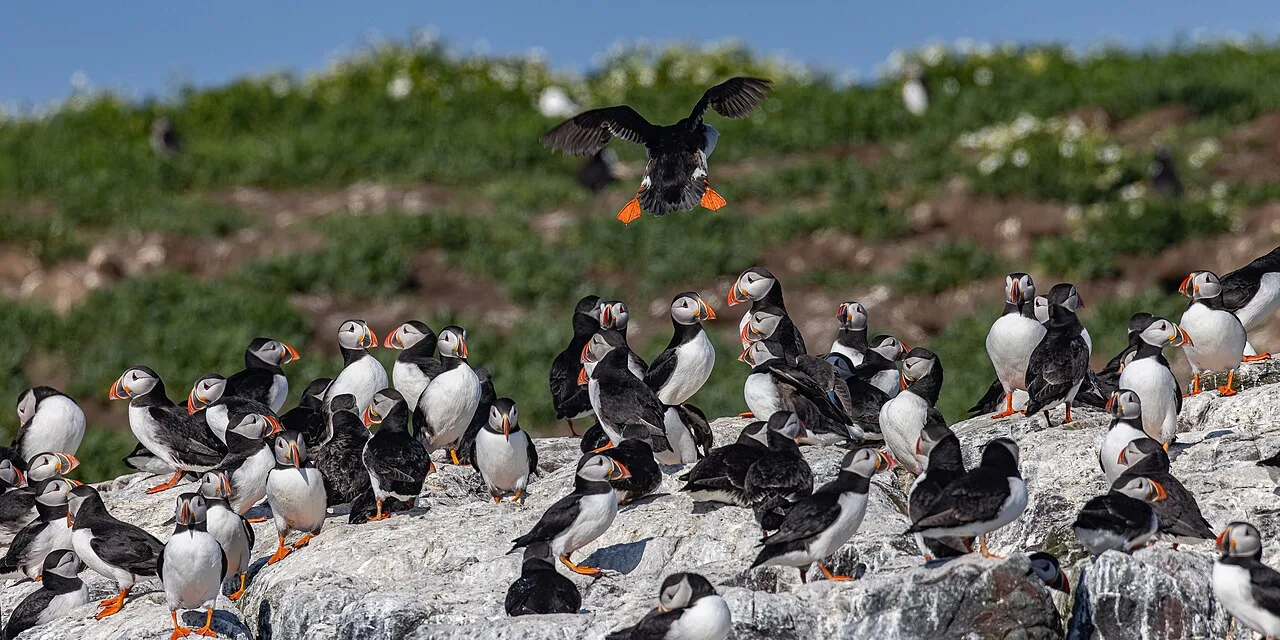
- Farne Islands · Typically May–July for the breeding seabird colonies
- Dunwich Heath and Beach · Currently closed · future heathland watching subject to reopening
- Brownsea Island · Spring and summer terns · autumn lagoon birds
- Blakeney Point · Summer terns · winter seals and wildfowl
- Wicken Fen · All year; spring song and winter wildfowl
- Lundy · Spring and summer seabirds · spring and autumn migration
The National Trust owns Lundy; the Landmark Trust manages visits and accommodation.
Scotland
- St Abbs Head National Nature Reserve · May–July seabird colonies; year-round coastal walks
- Lunga and the Treshnish Isles · Spring and summer for the widest choice of wildlife trips
- Fair Isle Bird Observatory · Spring and autumn passage; seasonal breeding and winter birds
NTS owns Fair Isle; the bird observatory is operated separately by Fair Isle Bird Observatory Trust.
- St Kilda · Late spring and summer boat trips · seabird colonies
Wales
- Whiteford National Nature Reserve · Year-round · autumn and winter waders
Northern Ireland
- Murlough National Nature Reserve · Autumn–winter wildfowl · rewarding year-round
Sources for this organisation history
- Confirmed: National Trust founders and 1895 foundation
- Confirmed: History of the National Trust
- Confirmed: National Trust for Scotland history and 1 May 1931 constitution
- Confirmed: Neptune campaign, Dinas Oleu and Whiteford Burrows
- Confirmed: National Trust membership and reciprocal visiting, consulted 18 October 2026
- Confirmed: Farne Islands visitor arrangements and separate boat ticket
- Confirmed: Brownsea Island admission, ferry and partner access
- Confirmed: Blakeney visitor routes and restrictions
- Confirmed: Murlough access and parking
- Confirmed: St Abb’s Head visitor information
- Confirmed: Wicken Fen visitor arrangements
- Confirmed: Lundy ownership and management
- Confirmed: Farne Islands — ownership and conservation management
- Confirmed: Murlough National Nature Reserve — ownership and conservation management
- Confirmed: Dunwich Heath and Beach — ownership and conservation management
- Confirmed: Brownsea Island — ownership and conservation management
- Confirmed: Blakeney Point — ownership and conservation management
- Confirmed: St Abbs Head National Nature Reserve — ownership and conservation management
- Confirmed: Wicken Fen — ownership and conservation management
- Confirmed: Lunga and the Treshnish Isles — ownership and conservation management
- Confirmed: Fair Isle Bird Observatory — ownership and conservation management
- Confirmed: Lundy — ownership and conservation management