
Conservation organisations
History of WWT
WWT began at Slimbridge in 1946, when Sir Peter Scott brought wetland conservation, research and public enjoyment together. Its ten UK wetland sites now offer very different ways to understand birds and the places they need.
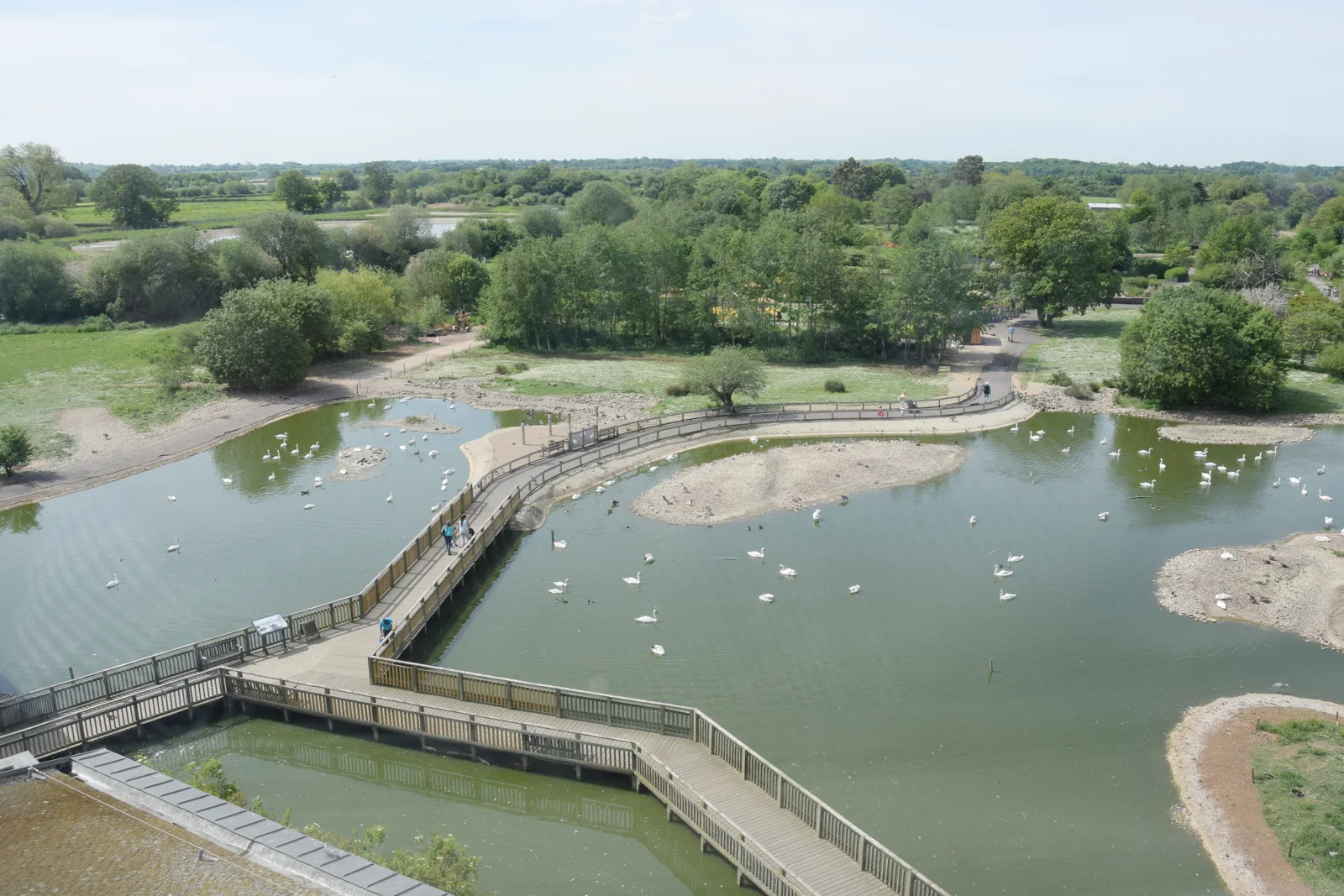
When was WWT founded?
Sir Peter Scott established the Severn Wildfowl Trust at Slimbridge in Gloucestershire in 1946. WWT’s official history dates the opening to 10 November. The location on the Severn connected the study of waterbirds with the much larger landscape they used. It also gave visitors a way into conservation through birds they could watch, discuss and come back to recognise. That combination remains the most useful way to understand WWT: a wetland charity with visitor destinations, scientific work and conservation projects, rather than simply a chain of places to take a walk.
Our choice for a first visit that brings this history into focus is WWT Slimbridge. Give the place a proper day and combine its interpretation with time in the hides. The historic story is more persuasive when you can step outside and think about the living wetland beyond the displays. For the entrance arrangements, accessible routes and seasonal wildlife, use the Slimbridge guide. If you already know that centre, choose a different landscape for your next visit. A second WWT site helps explain how one organisation can work with estuary edges, washlands and urban wetlands without making them feel interchangeable.
Why has WWT had different names?
The original name was the Severn Wildfowl Trust. The Centre for Scientific Archives catalogue of Peter Scott’s papers identifies the organisation as the Wildfowl Trust from 1954, and the Wildfowl and Wetlands Trust from 1989. WWT is the familiar short form used by the charity today. Those names provide a compact route through its development: an origin tied to the Severn, a wider concern for wildfowl, and explicit recognition of the wetlands on which birds depend. Older books, annual reports and signs may therefore use names that differ from the name on a current visitor ticket.
For a birdwatcher, the final change is especially helpful. A wetland is more than the patch of open water visible from a hide. Follow the connections between shallow margins, wet grassland, reed, mud and the surrounding land. Ask where birds are feeding and where they are resting, then move to a viewpoint that lets you watch without pushing them away. The reedbed collection and winter wetland collection offer useful comparisons with other operators. Choose by habitat and season as well as by membership card; it makes the day more interesting and the journey more worthwhile.
Peter Scott, Slimbridge and the public
WWT’s account of its eight decades places public access alongside conservation from the beginning. Scott’s work joined close observation with the ability to communicate what he saw. His former home at Slimbridge also matters to the history: WWT describes the study as the setting in which plans for much of its later network developed. A visitor can therefore follow two linked stories, the birds outside and the ideas that grew around watching them. The significance is the relationship between attention, knowledge and action, which is easy to miss if the day becomes a quick circuit of attractive enclosures.
Try a slower visit. Read one display carefully, then choose a live behaviour to watch for ten minutes. A bird feeding, a family group changing position or a flock settling can make a research question tangible. Children can do this too, especially if the question is simple: which birds stay together, which ones dive, and which feed at the edge? Keep a few notes and compare them on a return trip. Keeping better notes explains a useful approach. The point is to leave with something you noticed for yourself, alongside the history you learned from the centre.
How WWT helped conserve the nēnē
The nēnē, or Hawaiian Goose, became one of WWT’s best-known conservation stories. WWT’s Slimbridge account says three birds were brought from Hawaii in 1952 for breeding. Its history records the first release of a Slimbridge-reared bird in Hawaii in 1962. Work in managed care formed part of a wider effort to recover the species in its home range. It is a useful example of why specialist breeding skills can matter, and why success ultimately depends on birds being able to live in suitable conditions beyond a collection.
At Slimbridge, the Mission Possible interpretation connects visitors with this work. Our advice is to read the conservation explanation before treating the birds as another identification exercise. Ask what threat a project addresses, what intervention is involved and how the results are followed. That is a stronger way to understand conservation than assuming every species on display has the same story. Keep wild sightings and collection observations separate in your notes, with a clear location and context for each. Both can teach you something, but they answer different questions. The first reserve visit guide helps new birdwatchers turn a varied day into a manageable experience.
Why are Bewick’s Swans important to WWT history?
WWT’s Bewick’s Swan project describes Peter and Philippa Scott recognising individuals through differences in their bill markings in 1963. Its general history dates the formal study to 1964. These refer to the early observations and the study’s establishment, respectively. Repeated recognition allowed researchers to follow individual birds and their relationships over time. Later work has also used ringing and tracking. A winter flock could thus become a gathering of known individuals, with observations linked across years and places rather than starting from nothing each season.
That story rewards a patient watch at WWT Slimbridge or WWT Welney, when the season and conditions suit. Start with the broad arrangement of the flock and compare adults with younger birds, then look for behaviour rather than chasing a named individual. WWT notes that wild Bewick’s Swans have increasingly stayed farther east in mild winters. Plan for the wetland as a whole and let any swans add to it. Feed sessions and special openings belong in the individual visitor guides and the operator’s current programme. An old photograph of a crowded pool is a record of that occasion, not a timetable for the day you travel.
How WWT grew to ten UK wetland sites
WWT’s official visitor directory, consulted on 18 October 2026, lists ten sites: Arundel, Caerlaverock, Castle Espie, Llanelli, London, Martin Mere, Slimbridge, Steart Marshes, Washington and Welney. The organisation’s timeline records Welney opening in 1970, Martin Mere and Washington in 1975, Arundel in 1976 and London in 2000. Steart Marshes was completed in 2014. The network developed over time rather than arriving as a single visitor attraction model. It now lets a birdwatcher compare contrasting wetland settings while following a shared conservation interest.
Build your own introduction around three kinds of day. Choose a nearby centre for repeat visits, a different region for a seasonal trip, and an open landscape where weather and walking shape the experience. WWT London Wetland Centre can fit a city break; WWT Caerlaverock belongs in a Solway itinerary; WWT Steart Marshes asks you to think about a broad coastal landscape. The individual guides explain the differences. Avoid trying to fit several centres into one rushed day simply because membership includes admission. A long watch from one comfortable hide usually teaches more than another arrival, another ticket check and a hurried final walk.
What does WWT do today?
WWT describes its work in terms of restoring wetlands, conserving species, sharing expertise and helping people connect with wetland nature. Its strategy to 2030 places wetlands at the centre of the charity’s ambitions. The visitor sites are one visible part of that work, alongside projects and scientific activity. Steart is particularly useful for understanding why wetlands feature in discussions of flood risk and carbon as well as birds. Its learning material presents the site as a working wetland with several connected purposes.
Read the place as well as the species list. Where does water enter, where does it remain, and what changes as the tide or season moves on? Look for the relationship between the birds and the ground they are using. You do not need to judge a restoration scheme from a single visit to become a more attentive observer. A sketch of water levels and feeding areas can be enough to make the next visit richer. Follow how to read an estuary for coastal sites, or how to scan a reedbed where cover is dense. Give the landscape time before deciding that a quiet hour means there is little to see.
Which WWT wetland centre should you visit?
Our choice for a first WWT day is the centre you can reach comfortably and revisit. WWT Arundel and WWT Washington deserve consideration when they are local to you, rather than being passed over for a more distant name. WWT Martin Mere and WWT Welney can anchor a winter wetland break. WWT Llanelli and WWT Castle Espie introduce different estuary settings in Wales and Northern Ireland. Use the guides to compare the actual walking, hides, transport and facilities before selecting the one that fits your group.
Choose a short route first if someone is trying birdwatching for the first time. A warm pause and a good view can make a better introduction than covering every path. More experienced visitors can use a whole day to compare the view at different times, or combine a centre with another nearby habitat. The UK birdwatching calendar helps you choose a month, while accessible birding explains the questions worth asking about paths, hide thresholds and toilets. Our preference is to make one centre work well for everyone travelling, then add another destination only if time, energy and daylight genuinely allow it.
How do WWT membership and admission work?
WWT’s membership information, consulted on 18 October 2026, advertises unlimited entry to its ten UK wetland sites. Admission products, membership categories and conditions should be read on the charity’s own booking pages before purchase. A membership card supports repeat visiting, but individual activities can have separate booking requirements. The visitor guides link to the relevant official pages so you can compare a day ticket with membership using your actual plans. Avoid deciding from an old quoted admission price or assuming a special event is part of ordinary entry.
For a family or mixed group, write down who is travelling and which two or three visits you realistically expect to make. Check the membership category against those people, then compare the current total with the tickets you would otherwise buy. If a carer or companion is coming, read the relevant access arrangements before booking. Bring whatever membership or concession evidence the operator requests. Keep the confirmation available offline, particularly on an unfamiliar journey. WWT Steart Marshes has its own visitor arrangements and a different feel from an enclosed centre; use its guide rather than borrowing assumptions from Slimbridge. Membership is most useful when it makes returning easy, not when it turns every day out into an attempt to extract value.
How to plan a useful WWT birdwatching day
Choose the wildlife season, the journey and the shortest suitable route before worrying about how many species you might record. At a tidal destination, compare your available hours with the tide information linked from its guide. At a washland site, look at the operator’s access notices because water can affect paths and viewpoints. Carry layers for sitting still, protect binoculars from rain and keep enough food and drink for the route you have chosen. A visitor centre does not mean every hide is warm or every path sheltered.
Give yourself permission to return to a productive viewpoint. Watch one patch closely, take a break, then look again as light or water changes. Keep voices low in hides and make room at windows for children and seated visitors. Follow signs around collections and wild areas, particularly where routes or feeding instructions differ. If you need a fallback, choose it before leaving home so poor conditions do not turn into a rushed decision in the car park. The winter kit checklist and car-free favourites can help with preparation. End with a few clear observations and a reason to come back; that is a fitting way to enjoy an organisation whose history grew through sustained attention to wetland birds.
For a repeat visit, keep the route broadly familiar and change just one thing: the month, the tide stage or the time you spend in a particular hide. This makes comparisons easier than continually choosing a new destination. Bring yesterday’s notes if you have them, and leave room for ordinary birds alongside the hoped-for spectacle. A careful description of a feeding flock can be more useful later than an uncertain name added in haste. Take a final look at the habitat before leaving, while the pattern of the day is still clear.
WWT history timeline
· The Severn Wildfowl Trust begins
Peter Scott opens Slimbridge on 10 November. Source for this milestone
· Nēnē breeding work at Slimbridge
WWT says three birds were brought from Hawaii for breeding. Source for this milestone
· The Wildfowl Trust name
The Centre for Scientific Archives catalogue dates the shorter name from 1954. Source for this milestone
· A Slimbridge-reared nēnē returns to Hawaii
The first release is recorded in WWT’s historical timeline. Source for this milestone
· Recognising individual Bewick’s Swans
WWT describes the Scotts’ observations in 1963 and dates the formal study to 1964. Source for this milestone
· The Wildfowl and Wetlands Trust
The archive catalogue records the expanded organisational name. Source for this milestone
· London Wetland Centre opens
A new urban wetland centre joins the network. Source for this milestone
· Steart Marshes completed
WWT’s timeline records the completion of the created tidal wetland. Source for this milestone
All ten WWT wetland guides
Choose a guide for its seasonal birds, public trails, visitor arrangements and nearby places to stay.
England
- WWT Arundel · Spring migration · winter wildfowl · rewarding year-round
- WWT Slimbridge · Winter swans · rewarding year-round
- WWT Martin Mere · Autumn & winter
- WWT London Wetland Centre · Autumn passage · winter Bitterns · rewarding year-round
- WWT Steart Marshes · Autumn and winter waders · rewarding year-round
- WWT Washington · Spring heronry and breeding waders · autumn migration · winter Curlew roost
- WWT Welney · Winter swans and wildfowl · spring breeding waders · autumn Cranes
Scotland
- WWT Caerlaverock · October–April
Wales
- WWT Llanelli · Rewarding year-round
Northern Ireland
- WWT Castle Espie · Autumn & winter
Sources for this organisation history
- Confirmed: WWT historical timeline
- Confirmed: WWT reflections on eight decades and public access
- Confirmed: Centre for Scientific Archives, Peter Scott catalogue and organisational names
- Confirmed: WWT on nēnē breeding and the 1952 arrivals
- Confirmed: Mission Possible at Slimbridge
- Confirmed: WWT Bewick’s Swan research
- Confirmed: WWT visitor directory, ten sites consulted 18 October 2026
- Confirmed: WWT membership benefits, consulted 18 October 2026
- Confirmed: Steart Marshes learning and wetland functions
- Confirmed: Steart Marshes visitor information
- Confirmed: Peter Scott’s study and the development of the network