Regional birdwatching guide
Birdwatching in Norfolk: choose the coast, Broads or winter wetlands
For a first Norfolk birdwatching break, our choice is Titchwell with one tide-led Snettisham visit, or a Broads stay built around Strumpshaw and Hickling. Choose between coast, reedbed and winter floodplain before booking a base: trying to cover all three in a weekend leaves too little time watching birds.
Map of the region’s birdwatching sites
Numbered links locate the reserve destinations. Use each guide’s official arrival directions for the entrance and its watching table for public viewpoints.

Best birdwatching sites in Norfolk
| Site | Our strongest months | Specialities | Public access |
|---|---|---|---|
| RSPB Titchwell Marsh | April, May, September | Bittern, Avocet, Marsh Harrier, Bearded Tit | Dawn access available; check route restrictions. Watching places and access details |
| RSPB Snettisham | September, November, January | Knot, Pink-footed Goose, Oystercatcher | Dawn access available; check route restrictions. Watching places and access details |
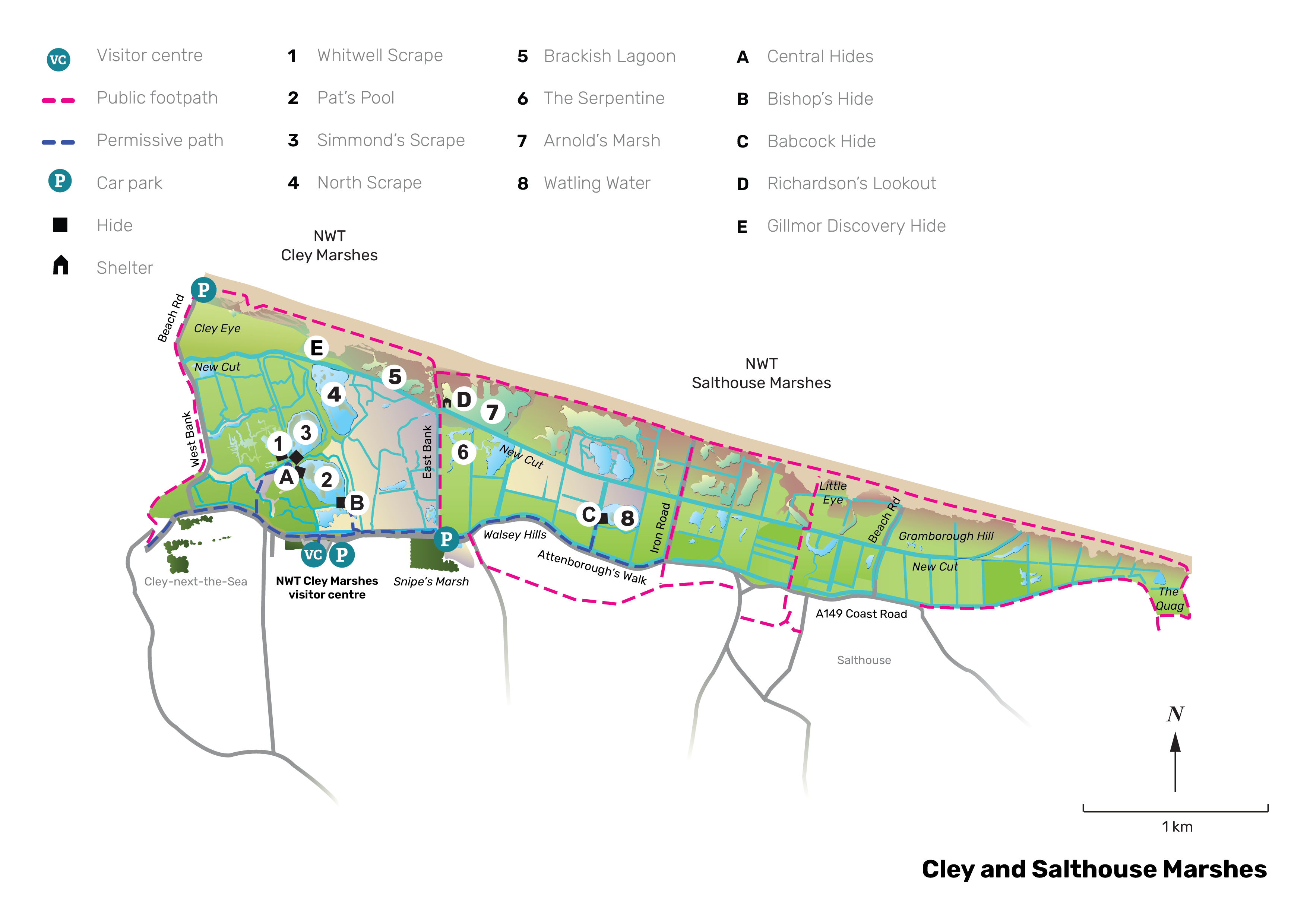
| NWT Cley and Salthouse Marshes | May, September, November | Avocet, Spoonbill, Marsh Harrier, Bearded Tit, Bittern | Dawn access limited to specified routes. Watching places and access details |
| Holkham National Nature Reserve | November, January, April | Spoonbill, Pink-footed Goose, Brent Goose, Shore Lark, Marsh Harrier | Dawn access limited to specified routes. Watching places and access details |
| Blakeney Point | June, July, January | Harbour boat views of seals and terns, with a separate long shingle walk. | Boat or ferry planning required. Watching places and access details |
| RSPB Strumpshaw Fen | April, May, January | Bittern, Kingfisher, Bearded Tit | Dawn access limited to specified routes. Watching places and access details |
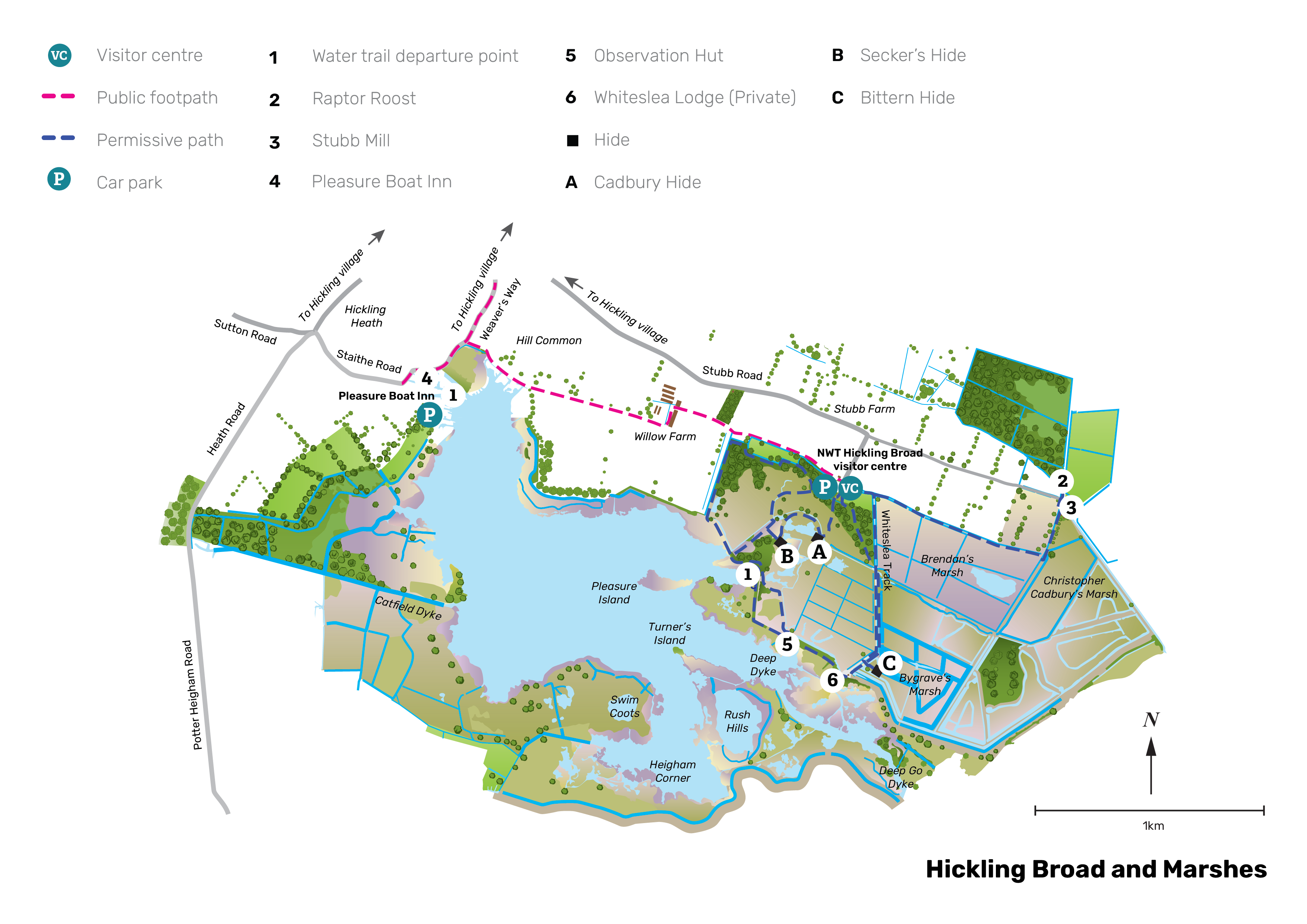
| NWT Hickling Broad and Marshes | April, May, November | Bittern, Bearded Tit, Spoonbill | Dawn access limited to specified routes. Watching places and access details |
| RSPB Buckenham Marshes | November, December, January | Rook, Jackdaw, Wigeon, Pink-footed Goose | Dawn access available; check route restrictions. Watching places and access details |
| RSPB Berney Marshes and Breydon Water | November, January, September | Pink-footed Goose, Wigeon, Lapwing, Black-tailed Godwit | Dawn access limited to specified routes. Watching places and access details |
| WWT Welney | December, January, February | Whooper Swan, Bewick’s Swan, Wigeon, Black-tailed Godwit | Check permitted visiting hours. Watching places and access details |
Where should I start birdwatching in Norfolk?
Choose RSPB Titchwell Marsh if you want to compare several wetland habitats in one substantial visit. Its freshwater views, reedbed paths and coast make it particularly useful when members of a group have different interests. Begin with the guide’s public watching places and decide how far towards the beach you actually want to go. A successful first visit can finish at a favourite hide without reaching every possible viewpoint.
Our alternative for someone who enjoys careful wader identification is NWT Cley and Salthouse Marshes. Give the central hides a proper session before deciding whether the longer banks suit the conditions. The connected views help you compare feeding birds without constantly changing destination. Titchwell and Cley both deserve more than a brief stop; choose one as the day’s main reserve and keep the other for another morning.
When is the best time for birdwatching in Norfolk?
Our choice for a first winter visit is November to February, when the Norfolk guides offer a useful contrast between geese, ducks and coastal waders. RSPB Snettisham suits a trip organised around the Wash tide; WWT Welney offers a different inland setting for winter swans and wildfowl. Choose the experience that matters to you before comparing rooms. Being near a reserve helps less if its strongest viewing period falls outside your available day.
Late spring and early summer usually reward more time listening beside reedbeds, watching returning migrants and studying breeding-season behaviour from public paths. Autumn can combine passage waders with the developing winter flocks. The month links and species table help narrow that choice, while the individual guides explain where public viewing works. Stay flexible enough to spend a second day at the habitat that is producing the most interesting watching.
How to plan the Snettisham wader spectacle
Make RSPB Snettisham a deliberate tide appointment. The operator’s current spectacle guidance is the place to choose a suitable date, then the reserve guide helps you judge the walking approach and available watching places. Knot and Oystercatcher are the principal flock interests here; cold-weather Pink-footed Geese give the season another dimension. A tide chart alone cannot tell you exactly where a flock will settle, so arrive with time to learn the view.
The ordinary approach is a walk, with exposed sections and uneven ground, rather than a short step from a car into a hide. Carry what you need for the whole watch and decide in advance when you must turn back. At an official watching point, stay still as birds draw nearer. Following a retreating flock across the shore can destroy the very feeding opportunity that makes the place valuable.
Titchwell, Cley or Holkham: which coastal reserve suits you?
Choose Titchwell for a day that can change emphasis as wind, glare and water levels change. A view from Island Hide may be enough to start learning the freshwater birds; the Parrinder hides give other angles, while the reedbed and shore broaden the visit. The reserve guide distinguishes those places so you can choose a few purposeful stops. Carry a scope if distant ducks and waders are central to your interests, but use binoculars for close activity.
Choose Cley when you want a hide-led wetland day with optional longer banks, and Holkham National Nature Reserve when a wider coastal landscape and a longer walk appeal. Holkham’s grazing marsh, pines and bay require separate decisions about distance and exposure. Winter geese and Shore Lark are reasons to read its seasonal guide; they are also reasons to respect cordons and stay with the official approaches instead of following an online pin into fragile ground.
Where to watch birds in the Norfolk Broads
Build a Broads day around RSPB Strumpshaw Fen or NWT Hickling Broad and Marshes, rather than treating them as extensions to an already full coast day. Strumpshaw suits patient reedbed observation from its open public facilities. Its Fen Hide was closed for refurbishment in the operator’s 13 October 2026 notice; confirm the current position in the reserve guide before making that particular building essential to your day.
Hickling offers broad water, reedbed and marsh views, with several named hides and public outlooks. Bittern, Bearded Tit and Marsh Harrier are among its headline interests, but the pleasure often lies in learning where movement appears above the reeds. Pick an open viewpoint, settle down and listen before changing location. If a guided boat experience appeals, check the actual product separately from ordinary walking access and keep the walking version workable on its own.
Winter marshes beyond the familiar north coast
RSPB Buckenham Marshes is worth comparing when grazing-marsh geese and ducks appeal more than a beach walk. Use the station-to-river public route and the operator’s permitted viewing places, keeping well clear of the working fields. The riverside hide is currently listed as closed, so plan an outdoor visit. For the winter corvid gathering, use the operator’s designated public watching position rather than seeking another roost approach.
RSPB Berney Marshes and Breydon Water needs a different level of self-sufficiency. The marsh-side approach has no road arrival at Berney Arms and the public paths can be muddy and exposed. It is a strong choice for someone who enjoys an open estuary landscape and is comfortable planning the complete return. The eastern Breydon viewing option is a separate decision; the guide helps distinguish it from a walk starting at the station.
When Blakeney Point is the right choice
Blakeney Point suits visitors who want a coastal outing with time to understand its particular access arrangement. A boat trip and the shingle walk from Cley are different experiences with different demands. Choose the one your group can comfortably manage, then read the relevant operator instructions. Do not make the far end of the Point a compulsory destination simply because it looks close on a small map.
The breeding-season tern interest calls for restraint: official viewing, current cordons and the boat crew’s chosen distance govern the visit. In autumn and winter, weather and restrictions still decide which parts of a public route are sensible. Our choice for a first coast break is to give Blakeney its own half-day or day, replacing another outing rather than squeezing it between Cley hides and a distant evening appointment.
A Norfolk birdwatching weekend that leaves time to watch
The North Norfolk weekend is the most useful starting itinerary for the western coast. Give Titchwell one full day and place Snettisham at the appropriate tide, swapping their order when that improves the plan. Keep the last morning for a return to the better conditions. A familiar hide often yields more understanding on a second visit because you already know where to look and how the light behaves.
For a longer holiday, choose a second area rather than adding a distant reserve every evening. A Broads stay can give Strumpshaw and Hickling more attention; an inland extension to Welney changes both habitat and season emphasis. Avoid changing accommodation during a short break solely to collect more names. A settled base, packed food and room for weather changes usually make the days easier to use.
Can I go birdwatching in Norfolk without a car?
Yes, if the last connection and the return work for the reserve you choose. Start with the transport section in each guide, then check the live journey for your actual weekday or weekend. A station name beside Buckenham or Berney Arms should prompt a timetable check, not an assumption of a frequent service. Compare the full walk from arrival point to watching place, including time to get back before the last usable connection.
On the north coast, select accommodation around the confirmed service you will use and concentrate on fewer reserves. An early Wash tide may need a booked taxi, including a definite return collection. For a relaxed visit, a second Titchwell session can be more rewarding than a complicated transfer to another reserve. Keep tickets and contact details available offline and make the travelling distance fit the shortest member of your group’s comfortable day.
Which Norfolk reserves suit different access needs?
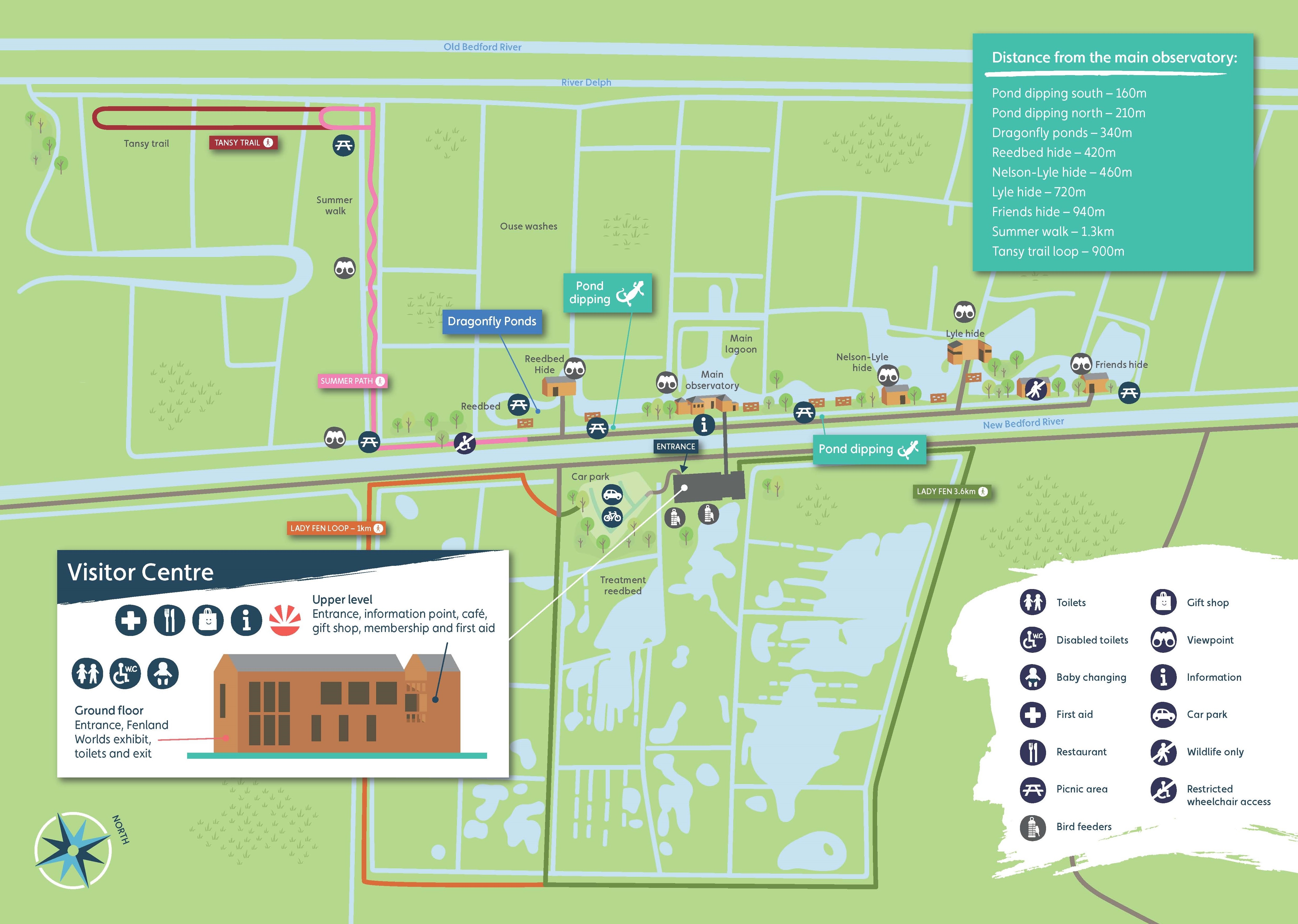
Start with the exact viewpoint rather than the general word accessible. Titchwell has level hide options alongside a more demanding final beach approach; Cley combines boardwalk hides with longer, more exposed banks. At Welney, the Main Observatory and some public hides have particularly useful access provision, while routes farther out need their own check. The linked guides explain the individual differences so that a suitable plan can end at a comfortable watching place.
For the Broads, ask which routes are currently open and which buildings require steps. Strumpshaw’s reception hide and its adjacent level screen provide different arrangements, and an elevated tower is another matter again. At Hickling, closer parking for a particular hide may require agreement with staff. Describe your own equipment, walking distance and seating needs when contacting the operator; a precise question gets a more useful answer than asking whether the whole reserve is suitable.
What to do when wind, rain or tides change the plan
In a strong coastal wind, our choice is to shorten the exposed section and give sheltered lagoon views more time. Moving from a beach to an inland hide can improve comfort, but a county-wide storm does not disappear when you change reserve. Check official closures before leaving your base. If the paths are affected by flooding or overtopping, use the permitted shorter option or postpone the outdoor part of the day.
Calmer mornings usually help with reedbed listening and detecting small movements; brighter periods can improve distant identification when glare is manageable. Use that as general fieldcraft, then let the actual view guide you. A different window or a patient second scan may be enough. The sea, managed freshwater lagoons and inland floodplain behave differently, so use each guide’s own tide and conditions advice rather than transferring one reserve’s rule to another.
How to watch Norfolk birds responsibly
Keep flocks feeding and resting by using the official banks, hides and viewpoints. Share narrow hide windows, keep voices low and leave room for someone with a seated viewing position. When birds repeatedly alarm or lift because people are approaching, increase the distance. The public viewpoint gives you a place to observe; it does not justify following a bird into the marsh, reedbed or a protected dune section.
Before travelling home, note what made the day work: tide state, wind direction, visibility and the public viewpoint that suited your group. That information makes a return visit more useful than another distant recommendation. Continue with the linked month guide, the winter-flock collection or a reedbed lesson according to the birds you enjoyed most, and keep precise sensitive locations out of public reports.
Trips and related reading
Sources and review
Reviewed 2026-10-19. Practical details remain in the linked reserve guides.
- RSPB current reserve page and weekly sightings
- RSPB opening calendar
- RSPB reserve and goose-season guidance
- RSPB current facilities and hide provision
- NWT reserve, seasonal birds and opening hours
- Current operator map: six hides and Richardson’s Lookout
- Holkham public access, seasonal restrictions and sandbank safety
- Operator interactive map: Joe Jordan and George Washington hides
- RSPB current reserve birds and 13 October Fen Hide closure
- RSPB hides, steps and seasonal trail closures
- NWT current Hickling reserve and seasonal birds
- NWT current illustrated reserve map: visually checked
- WWT Welney map linked by current visitor page
- WWT hide names, views and accessibility
- RSPB Buckenham habitats and winter corvids
- RSPB official rook-roost viewpoint and closed hide notice
- RSPB Berney/Breydon confirmed reserve birds
- RSPB public paths, mud and lack of facilities
- National Trust live visitor access and seasonal restrictions
- National Trust public coastal-walk map and safety
- WWT Welney current address confirms Norfolk location