
UK birdwatching calendar
November birdwatching in the UK
Choose November for winter geese, busy estuaries and the first proper starling evenings. Our choice is a wetland day with a sheltered middle and one carefully timed dawn or dusk watch.
What changes in the birding year in November
November changes the scale of a day's birdwatching. Individual summer territories give way to feeding flocks, commuting lines and shared resting places. Geese can fill a distant field while a nearby hedge appears empty; then a flock of small birds makes that hedge the most interesting part of the walk. Look for movement between habitats rather than expecting activity to be spread evenly. Shorter daylight also makes the order of your stops more important than the number of places you visit.
Winter visitors typically increase the numbers of ducks, geese and some waders already using British wetlands. Arrivals are influenced by conditions elsewhere as well as local weather, so an early cold spell can feel very different from a mild November. Our recommendation is to build familiarity with one wetland and revisit it. Comparing the same pool a fortnight apart teaches more about arrival and redistribution than comparing unrelated species lists from opposite ends of the country.
November's headline bird spectacles
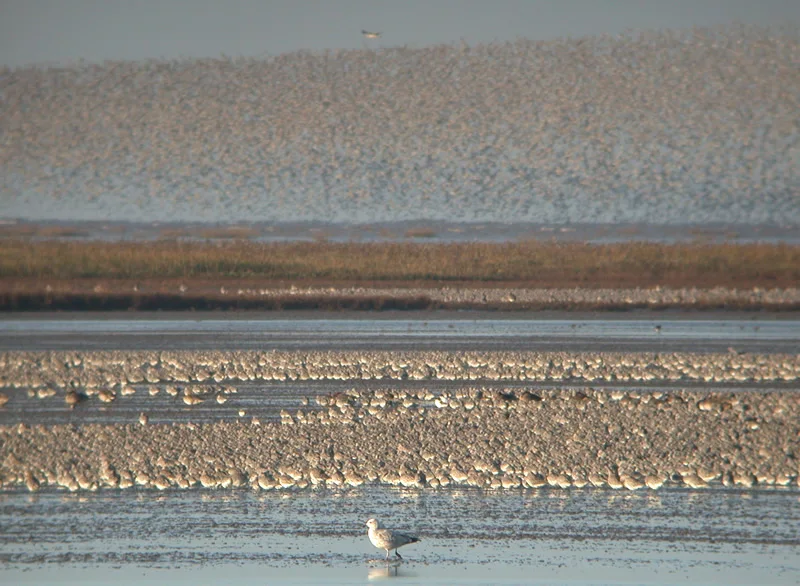
A high-tide wader gathering is the clearest example of the month working to a timetable that belongs to the landscape. Feeding birds usually become concentrated as mud is covered, but their resting place and the view available to visitors vary with tide height, wind and disturbance. At RSPB Snettisham, use the reserve's own tide advice to select a suitable visit. Leave enough time to settle at the authorised viewing area before birds arrive; a hurried approach can spoil the watch for everybody.
Starling evenings offer a different rhythm. A murmuration may develop gradually, with separate groups arriving across a wide sky, or birds may go straight into cover. RSPB Ham Wall and Shapwick Heath National Nature Reserve provide the Somerset setting, but the permitted viewpoint depends on where the birds are gathering. Follow current operator instructions rather than an old social-media pin. Treat the daytime reedbed visit as worthwhile in its own right, then let the final watch complete the afternoon rather than determine whether it was a success.
How to plan tides and weather in November
Find the official tide prediction for the relevant coast, then read the reserve's explanation of how that tide affects its viewing points. The nearest named port is not automatically the right reference for every creek. Wind can make an exposed watch uncomfortable long before rain arrives, and heavy cloud can remove useful light earlier than the published sunset. Choose your position for both visibility and a straightforward return, especially when watching a large open estuary.
A useful wet-weather alternative is a reserve with several covered observation points and a short route between them. That still requires suitable footwear and waterproof clothing for the transfers. If wind makes a seawall or cliff route unpleasant, move to a sheltered lagoon or woodland edge; do not persist merely because a rare bird was reported. An inland duck watch often produces better learning than an hour spent struggling to hold binoculars steady on the coast.
A suggested November birdwatching weekend
Use the linked North Norfolk weekend as a framework, with one tide-led session at Snettisham and an unhurried day at RSPB Titchwell Marsh. Choose the order after looking at the tide and weather together. Titchwell's sequence of habitats suits a day when you want to compare fresh water, marsh and shore without driving between every change of scene. A long stop with a telescope, if you have one, is more useful than repeatedly walking to see whether something has changed.
Stay in one base and keep the second morning flexible. If the tide falls at an awkward hour, enjoy a daytime wetland route and make the dramatic gathering a future visit. Avoid combining a dawn departure, full day outside and distant dusk roost with a long drive home. November weekends work best with a clear finish: pack a dry layer, have a meal before the return journey and accept that the coast will still be there next month.
Responsible winter watching and useful fieldcraft
Resting birds are conserving energy. Watch their reaction as well as your own view: heads rising together, birds edging away and a flock becoming restless are reasons to increase distance. A hide window or official viewing screen is a better starting point than a gap in the hedge beside a crowded roost. Keep dogs under the reserve's published control rules and resist moving towards geese simply because a photograph looks distant on a phone.
For a practical exercise, follow one flock for ten minutes without trying to identify every individual. Notice where it feeds, what prompts a movement and whether all birds react together. Make a rough note of light, wind and tide stage. That context helps you understand a later visit and makes a report more useful than a list alone. Share sensitive records privately with the operator or appropriate recorder, and keep exact resting locations out of public directions when the reserve asks for restraint.
Where to go birdwatching in England in November
RSPB Snettisham
Our choice for a November visit built around a large estuary rather than a long walking circuit. Read the guide's tide section first and decide whether the particular date suits the spectacle you want. On the ground, allow long periods of quiet watching and look beyond the densest flock: changing flight shapes and feeding behaviour can be as interesting as the final gathering. Keep the walk back within your available daylight.
RSPB Titchwell Marsh
Choose Titchwell if your group wants several habitats within a single reserve day. Start with a careful look across the first productive water instead of hurrying towards the sea, then compare how different birds use the next part of the route. In poor coastal conditions, shorten the exposed part and spend more time in sheltered observation. The reserve guide holds the current practical detail, including the access that suits your party.
WWT Welney
Welney is our alternative for a swan-and-wildfowl day away from a tidal shore. Use the official programme if you want an organised activity; do not infer a particular feed or event from the month alone. Take time to compare the birds' shapes, voices and behaviour from the authorised viewing areas. A smaller number watched closely can be more memorable than a much larger distant flock seen only in silhouette.
Where to go birdwatching in Scotland in November
RSPB Mersehead
Mersehead suits visitors who want a southern Scottish wetland base and a chance to understand geese in their wider feeding landscape. Our preference is to work slowly through the official viewing options rather than chase birds between roadside fields. Let wind direction decide where to spend the longest watch. The reserve's coastal setting makes a weather fallback sensible, and the full guide is the place to check the day's practical arrangements.
WWT Caerlaverock
Caerlaverock makes a useful choice when your priorities are winter waterbirds and time spent watching rather than covering distance. Compare different groups through the day and use the centre's current information to decide whether any advertised activity suits the visit. Keep the itinerary compact enough to enjoy a warm break without feeling that you are missing the whole day. A relaxed first visit often becomes the best foundation for a return.
RSPB Lochwinnoch
For a shorter outing in western Scotland, consider Lochwinnoch as a freshwater alternative to a very exposed coast. Ducks and other waterbirds typically give plenty to practise on without requiring a rare-species target. Spend a session learning the common birds before looking for less familiar ones, and compare their feeding methods. It is a sensible choice for a mixed-experience group whose members want a satisfying watch at different levels of detail.
Where to go birdwatching in Wales in November
RSPB Conwy
Conwy is our choice when you want estuary context with a lagoon watch to compare against it. Think about where birds can rest as the tide advances, and use the guide to plan the permitted route. Allow enough time to distinguish activity on the water from activity along the edges. If the estuary is hard to scan in wind or glare, the day's interest need not disappear with it.
RSPB Ynys-hir
Ynys-hir offers a different Welsh November: compare woodland shelter with open wetland views rather than treating the whole reserve as one habitat. Winter geese are part of the attraction, but their presence in a particular view is variable. Our recommendation is to choose a manageable official circuit and pause wherever calls or movement suggest activity. Avoid extending a late-afternoon walk simply to reach a distant viewpoint before darkness.
RSPB Newport Wetlands
Newport Wetlands gives a useful reedbed-and-estuary option for a South Wales day. Watch how water level, reed cover and wind change what you can see from the public route. Binoculars used slowly often reveal more than repeatedly moving between viewing spots. If you hope to finish with Starlings, check the operator's current advice; a historic roost report should never become directions to an assumed evening gathering.
Where to go birdwatching in Northern Ireland in November
RSPB Portmore Lough
Portmore Lough is a strong starting point for November wildfowl and a patient watch over open water. Listen as well as look, and spend time comparing birds resting together before they move. Our choice here is a deliberately simple outing with one sustained observation session. Read the reserve guide for arrival and access planning rather than assuming a large lake comes with facilities at every possible approach.
RSPB Lough Foyle
Lough Foyle suits an estuary-led day when you are comfortable planning around tide, exposure and limited facilities. Use established public watching places and leave feeding birds plenty of space. A telescope helps with distant flocks, but a broad binocular scan can teach you how birds are distributed across the shore. Choose a manageable stretch and a clear return point instead of trying to work the whole lough edge.
RSPB Belfast Window on Wildlife
For a more compact Northern Irish outing, Belfast Window on Wildlife is our choice for combining an urban journey with careful wetland watching. Look for changes in the group rather than waiting only for a new species to arrive. A hide session can work well for beginners who want time to compare an identification with a field guide. Consult the detailed page for current access before making a special journey.
More reserves to consider in November
Plan your November birdwatching trip
Sources for birdwatching in November
- Confirmed: RSPB: November in nature
- Confirmed: RSPB Snettisham
- Confirmed: RSPB Mersehead
- Confirmed: RSPB Conwy
- Confirmed: RSPB Portmore Lough
- Confirmed: RSPB Titchwell Marsh operator information
- Confirmed: WWT Welney operator information
- Confirmed: WWT Caerlaverock operator information
- Confirmed: RSPB Lochwinnoch operator information
- Confirmed: RSPB Ynys-hir operator information
- Confirmed: RSPB Newport Wetlands operator information
- Confirmed: RSPB Lough Foyle operator information
- Confirmed: RSPB Belfast Window on Wildlife operator information
- Confirmed: RSPB Ham Wall operator information
- Confirmed: Shapwick Heath National Nature Reserve operator information