
Trips · Practical UK birdwatching
Car-free Morecambe Bay birdwatching
Use the Furness railway and a settled base to make Leighton Moss the heart of a three-day birdwatching break. Add Hest Bank only when the final connection and tide work comfortably.
Who this railway birding break suits
This is our choice for a first birdwatching holiday without a car: a strong main reserve, a recognisable rail arrival and time to settle into one landscape. It suits couples, solo visitors and small groups who would rather spend their energy observing than navigating a large touring circuit. A light day bag, comfortable footwear and a realistic walking pace are more valuable than carrying every piece of optical equipment you own.
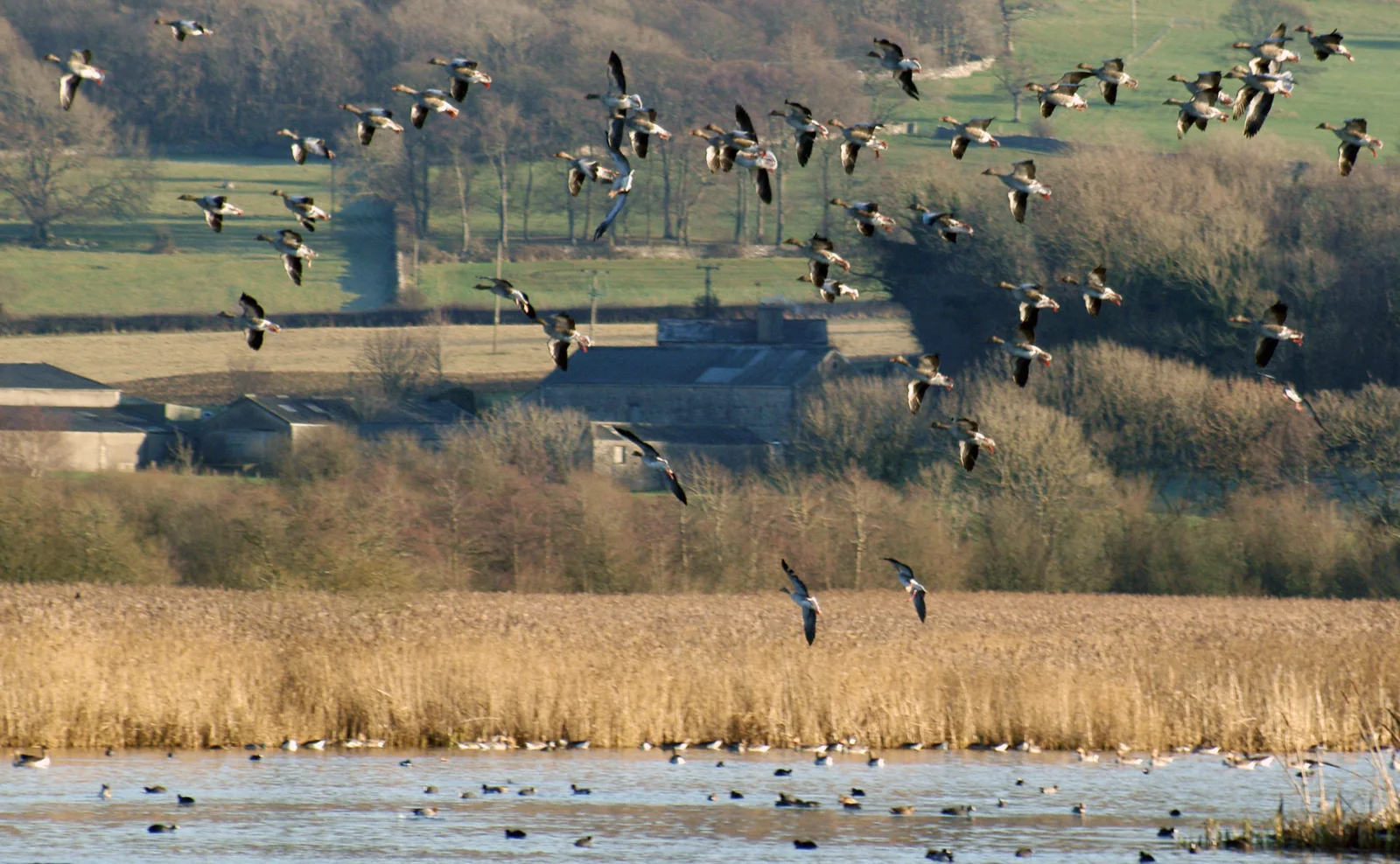
Autumn and winter are appealing for wetland birds, while spring brings the sound and activity of the reedbed. The best months depend on what you want to learn. Pick winter for a patient comparison of waterbirds, or spring for listening and breeding-season behaviour from public viewing places. The trip can work in other months too, provided the train service, accommodation and reserve access fit together. Read the current month guide and let seasonal interest shape your expectations before purchasing advance travel tickets.
Day 1: train to Silverdale and Leighton Moss
Arrive at Silverdale with enough daylight for the onward walk and an unhurried introduction to RSPB Leighton Moss. Consult the reserve guide for the official station approach, current entrances and facilities. Keep the first visit modest after a long journey: one comfortable circuit, a sustained hide watch and a chance to learn the wetland's sounds. Leave the heavier overnight bag at your accommodation where that has been arranged, instead of carrying it through narrow viewing spaces.
Before leaving the train, check the time of the return service you would use if your plans changed. On arrival at the reserve, note the day's opening arrangements and any closed paths. Choose two or three familiar species and watch how they move between water and cover. A new site becomes easier to understand when you return to the same viewpoint on the following morning, so make notes about the light, the direction of the reedbed and where the birds spend their time.
Day 2: a full reedbed day and an optional saltmarsh watch
Return to RSPB Leighton Moss for your longest day. Start with the habitat you enjoyed yesterday, then expand the visit at a pace that leaves time for sitting quietly. Reedbeds often produce brief glimpses after long intervals of apparent inactivity. Listen for repeated calls, watch gaps in vegetation and resist walking constantly because a bird has disappeared. Share windows and lower your voice when another visitor is concentrating on something close to the hide.
The saltmarsh hides are a separate walking decision, and the route between viewing areas should be checked in the guide before setting off. Consider the total distance back to your room or station, not merely the outward walk. A full day based on the main reserve is a complete itinerary if the additional approach is uncomfortable, muddy or incompatible with the light. Have lunch and a drink ready so that an interesting watch does not force you to choose between staying attentive and walking back for supplies.
Day 3: Hest Bank if the tide and connection agree
Use RSPB Hest Bank at Morecambe Bay as an optional third-day coastal contrast. Check its official transport approach and the actual onward service from your accommodation before committing. This is a shoreline watch shaped by the tide, so compare the suitable viewing period with the time of your outward and return journeys. If those three elements fail to align, spend the morning at Leighton Moss and travel home comfortably.
For orientation only, OSRM measured the road section between the mapped Leighton Moss and Hest Bank locations at 27 minutes on 18 October 2026. That figure describes a car journey and must never be substituted for the rail, bus or walking connection. The value of this optional stop is its change of habitat, not its apparent proximity on a regional map. Arrange any necessary taxi beforehand, identify a proper collection place and keep clear of private accesses while waiting for your return.
How to plan the complete public-transport journey
Book the long-distance travel only after checking the local train service on the actual days involved. A room advertised as near a station may still require a substantial final walk, especially with luggage. Place the station exit, accommodation entrance and reserve arrival on one saved map. Read the walking description and look at the terrain rather than treating a straight-line distance as an assurance of an easy approach.
Allow a connection margin that suits your needs. A later arrival can remove the daylight you expected for a rural walk, while an early departure can leave no time to collect luggage from an unstaffed property. Ask the accommodation about bag storage before relying on it. Keep the rail operator's travel notices available, save a local taxi contact and carry a charged phone. If a disruption affects the local railway, a shorter stay with one well-arranged transfer is preferable to an improvised chain of unfamiliar buses.
Wet-weather and high-wind alternatives
A wet forecast is a reason to choose a shorter reserve circuit and longer hide sessions. Pack waterproof trousers or other protection that remains comfortable when sitting, and keep a dry layer for the journey home. Take the opportunity to practise patient observation: compare bills and head shapes, follow a bird through several feeding movements and write down the features that made you confident. A poor photograph can still support a notebook, but repeated clear watching usually helps more.
When strong winds make the exposed shoreline unpleasant, leave Hest Bank for another trip. The walking return must remain manageable after the watch, particularly if your only connection is later in the afternoon. Flooding or a closed path may require a completely different approach; use the operator's current notices and ask about the available route. Do not try to cross the bay or take a shortcut over tidal ground. Keep this itinerary on established public approaches and reserve paths.
Where to stay without a car around Morecambe Bay
Silverdale is our preferred base when a suitable room and station connection are available. Staying locally lets you return to the reedbed without rebuilding the journey every morning. Compare the practical walking route and food options, especially if you arrive after the usual shopping hours. An independent breakfast and somewhere to dry waterproofs can make a bigger difference than a long list of in-room extras.
Carnforth provides another rail-based option; Lancaster can suit visitors who value a wider choice of accommodation and evening food. Both involve more travelling to the reserve, so test a sample morning and evening journey before paying. These are alternative stay searches, not claims that every hotel in those towns offers a convenient car-free connection. Check the actual door-to-platform route, whether the room meets your access needs and how cancellation terms interact with any advance train fare.
What to book and how to enjoy a slower visit
Book your room and train tickets together once the local timetable works. If a particular guided reserve activity is central to the visit, obtain that confirmation before fixing the rest. Keep the core itinerary independent of an optional third-day transfer, and plan the final morning around the journey home. A relaxed last hide visit is a better ending than a rushed coastal detour followed by a missed connection.
Use the repeat day to build confidence in a handful of identifications. Note the habitat, behaviour and conditions as well as the name, and leave uncertain birds uncertain until the evidence improves. Sensitive breeding observations belong with reserve staff or the appropriate recorder rather than a precise public location. The gain here comes from familiarity, with enough time left to watch the wetland change.
Other reserves to compare for a longer birding holiday
For a longer regional holiday, compare RSPB Marshside, WWT Martin Mere and Brockholes Nature Reserve as independent day-trip options. Check each guide's final public-transport approach before choosing: this railway-based Morecambe plan does not establish that every other wetland has the same convenient station connection. Select a base around the actual service you intend to use.
South Walney Nature Reserve and Observatory and RSPB Hodbarrow are additional coastal comparisons for a wider holiday, while RSPB Campfield Marsh suits a separately planned Solway extension. Each needs its own arrival, walking and return assessment. Choose one extra destination that adds a habitat you want to study, and give it a full day. A longer list of possible reserves becomes useful only after the journeys between them have been made realistic.
Reserve guides for this visit
Sources and review
- Confirmed: RSPB Leighton Moss operator visitor information
- Confirmed: RSPB Hest Bank at Morecambe Bay operator visitor information
- Confirmed: RSPB Marshside official visitor information
- Confirmed: WWT Martin Mere official visitor information
- Confirmed: Brockholes Nature Reserve official visitor information
- Confirmed: South Walney Nature Reserve and Observatory official visitor information
- Confirmed: RSPB Hodbarrow official visitor information
- Confirmed: RSPB Campfield Marsh official visitor information
- Confirmed: OSRM road estimate measured 18 October 2026 — RSPB Leighton Moss to RSPB Hest Bank at Morecambe Bay
- Confirmed: National Rail current journey and station information