RSPB Snettisham
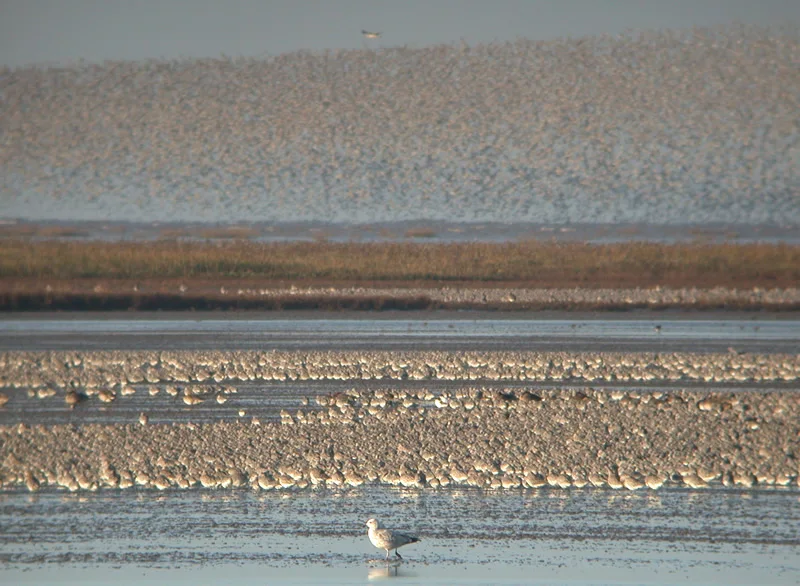
On selected very high spring tides, vast flocks of Knot, Dunlin, Oystercatchers and godwits lift from the Wash; winter dawn can also bring tens of thousands of Pink-footed Geese.
Open planner → the ai birderStart planning
Curated reserve collection
Choose a safe high-tide birdwatching visit, from Snettisham and Parkgate to Hest Bank, with tidal-walk cautions, responsible viewing and linked guides.
A rising tide changes an estuary in front of you. Mud that supported scattered feeding birds becomes covered, flocks draw together and the remaining resting places become increasingly important. For a visitor, the best spectacle may be a mass flight, a close view of a roost or simply a clearer comparison of species that were distant at low water. Choose a public viewpoint with a secure route back, then fit the visit to the operator’s advice for that particular place. A high-tide prediction alone does not establish either a safe route or an organised event.
Spring tides have a greater tidal range; the word does not restrict them to the season of spring. Weather can also alter conditions and the speed with which water affects a shore. The RNLI advises checking tide times and recognising places where an incoming tide can block a retreat. Carry the day’s information, understand whether times use GMT or British Summer Time, and avoid relying on the apparent distance of the sea when you arrive. A wide exposed beach can look reassuring just before the available ground begins to disappear.
RSPB Snettisham is the clearest choice for visitors specifically seeking the whirling wader spectacle. The RSPB explains that very high spring tides, combined with the birds being present, move large gatherings from the Wash mudflats. Knots, Dunlins, Oystercatchers and Black-tailed Godwits are part of that seasonal interest. Use the current spectacular page to select a published date and its parking arrangements. The operator requires booked reserve parking on spectacular dates; a previous visit or ordinary-day tariff is not a substitute for the correct booking.
Build in the walk as well as the tide. The RSPB recommends arriving at the car park at least two hours before high water so that visitors can reach the watching area before activity develops. Follow current staff directions and enjoy the movement from the permitted route. Keep the flock’s resting space clear, share viewing opportunities and remain after the first flight if the operator’s arrangements allow: watching birds settle can be as absorbing as the dramatic airborne patterns.
At RSPB Dee Estuary – Parkgate, the public promenade provides a landward view across a broad saltmarsh. The highest tides can bring water and wildlife much closer to the town, making the relationship between weather, water level and the marsh particularly visible. The RSPB recommends high-tide visits, but no future programme of high-tide watch dates was confirmed for this collection on 18 October 2026. Use the operator’s live event listing for an actual booked watch rather than treating a tide prediction as an advertised event. Remain on permitted public routes and never enter the marsh to get closer to displaced wildlife.
RSPB Hest Bank offers Morecambe Bay waders from the coastal edge. Curlews, godwits, Redshanks, Knots and Oystercatchers feed across a huge intertidal landscape, then need undisturbed resting ground as water rises. Use the full guide to locate the Shore Road arrival point and suitable shoreline watching. This is a birdwatch from the safe edge of the bay, not a suggestion to cross its mud or channels. Keep dogs on short leads and stop approaching well before a flock becomes restless.
Hilbre belongs in this collection because it explains a crucial distinction: an island reached across tidal sands should not be treated like a promenade high-tide viewpoint. This guide recommends the council’s low-water visit from West Kirby. Wirral Council’s conservation plan says to start no earlier than three hours after high tide and to leave the island at least three hours before the next high tide. Those limits work together with the day’s official times, local notices and conditions; they are not an invitation to squeeze a visit into the last possible minutes.
Follow the council’s recommended route from Dee Lane via Little Eye and Middle Eye, allowing plenty of time for the return. Do not use a direct crossing from Red Rocks or improvise a line across channels. No planned high-tide island stay is proposed here. If the safe window is unsuitable, watch from the mainland on another visit. Hilbre Bird Observatory is a working observatory whose visits require separate arrangements; the presence of its building does not make it a shelter visitors can assume will be open.
RSPB Frampton Marsh gives a different experience: the managed wetland and public sea-bank route let you compare inland water with the Wash beyond. Depending on water levels and the season, birds may use the freshwater habitat while the estuary changes. Read the reserve’s current route guidance and choose hides that suit the conditions. It is a good place for a sustained watch and careful identification, without promising a Snettisham-style mass flight on every high tide.
RSPB Culbin Sands offers winter sea ducks as well as waders. The operator recommends high tide for closer views of offshore ducks and lower water for feeding shorebirds, so choose which interest matters most before travelling. At RSPB Campfield Marsh, a safe Solway coastal watch can be combined with inland hides. Lindisfarne adds another essential access constraint: the Holy Island causeway’s official safe-crossing windows govern a road journey independently of the birds. Use the appropriate full guide and current operator instructions for every destination.
A high-tide roost is valuable because birds have limited dry ground and need to conserve energy between feeding periods. Keep a generous distance, lower your profile and let birds move naturally. If heads rise, feeding stops or the flock repeatedly lifts in response to your approach, retreat. A telescope usually improves the view more responsibly than another few steps forward. Keep drones away and avoid playback or attempts to manufacture a photographable flight.
Prepare for standing still: warm layers, a stable telescope, water and an easily reached snack can make a long watch comfortable. Leave paths, gates and emergency access clear, and use designated parking even if the most convenient space looks full. Choose a different date when the safe access or parking arrangement cannot accommodate your party. The successful visit is one in which people return comfortably and birds keep the quiet refuge they came to use.
On selected very high spring tides, vast flocks of Knot, Dunlin, Oystercatchers and godwits lift from the Wash; winter dawn can also bring tens of thousands of Pink-footed Geese.
Open planner →Winter wildfowl and raptors over flooded saltmarsh on the highest spring tides
Open planner →Oystercatchers, knots, curlews and other waders on the changing tide
Open planner →Brent geese, purple sandpipers, migration watches and offshore grey seals
Open planner →Avocets and Redshanks bring the shallow freshwater pools to life in summer; winter ducks and passage waders reward repeated scans. The Wash provides a broader estuary setting beyond the managed wetlands.
Open planner →Winter sea ducks and feeding shoreline waders
Open planner →Solway waders, winter wildfowl and summer bog wildlife
Open planner →Light-bellied Brent Geese and winter waders across a tidal reserve encompassing Holy Island and the mainland shore.
Open planner →Reviewed 18 October 2026.