
Responsible wildlife guide
Where to see Dartford Warblers in the UK
Choose a heathland reserve with supported local records, stay on its public trails and give the scrub time. Dartford Warblers are resident, so a suitable visit can work beyond spring. Our choice for a first encounter is a calm listening walk with other heathland wildlife to enjoy along the way.
Where to see Dartford Warblers in the UK
Begin in a region with established heathland opportunities. BTO describes the species as a localised resident in southern Britain, with important heathland areas in Hampshire, Surrey and Dorset and a range extending into other southern areas. That broad distribution helps choose the holiday; it does not mean every patch of gorse holds a bird. Select a reserve whose operator supports the species and whose public route gives you a comfortable way to enjoy the habitat.
The RSPB’s species account points to places including Arne and Aylesbeare Common. Arne is our choice for a varied first day because the operator describes heathland alongside woodland and wetland, allowing a change of emphasis when the scrub seems quiet. Aylesbeare suits a visit focused on a heathland walk. Read the individual guides before deciding: the relevant difference may be the terrain, distance or facilities your group needs, rather than which destination has the most impressive photograph online.
When is the best time to see Dartford Warblers?
Dartford Warbler stays in Britain throughout the year, unlike many familiar summer warblers. BTO’s seasonality account explicitly describes year-round records in suitable habitat. Spring can make listening rewarding as singing birds advertise their presence, but there is no requirement to build the whole trip around breeding activity. Our preference is a calm day when you can remain comfortable and hear the scrub clearly. A suitable autumn or winter walk can fit a broader coastal holiday very well.
Harsh winter weather has affected this species severely, according to both RSPB and BTO. Give feeding birds additional space in cold conditions rather than increasing effort to obtain a close view. If conditions are uncomfortable, shorten the session or choose a sheltered alternative. Avoid inferring current abundance from an old report: a resident species can still become difficult locally after a poor season. The reserve’s recent advice should refine the national calendar and help set a sensible aim for the day.
How to identify a Dartford Warbler
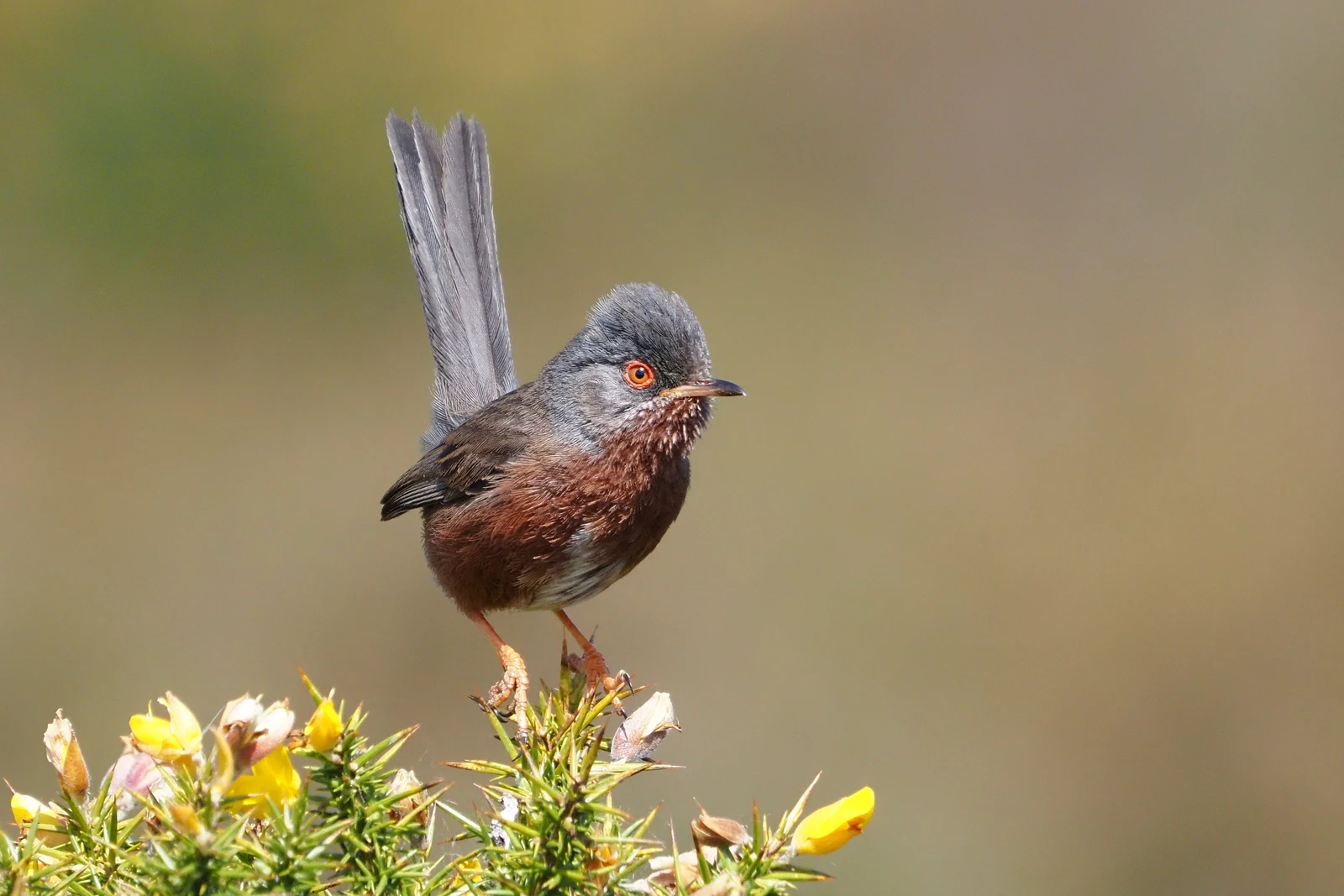
The long tail and compact, dark-looking body are useful first impressions. BTO describes grey-brown upperparts, a russet breast and a red eye-ring, while the RSPB notes that the bird may appear briefly as a small shape moving between bushes. Wait for a better angle before deciding that a dark glimpse was enough. Binoculars are the practical first tool because a bird can disappear into cover before a scope or camera is ready.
Learn its song and calls before the visit, then listen with the device silent. Keep your attention on naturally moving birds rather than the most prominent perch in a photograph. If the view is incomplete, write down tail length, colour, movement and the sound you heard. Compare those notes with the identification account afterwards. You can enjoy the encounter without forcing an immediate conclusion, particularly when strong backlighting has removed the colours that seemed obvious in the field-guide illustration.
How should you watch from a heathland path?
Walk a short suitable section slowly, then pause where you can see across the vegetation without blocking the path. Our choice is to let birds enter the view naturally rather than constantly moving towards each sound. Change your position within the public route if glare obscures the scrub, keeping a respectful distance throughout. Allow walkers to pass before resuming the watch. A comfortable shared path makes quiet observation easier for everyone and prevents tripods or groups from spreading into fragile vegetation.
Leave gaps between bushes untouched. What looks like an inviting shortcut or a bare patch may lead through sensitive habitat, and a low bird can vanish without leaving a clear clue to what it was doing. Never enter cover to resolve an identification or follow repeated movements into it. A prolonged alarm or a bird changing its behaviour in response to the group is a reason to move away. Accept the view available from the route and make patience part of the experience.
Arne or Aylesbeare for a first visit?
Choose Arne when a mix of habitats will keep your party interested. Its operator describes a mosaic of open heath, woodland and Poole Harbour wetland, with Dartford Warbler among the heathland birds. That allows you to devote a manageable session to the scrub and spend the rest of the day elsewhere on authorised trails. Use the Arne guide to choose the walk and facilities that fit your needs; the species page is the place to decide the style of day.
Choose Aylesbeare when the heathland landscape itself is central to the plan. The operator includes it among recommended Dartford Warbler destinations, but a listed species never substitutes for an assessment of the walk. Check the guide’s route choices, surfaces and shelter before travelling, especially with anyone who needs a short outing. Our preference would be one unrushed route in a suitable forecast, followed by a return another month, rather than covering several distant heaths in search of an immediate photograph.
Why does heathland management matter?
Dartford Warblers depend on the kind of lowland heath habitat described in the primary species accounts. BTO connects historic difficulties with habitat loss and fragmentation as well as severe winters. The RSPB explains that Arne uses management, including grazing, to maintain open heath. A reserve can therefore contain cut areas, grazing animals and patches of scrub at different stages. Appreciate that mosaic from the public route rather than judging habitat quality by whether every part looks equally wild or picturesque.
Follow instructions around livestock and keep clear of working machinery. Heathland fire rules are particularly important: Arne explicitly prohibits fires, barbecues and other ignition risks under its published warning. Prepare food and refreshments appropriately before the walk, and leave smoking materials behind where prohibited. Such conduct protects much more than the bird you came to see. Looking after the habitat is a practical contribution every visitor can make without knowing the position of a single territory.
What should you bring and record?
Carry binoculars, clothing for an exposed pause and footwear suitable for the actual trail. A light notebook helps you separate what you saw from what you hoped to see. A large lens is optional; make sure carrying it does not turn a gentle walk into an uncomfortable expedition or tempt you off the path for a cleaner view. With companions new to birding, agree a modest listening session and keep the rest of the day flexible, including time simply to enjoy the heath.
Record date, broad conditions, identification features and confidence, using the appropriate private reporting route for sensitive information. Keep exact nesting positions out of public posts and avoid drawing a crowd towards repeated breeding activity. At the end, note what made the visit enjoyable beyond the target: a call understood, a better comparison with another bird or a route you would willingly repeat. That is a useful basis for the next trip, whether or not this particular Dartford Warbler stepped into the sunlight.
Where to see dartford warblers by month
The months below come from each reserve’s local birding guide. They describe typical presence or a preferred watching season; national occurrence can be broader. Reports show past observations and cannot promise an encounter. Sensitive birds have no published watching position.
| Species | Reserve guide | Typical or preferred months |
|---|---|---|
| Dartford Warbler | RSPB Arne | January, February, March, April, May, June, July, August, September, October, November, December |
| Dartford Warbler | RSPB Aylesbeare Common | January, February, March, April, May, June, July, August, September, October, November, December |
Reserve guides for dartford warblers
- RSPB Arne · England
- RSPB Aylesbeare Common · England
Sources and review
Reviewed 2026-10-19.