
Trips · Practical UK birdwatching
Northumberland coast birdwatching trip
Choose the seabird version in late spring or early summer, or the mainland wader version in autumn and winter. Our choice is a three-day coast break with the Farne sailing flexible and Lindisfarne planned around safe access.
Seabirds or winter waders: choose your season first
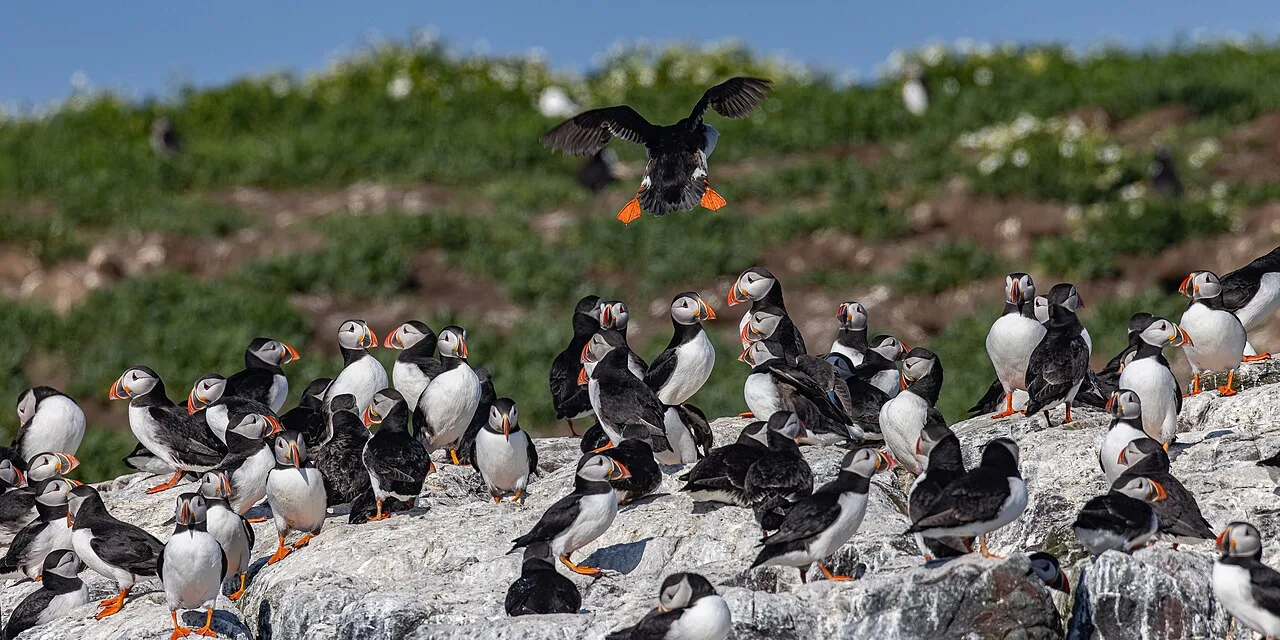
The Northumberland coast gives two different trips. For active seabird colonies, choose the main spring and early-summer period and build around a suitable Farne landing or cruise. For winter waterbirds and wide shore views, make the mainland and Lindisfarne area the centre of the holiday. A boat offered in a later month can be an excellent excursion while showing a very different wildlife scene from a breeding-season photograph.
May and June are our preferred starting point for the seabird version, with the exact product and conditions still decisive. Autumn and winter suit a slower mainland visit watching feeding and resting flocks. Beginners can enjoy either version, although a moving boat creates a different challenge from a steady shore telescope. Decide which experience matters most before choosing the room; otherwise it is easy to book a general coast holiday and discover that its dates do not fit your main wildlife interest.
Day 1: mainland arrival and a Lindisfarne plan
Begin with Lindisfarne National Nature Reserve, selecting an official mainland or island approach from the guide. Holy Island access requires current safe-crossing information and a plan that fits the full visit, including the return. Work out the usable interval before setting off, and leave margin rather than aiming for the final safe minute. If that interval is awkward, choose a mainland viewpoint and keep the island for a more suitable day.
Watch the relationship between feeding ground and water before moving closer to a flock. A telescope can make a distant view far more useful without reducing the birds' resting space. Keep to public routes and follow seasonal signs. This first day is a good time to practise identifying a few common coastal birds, compare bill lengths and record their feeding movements. Finish early enough to prepare clothing and food for the next day's boat, if you have booked one.
Day 2: the right Farne Islands boat experience
Give the Farne Islands a separate day. A landing and a cruise are different choices: decide whether time ashore is central to your visit, then book the advertised product through one of the operators named by the National Trust. The boat fare and National Trust landing arrangements need separate attention. Use the reserve guide for current details, and carry the confirmation so that there is no confusion about the island, departure or inclusion you purchased.
Arrive at Seahouses with room for parking, walking to the harbour and the check-in instructions. The skipper and island staff decide what the sea and landing conditions permit. Pack warm layers and secure loose items before boarding; even a bright coast day can feel cold afloat. Once ashore, follow the authorised route and let wildlife come into view naturally. Keep to biosecurity instructions, seal your bags and avoid leaving them unattended around the harbour before departure.
Day 3: another shore watch and room for a delayed sailing
Reserve the third day for the part of the holiday that conditions have favoured. If the boat was cancelled and an alternative suitable departure is available, you have space to consider it. If the sailing went ahead, return to Lindisfarne National Nature Reserve or give the local coast a longer public-viewpoint watch. Repeated observation helps you notice changing flock behaviour, a different light angle and the influence of the tide.
The mainland road section from Seahouses harbour to the mapped Lindisfarne mainland location measured 28 minutes through OSRM on 18 October 2026. This estimate covers the mainland road leg; boat travel, parking and check-in are additional. A visit across the Holy Island causeway also needs the current safe-crossing information and its own return margin. Use the specific entrance from the Lindisfarne guide to complete the day’s route.
The winter version of this Northumberland itinerary
For an autumn or winter trip, replace the colony expectation with close attention to shorebirds and the changing coastal landscape. Give one day to a Lindisfarne visit that fits safe access, one to a mainland tide watch and one to whichever public route offers the best shelter. Think about feeding behaviour, flock movement and the difference between a low-water spread and a higher-water concentration.
A coastal winter day needs careful comfort planning. Carry a warm drink, spare gloves and a layer that works when you stop walking. Choose an observation session that ends before everyone becomes cold and impatient. A clear, short watch can teach more than a long exposed stay in which binoculars barely come out of the bag. Keep all approaches to birds broad and unhurried; repeated flights from a resting flock are a sign to back away and choose a more distant view.
Can you do the Northumberland coast without a car?
A car-free break needs a narrower route based on current regional rail and bus connections. Choose accommodation with a confirmed practical link to the coast and allow each major reserve or boat outing its own day. Follow the transport sections in the linked guides, then test the actual outbound and return journeys on the operators' date-specific information. The final connection to a harbour or causeway is the part most likely to determine whether a plan is comfortable.
Do not presume that a normal mainland bus timetable fits a particular Holy Island safe-crossing interval. Likewise, a sailing's return time should leave room before a rail connection. A pre-booked local taxi may bridge one awkward leg, provided both the collection place and return are agreed. If that adds too much complexity, choose either a Seahouses-based boat break or a mainland shore trip. Two good local days can be more enjoyable than a larger itinerary held together by hurried transfers.
Where to stay on the Northumberland coast
Seahouses is our first choice when the Farne boat is the main reason for coming. Being close to the departure removes one layer of travel on a weather-dependent morning, and makes it easier to respond to the operator's update. Check parking or the walking approach from the particular property, along with breakfast arrangements if check-in is early. A sea-view room does not automatically mean a convenient harbour departure.
Bamburgh is another coastal option, while Berwick-upon-Tweed suits visitors who favour rail arrival and the northern part of the trip. Compare how each base works with your exact Lindisfarne approach and boat date before choosing. The stay searches below help you review availability, but each property's cancellation, access and meal arrangements require their own reading. Keep one base for the short break so that a changed sailing day does not force a change of accommodation as well.
Booking, biosecurity and responsible watching
Book the boat product that matches the intended experience, then keep the mainland fallback available. Check the reserve guide for current landing rules and any extra event booking, rather than relying on an old island itinerary. Pack food and clothing for the duration of the actual excursion. Clean footwear and properly closed luggage help protect islands from accidental introductions; follow the operator's specific checks before going aboard.
On land, share the viewing route and allow other people time at a useful gap. Keep away from nesting edges and leave resting flocks enough room to remain settled. Add other reserves only as separate days with their own journeys. A modest itinerary leaves space for what makes this coast memorable: time to watch the birds and understand their place in the landscape.
Other reserves to compare for a longer birding holiday
If you have more days, compare RSPB Saltholme as a separate north-east wetland visit and RSPB Geltsdale for a different inland landscape. Choose either for its own public routes and seasonal appeal, then allow the actual transfer. They belong to an extended holiday and should not compete with a reserved boat morning.
For another seabird holiday, read St Abbs Head National Nature Reserve, Bass Rock and Scottish Seabird Centre, Isle of May National Nature Reserve and RSPB Bempton Cliffs. These are destination comparisons across a wider region, each with different access and, in some cases, boat dependencies. Decide which experience you prefer before expanding the journey: a cliff-top walk, a cruise and an island landing create very different days.
Reserve guides for this visit
Sources and review
- Confirmed: Farne Islands operator visitor information
- Confirmed: Lindisfarne National Nature Reserve operator visitor information
- Confirmed: RSPB Saltholme official visitor information
- Confirmed: RSPB Geltsdale official visitor information
- Confirmed: St Abbs Head National Nature Reserve official visitor information
- Confirmed: Bass Rock and Scottish Seabird Centre official visitor information
- Confirmed: Isle of May National Nature Reserve official visitor information
- Confirmed: RSPB Bempton Cliffs official visitor information
- Confirmed: Farne Islands boat booking arrangements
- Confirmed: Bass Rock and Scottish Seabird Centre boat booking arrangements
- Confirmed: Isle of May National Nature Reserve boat booking arrangements
- Confirmed: OSRM mainland road estimate measured 18 October 2026 — Farne departure: Seahouses harbour to Lindisfarne NNR mainland reference