
Responsible wildlife guide
Where to see Kingfishers in the UK
For Kingfishers, choose a public hide or waterside path overlooking quiet water, then pause long enough to notice a small bird before it flies. They occur in the UK throughout the year, with autumn offering particularly useful opportunities. Our choice is a short, patient watch close to home rather than a long chase after yesterday’s photograph.
When is the best time to see a Kingfisher?
BTO describes Kingfishers as present throughout the year, with reports more likely after the breeding season in autumn. That makes late summer and autumn sensible times to develop a regular watching habit, while retaining the possibility of a rewarding winter or spring visit. Choose a reserve whose guide names Kingfisher for your month, then look at the outlook and recent conditions. A national calendar can help you choose a season; it cannot tell you which particular branch will be occupied.
Our preference for a first attempt is an ordinary day when you can give one waterside stop proper attention. You do not need to wait for a holiday or a rare-bird alert. Allow a second attempt on another day rather than expecting one short session to settle the matter. If a bird fails to appear, use the time to learn the shape of the pool, the useful viewing angles and the route back. Those observations make the next visit easier.
Where to look for Kingfishers in the UK
Slow-flowing rivers, canals and lakes can all offer Kingfisher watching. The Canal & River Trust describes the importance of waterside cover and branches over the water, while BTO identifies rivers as the most frequently occupied breeding-season habitat. For a visitor, the useful question is which of those habitats can be observed comfortably from an established public place. A reserve hide facing a channel may suit you better than a narrow, busy towpath, even when both have suitable water.
Begin with the linked guides and select a manageable journey. Compare access to the named watching spot, the amount of walking you want and whether you can sit down. If a canal is your local option, choose a section with a clear public route and room to stand without blocking cyclists or walkers. A quiet pause at a bridge can fit into an everyday walk; leaning out over a waterway or stepping onto a fragile bank adds risk without making the bird more likely to cooperate.
How to spot a Kingfisher before it flies
Look across the water at the available perches rather than staring only into the middle of the pool. Scan branches and projecting stems in small sections, then check the water below them. The Canal & River Trust describes a bird that watches for prey from a perch before diving. That behaviour gives a patient observer something specific to look for: a compact shape above the surface, briefly moving its head, against a complicated background.
Our technique is to identify several visible perches, scan each with binoculars and return to the first before moving position. Keep the instrument down between scans so you retain awareness of movement outside the narrow view. If another visitor spots a bird, ask for a fixed landmark and the direction from it. A precise reference to a visible branch is kinder to everyone than repeatedly saying that it is right there. Take turns where a hide opening has limited space.
Recognise the Kingfisher’s shape, colours and call
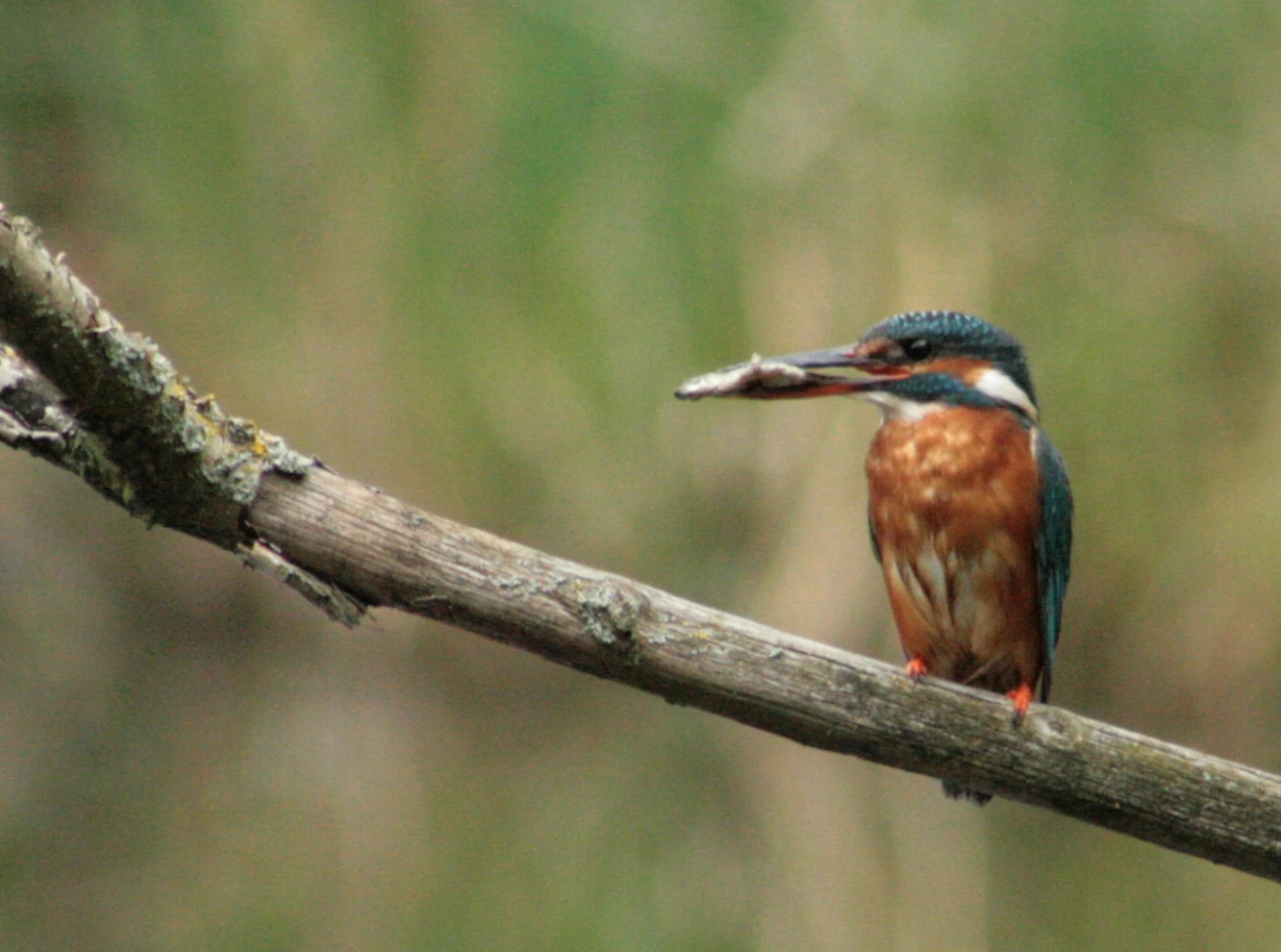
The familiar combination is blue upperparts and orange below, with a strong pointed bill and a compact body. Seen from behind in flight, the bright back can be the most memorable feature; viewed in shade, a perched bird may look much less conspicuous. Compare the whole outline before searching for tiny details. A blue object beside water is a reason to look carefully, rather than an identification in itself.
Listen as well as looking. The Canal & River Trust describes a high-pitched whistle, sometimes a single note and sometimes two. Hear a recording before your visit, at home with headphones, then put the phone away beside the water. If you hear a likely call, watch along the channel without running after it. A fleeting view can still be valuable: note direction, approximate height above the water and what you saw of the bird’s shape. You can build a fuller picture on another encounter.
Choose a useful Kingfisher hide or viewpoint
For beginners, our choice is a hide where the water and natural perches can be watched from a relaxed seated position. Read the reserve guide’s description of its named watching places and decide which one offers that kind of view. A long list of possible hides is less helpful than knowing which approach you can manage and what habitat lies in front. Check opening arrangements before deciding to arrive at dawn.
Once inside, settle before opening equipment bags or adjusting a tripod. Avoid leaning across another person’s sightline when a bird appears. If several openings are free, choose one with a comfortable background and little glare rather than the one nearest the water. A bird using a channel can move beyond your field of view in seconds; keep your attention on where it might reappear, without predicting a fixed circuit or expecting it to return on schedule.
What to take for a patient Kingfisher watch
Bring binoculars you can hold steadily and adjust quickly. Practise focusing from a near branch to the far bank before an encounter becomes exciting. A telescope is optional where the water is broad, but can be awkward for following a fast bird along a narrow channel. If you are sharing one, set a low magnification first and give the next person enough time to find the view. Comfort matters because constant fidgeting makes patient watching harder.
A small notebook helps you remember more than the colour blue. Write a few words while the view is fresh: perched or flying, direction of travel, what the bird did and how long you actually watched. Photographers can decide exposure and support before a bird arrives, keeping the shutter quiet where possible. Put the camera down for part of the encounter. Seeing a complete fishing attempt through binoculars can be more memorable than returning with many frames of a bird you scarcely watched.
Kingfishers, water conditions and a realistic fallback
Typically, glare, rain on your lenses and poor visibility make a small waterside bird harder to follow. Our advice is to adjust the watching position within the authorised area, shorten the session if you are uncomfortable and return another time when necessary. After heavy rain or during a freeze, follow the reserve’s current access advice and treat bridges, banks and boardwalks carefully. Never step onto ice or leave a path to reach a clearer patch of water.
Plan another interest at the same site so the day has a natural continuation. You could practise duck identification, listen to waterside birds or simply make a short habitat walk before returning to the original outlook. That is usually more enjoyable than spending the entire visit counting the minutes without a Kingfisher. Decide in advance when you will leave, especially if the walk back uses an unlit route or facilities close separately from the reserve.
Watch feeding Kingfishers responsibly
Keep a respectful distance from any bank with repeated bird movements or possible nesting activity. Use public viewing arrangements and let the reserve manage any specially protected area. If a bird becomes hesitant because people are close, retreat quietly rather than waiting for it to become accustomed to a crowd. Avoid sharing precise nesting locations, including photographs whose background makes an unadvertised site easy to find.
Leave natural perches, vegetation and feeding opportunities as you find them. Do not add food, place a decorative branch or arrange a close encounter for a camera. A successful visit is one in which the bird can carry on with its own routine. For your next outing, return to the same safe viewpoint and compare what you notice; familiarity with a place is a particularly useful piece of Kingfisher equipment.
Where to see kingfishers by month
The months below come from each reserve’s local birding guide. They describe typical presence or a preferred watching season; national occurrence can be broader. Reports show past observations and cannot promise an encounter. Sensitive birds have no published watching position.
| Species | Reserve guide | Typical or preferred months |
|---|---|---|
| Kingfisher | RSPB Minsmere | January, February, March, April, May, June, July, August, September, October, November, December |
| Kingfisher | RSPB Leighton Moss | January, February, March, April, May, June, July, August, September, October, November, December |
| Kingfisher | WWT Arundel | January, February, March, April, May, June, July, August, September, October, November, December |
| Kingfisher | WWT Slimbridge | April, May, June, July |
| Kingfisher | WWT Martin Mere | January, February, March, April, May, June, July, August, September, October, November, December |
| Kingfisher | WWT Caerlaverock | January, February, March, April, May, June, July, August, September, October, November, December |
| Kingfisher | WWT Llanelli | January, February, March, April, May, June, July, August, September, October, November, December |
| Kingfisher | Montrose Basin | January, February, September, October, November, December |
| Kingfisher | WWT London Wetland Centre | August, September, October, November, December, January, February |
| Kingfisher | RSPB Lake Vyrnwy | January, February, March, April, May, June, July, August, September, October, November, December |
| Kingfisher | WWT Washington | January, February, March, April, May, June, July, August, September, October, November, December |
| Kingfisher | RSPB Otmoor | August, September, October, November, December, January, February, March |
| Kingfisher | RSPB Dee Estuary - Burton Mere Wetlands | January, February, March, April, May, June, July, August, September, October, November, December |
| Kingfisher | RSPB Arne | August, September, October, November, December, January, February |
| Kingfisher | Quoile Pondage Nature Reserve | January, February, March, April, May, June, July, August, September, October, November, December |
| Kingfisher | Teifi Marshes Nature Reserve | January, February, March, April, May, June, July, August, September, October, November, December |
| Kingfisher | Parc Slip Nature Reserve | January, February, November, December |
| Kingfisher | RSPB Ham Wall | January, February, March, April, May, June, July, August, September, October, November, December |
| Kingfisher | Holkham National Nature Reserve | January, February, March, September, October, November, December |
| Kingfisher | RSPB Dearne Valley – Old Moor | January, February, March, April, May, June, July, August, September, October, November, December |
| Kingfisher | RSPB Fairburn Ings | January, February, March, April, May, June, July, August, September, October, November, December |
| Kingfisher | RSPB St Aidan's | January, February, March, April, May, June, July, August, September, October, November, December |
| Kingfisher | RSPB Strumpshaw Fen | January, February, March, April, May, June, July, August, September, October, November, December |
| Kingfisher | NWT Hickling Broad and Marshes | January, February, March, April, May, June, July, August, September, October, November, December |
| Kingfisher | Lakenheath Fen | January, February, March, April, May, June, July, August, September, October, November, December |
| Kingfisher | RSPB Fen Drayton Lakes | January, February, March, April, May, June, July, August, September, October, November, December |
| Kingfisher | Far Ings National Nature Reserve | January, February, March, August, September, October, November, December |
| Kingfisher | Attenborough Nature Reserve | January, February, March, April, May, June, July, August, September, October, November, December |
| Kingfisher | Middleton Lakes | January, February, March, April, May, June, July, August, September, October, November, December |
| Kingfisher | RSPB Radipole Lake | January, February, March, April, May, June, July, August, September, October, November, December |
| Kingfisher | RSPB Lodmoor | January, February, March, April, May, June, July, August, September, October, November, December |
| Kingfisher | Carlton Marshes Nature Reserve | January, February, March, April, May, June, July, August, September, October, November, December |
| Kingfisher | Brownsea Island | March, April, May, June, July, August, September, October |
| Kingfisher | RSPB Greylake | September, October |
| Kingfisher | RSPB Hayle Estuary | January, February, March, August, September, October, November, December |
| Kingfisher | Titchfield Haven National Nature Reserve | January, February, March, April, May, June, July, August, September, October, November, December |
| Kingfisher | Lymington–Keyhaven Marshes Nature Reserve | February |
| Kingfisher | RSPB Fowlmere | January, February, March, April, May, June, July, August, September, October, November, December |
| Kingfisher | Wicken Fen | January, February, March, April, May, June, July, August, September, October, November, December |
| Kingfisher | Brandon Marsh Nature Reserve | January, February, March, April, May, June, July, August, September, October, November, December |
| Kingfisher | Lackford Lakes | January, February, March, April, May, June, July, August, September, October, November, December |
| Kingfisher | College Lake | January, February, March, April, May, June, July, August, September, October, November, December |
| Kingfisher | RSPB Langford Lowfields | October |
| Kingfisher | RSPB Baron's Haugh | January, February, March, April, May, June, July, August, September, October, November, December |
| Kingfisher | Walthamstow Wetlands | January, February, March, April, May, June, July, August, September, October, November, December |
| Kingfisher | Woodberry Wetlands | November, June, July |
| Kingfisher | Chew Valley Lake | January, February, March, July, August, September, October, November, December |
| Kingfisher | Paxton Pits Nature Reserve | January, February, March, April, May, June, July, August, September, October, November, December |
| Kingfisher | Upton Warren | January, February, March, October, November, December |
| Kingfisher | Whiteford National Nature Reserve | January, February, March, April, May, June, July, August, September, October, November, December |
| Kingfisher | Isles of Scilly | August, September, October, November, December, January, February, March |
Reserve guides for kingfishers
- RSPB Minsmere · England
- RSPB Leighton Moss · England
- WWT Arundel · England
- WWT Slimbridge · England
- WWT Martin Mere · England
- WWT Caerlaverock · Scotland
- WWT Llanelli · Wales
- Montrose Basin · Scotland
- WWT London Wetland Centre · England
- RSPB Lake Vyrnwy · Wales
- WWT Washington · England
- RSPB Otmoor · England
- RSPB Dee Estuary - Burton Mere Wetlands · England
- RSPB Arne · England
- Quoile Pondage Nature Reserve · Northern Ireland
- Teifi Marshes Nature Reserve · Wales
- Parc Slip Nature Reserve · Wales
- RSPB Ham Wall · England
- Holkham National Nature Reserve · England
- RSPB Dearne Valley – Old Moor · England
- RSPB Fairburn Ings · England
- RSPB St Aidan's · England
- RSPB Strumpshaw Fen · England
- NWT Hickling Broad and Marshes · England
- Lakenheath Fen · England
- RSPB Fen Drayton Lakes · England
- Far Ings National Nature Reserve · England
- Attenborough Nature Reserve · England
- Middleton Lakes · England
- RSPB Radipole Lake · England
- RSPB Lodmoor · England
- Carlton Marshes Nature Reserve · England
- Brownsea Island · England
- RSPB Greylake · England
- RSPB Hayle Estuary · England
- Titchfield Haven National Nature Reserve · England
- Lymington–Keyhaven Marshes Nature Reserve · England
- RSPB Fowlmere · England
- Wicken Fen · England
- Brandon Marsh Nature Reserve · England
- Lackford Lakes · England
- College Lake · England
- RSPB Langford Lowfields · England
- RSPB Baron's Haugh · Scotland
- Walthamstow Wetlands · England
- Woodberry Wetlands · England
- Chew Valley Lake · England
- Paxton Pits Nature Reserve · England
- Upton Warren · England
- Whiteford National Nature Reserve · Wales
- Isles of Scilly · England
Sources and review
Reviewed 2026-10-19.