
Collections · Practical UK birdwatching
Winter birdwatching under big skies
Choose winter wetlands for geese, waders and wildfowl, with tide-led decisions, regional options and realistic short-day planning.
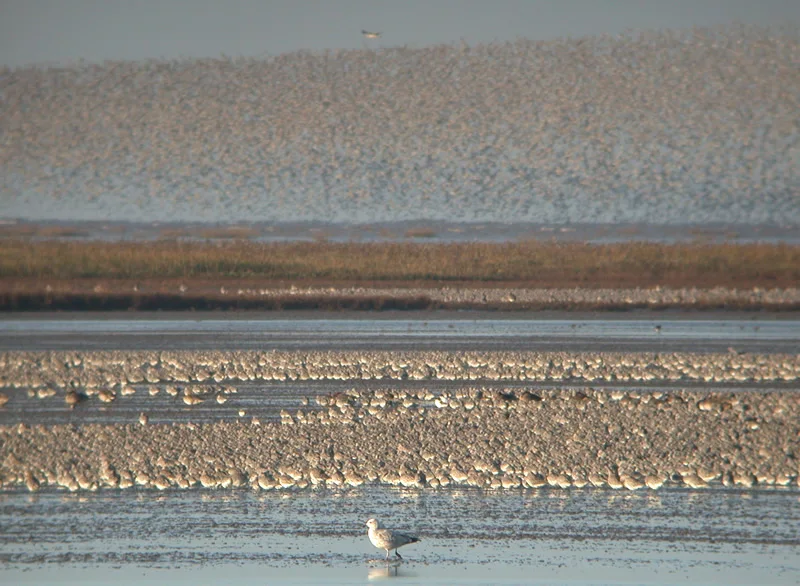
Where to go winter birdwatching in the UK
Choose a winter wetland by the daylight, shelter and journey you can manage, then add the spectacle that interests you. Our choice for tide-led wader watching is RSPB Snettisham; for an approachable mix of birds and visitor facilities, compare WWT Welney with WWT Slimbridge. A successful winter day needs a warm, manageable plan as much as an exciting destination.
Big landscapes reward a slower start than a crowded itinerary suggests. Give yourself time to understand where water, exposed mud and grazing fields meet. A large flock can be impressive through binoculars even before you identify its separate species. Decide which view deserves a long pause, find a sheltered position and let the birds move through the scene. You will usually learn more than by continually changing location.
Tides, daylight and weather: what to plan first
At a tidal reserve, the strongest viewing window may fall outside the most convenient part of your journey. Look up the local tide information before booking travel and use the reserve advice to understand which conditions matter there. Snettisham is a clear example: rising water changes where birds can stand and feed. A high-water time copied from another port is a poor substitute for the guidance relevant to your destination.
At inland wetlands, sunrise, sunset, visibility and wind may matter more than the tide. Keep enough daylight for the route out and use the weather forecast to choose exposed or sheltered viewing. Take an extra layer for sitting still, protect your hands and carry a warm drink. In poor visibility, a modest pool with birds near the hide can be a better choice than a distant estuary panorama.
England: geese, washes and the Wash
RSPB Snettisham, Holkham National Nature Reserve, RSPB Titchwell Marsh, RSPB Frampton Marsh and Freiston Shore give several ways to plan around the broad eastern coast. Choose between a particular tidal watch and a reserve where different habitats let you adjust the day. WWT Welney, Ouse Washes and RSPB Nene Washes shift the setting inland. Keep any organised feeding, evening event or special access arrangement tied to the operator’s current information.
For a wider eastern shortlist compare Elmley National Nature Reserve, RSPB Wallasea Island, RSPB Old Hall Marshes and RSPB Cliffe Pools. RSPB North Warren, Carlton Marshes Nature Reserve and Gibraltar Point National Nature Reserve add alternative coastal settings. Our advice is to select a small regional cluster, then revisit its best viewpoint under different light. Driving between distant spectacles consumes the very hours in which winter watching is most enjoyable.
North-west England and the Solway
RSPB Marshside, RSPB Hest Bank at Morecambe Bay and South Walney Nature Reserve and Observatory help you compare several north-west coastal experiences. RSPB Dee Estuary – Parkgate is another tide-sensitive option where official guidance should shape the visit. Never follow birds onto tidal ground in search of a closer view. A secure public viewpoint and a telescope are a much better combination than uncertainty about the rising water.
Further north, investigate RSPB Campfield Marsh, RSPB Mersehead and WWT Caerlaverock for a Solway-based break. Choose your accommodation and main reserve on the same side of the wider travel plan, then add another day only when the journey is worthwhile. The appeal here is often the relationship between feeding birds and an expansive landscape. Leave room to watch a flock change formation or settle, rather than treating each stop as a photograph.
Scotland: fit the birds to the journey
RSPB Loch of Strathbeg, RSPB Culbin Sands and RSPB Loch of Spiggie belong to different Scottish holiday plans. Avoid combining them simply because all appear in a winter collection. Choose the area first, then read about the local viewing and access. Weather can turn an exposed coast into a demanding place to stand; a shorter watch near shelter may be the more satisfying option.
For Islay, compare RSPB Loch Gruinart with RSPB The Oa and let the ferry plan lead the itinerary. Winter island birding needs spare time around crossings and flexibility about the day’s main outing. Mainland alternatives are valuable when the forecast is unsettled. Within each reserve, follow marked access and give feeding birds ample space. An island holiday becomes richer when the wider landscape remains interesting beyond one hoped-for species.
Southern England, Wales and Northern Ireland
In southern England compare RSPB Exminster and Powderham Marshes, Pagham Harbour Local Nature Reserve, RSPB Medmerry, Lymington–Keyhaven Marshes Nature Reserve, RSPB Greylake and RSPB Hayle Estuary. These choices allow a winter plan closer to an existing base, reducing travel during short days. Use the individual guide to distinguish freshwater watching from a tidal visit, and choose the route whose surface and exposure suit the conditions.
For Wales, RSPB Conwy, RSPB Newport Wetlands and RSPB Ynys-hir are useful additional wetland starting points. In Northern Ireland compare WWT Castle Espie and RSPB Belfast Window on Wildlife when planning a Belfast-area break. Look at the final approach and opening arrangements before assuming an urban location means an effortless arrival. Keep one compact option in reserve for a day when a broader exposed walk loses its appeal.
How to watch winter flocks without disturbing them
Approach a viewing place quietly and stop before the birds show concern. If feeding pauses and heads rise in response to your movement, create more distance. Stay on authorised paths and use the hide or screen intended for the view. Birds gathering on limited dry ground need space to rest; repeatedly lifting the flock for photographs turns a good watch into a harmful one.
For identification, divide a large scene into manageable sections. Compare size and posture before searching for fine markings, then return to the same section after a few minutes. Note the direction of movement and how the flock uses the habitat. A notebook entry that explains why birds moved is often more useful than a hurried list of uncertain names. Keep sensitive roost details out of public directions.
Choose a winter trip you can enjoy slowly
Our preferred winter weekend has one main wetland each day, a warm break and a short optional stop. Plan the first watch around the important local timing and make the second day easier if the first ends at dusk. A car-free Morecambe Bay visit can work well when transport and final walking routes fit; an Islay trip needs a different level of weather allowance. Match ambition to the available daylight.
Before leaving, open the appropriate month guide, the reserve page and the relevant trip. Save the key access information and return journey, then put the phone away while watching. Winter offers a particularly good reason to become familiar with ordinary ducks, gulls and geese: repeated comparisons gradually make a distant flock less bewildering. End with a comfortable journey home, leaving the birds to feed and settle undisturbed.
Reserve guides for this visit
Sources and review
- Confirmed: RSPB Snettisham — operator visitor guidance
- Confirmed: RSPB Loch of Strathbeg — operator visitor guidance
- Confirmed: WWT Welney — operator visitor guidance
- Confirmed: Holkham National Nature Reserve — operator visitor guidance
- Confirmed: Lindisfarne National Nature Reserve — operator visitor guidance
- Confirmed: RSPB Saltholme — operator visitor guidance
- Confirmed: Ouse Washes — operator visitor guidance
- Confirmed: Elmley National Nature Reserve — operator visitor guidance
- Confirmed: RSPB Wallasea Island — operator visitor guidance
- Confirmed: RSPB Marshside — operator visitor guidance
- Confirmed: Freiston Shore — operator visitor guidance
- Confirmed: RSPB Exminster and Powderham Marshes — operator visitor guidance
- Confirmed: Pagham Harbour Local Nature Reserve — operator visitor guidance
- Confirmed: Carlton Marshes Nature Reserve — operator visitor guidance
- Confirmed: Gibraltar Point National Nature Reserve — operator visitor guidance
- Confirmed: RSPB Dee Estuary – Parkgate — operator visitor guidance
- Confirmed: RSPB Hest Bank at Morecambe Bay — operator visitor guidance
- Confirmed: South Walney Nature Reserve and Observatory — operator visitor guidance
- Confirmed: RSPB Buckenham Marshes — operator visitor guidance
- Confirmed: RSPB Berney Marshes and Breydon Water — operator visitor guidance
- Confirmed: RSPB Nene Washes — operator visitor guidance
- Confirmed: RSPB Old Hall Marshes — operator visitor guidance
- Confirmed: RSPB Cliffe Pools — operator visitor guidance
- Confirmed: RSPB Greylake — operator visitor guidance
- Confirmed: RSPB Hayle Estuary — operator visitor guidance
- Confirmed: RSPB Medmerry — operator visitor guidance
- Confirmed: Lymington–Keyhaven Marshes Nature Reserve — operator visitor guidance
- Confirmed: RSPB North Warren — operator visitor guidance
- Confirmed: RSPB Campfield Marsh — operator visitor guidance
- Confirmed: RSPB Culbin Sands — operator visitor guidance
- Confirmed: RSPB Loch of Spiggie — operator visitor guidance
- Confirmed: WWT Slimbridge — operator visitor guidance
- Confirmed: WWT Caerlaverock — operator visitor guidance
- Confirmed: RSPB Loch Gruinart — operator visitor guidance
- Confirmed: RSPB The Oa — operator visitor guidance
- Confirmed: RSPB Mersehead — operator visitor guidance
- Confirmed: WWT Castle Espie — operator visitor guidance
- Confirmed: RSPB Belfast Window on Wildlife — operator visitor guidance
- Confirmed: RSPB Frampton Marsh — operator visitor guidance
- Confirmed: RSPB Titchwell Marsh — operator visitor guidance
- Confirmed: RSPB Conwy — operator visitor guidance
- Confirmed: RSPB Newport Wetlands — operator visitor guidance
- Confirmed: RSPB Ynys-hir — operator visitor guidance