
UK birdwatching calendar
April birdwatching in the UK
April brings returning migrants, woodland song and busy seabird cliffs. Our choice is one early listening walk and one wetland or coastal day, with enough flexibility for cold weather and sensitive breeding birds.
What changes for UK birds in April
April is the month when migration becomes an everyday part of a reserve visit. Chiffchaffs and Blackcaps typically become more noticeable in suitable cover, hirundines begin working over water and later arrivals gradually change the woodland sound. The order varies with latitude, habitat and weather. Treat a first arrival as a local event rather than proof that every summer bird should already be present. A return visit to the same circuit can reveal more change than a completely new destination.
Song is one of April's best advantages. Leaves are still developing in many places, making some singers easier to locate before the canopy fills. Learn a bird's position by listening, then lift binoculars when you know which tree or patch of cover to search. Walking continuously makes this harder. Our recommendation is to choose several quiet stopping points and give each a few minutes, accepting that a song heard well is valuable even when the singer stays hidden.
April's headline spectacles: cliffs, song and passage
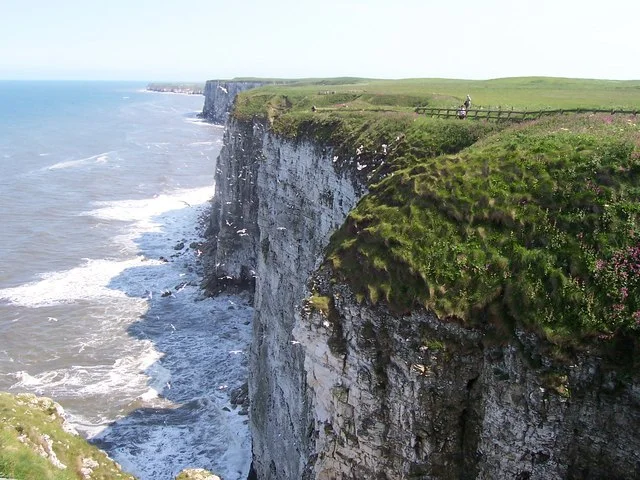
Seabird cliffs begin to feel like a different world from their winter selves. RSPB Bempton Cliffs is our choice for a mainland introduction: compare the way Gannets, auks and other seabirds occupy the wider scene before looking for an individual Puffin. The operator places the main Puffin opportunity within a limited breeding-season window. Keep the Puffin guide beside the reserve guide when choosing dates, and avoid treating April as a promise of a close encounter on every visit.
On wetlands, passage and breeding activity overlap. Look for hirundines feeding over pools, waders using shallow edges and reedbed birds returning to cover. RSPB Titchwell Marsh offers a useful mix, while RSPB Leighton Moss suits a more concentrated reedbed day. Decide whether your main interest is seeing a range of birds or learning to recognise a smaller set by voice. Both are good April aims, but trying to do everything can turn a quiet walk into constant checking of reports.
Where to listen for the April dawn chorus
Choose the habitat before setting an alarm. Woodland song and reedbed song have different characters, and sheltered edges can be productive without a remote start. RSPB Ynys-hir is an operator-supported spring woodland choice; RSPB Newport Wetlands offers the contrasting soundscape of reeds and open wetland. Some migrants arrive later than others, so an early-April visit should not be judged against a late-May recording. Listen to the birds actually present and build recognition from repeated phrases.
A first dawn outing works best on a route you already know. Establish legal access and the return beforehand, carry a light for the permitted approach and avoid shining it into cover. Keep voices low and allow the dawn to unfold without playback. If an extremely early start would make travel tiring or unsafe, choose an ordinary early morning instead. There is plenty to learn after sunrise, and a rested observer will notice more than an exhausted one chasing an ideal timetable.
April tide and weather planning
A bright spring forecast can conceal a cold coastal wind. Pack enough insulation for standing at a cliff viewpoint or lagoon, and protect optics from rain without letting a cover obstruct your view of the path. At the coast, remain behind barriers even when the most attractive angle seems to be one step further. On wetlands, use current operator notices to check for flooded routes or breeding-season diversions. A signed restriction is part of the visit, not an obstacle to work around.
Tide-led wader watching remains worthwhile, but birds using resting areas need space as breeding and passage progress. Select an official viewpoint and arrive with time to settle. If island travel forms part of the plan, book through the named operator and keep a mainland alternative. A boat booking does not guarantee conditions suitable for a landing. Do not book an inflexible onward journey immediately after a wildlife trip whose timing depends on sea conditions.
A suggested April birdwatching weekend
The North Norfolk weekend is a useful starting framework for April because it can combine wetland variety with a tide-aware coastal session. Give Titchwell a generous day and select the second outing according to conditions rather than automatically adding every nearby reserve. A sheltered listening walk can make a better contrast than another exposed coast. Use the itinerary for the overall shape, then consult each reserve guide for current access and practical decisions.
For a seabird-focused alternative, make Bempton the anchor of a Yorkshire coast visit and leave room for an ordinary mainland fallback when visibility is poor. Our recommendation is to concentrate on behaviour: compare birds in flight, on ledges and returning from sea. That remains absorbing even when the species list is short. An April weekend should leave time to watch one scene develop, rather than feel like a competition to reach the next headland before another observer does.
Responsible watching as breeding begins
Keep sensitive locations out of public directions. Singing, display and food-carrying can draw attention to places birds need to use repeatedly. Watch from the existing route, avoid lingering where alarm persists and share useful conservation information privately with the operator. Never play a song to provoke a territorial response for a photograph. At seabird sites, follow biosecurity instructions and give nesting areas the same respect even when a bird looks completely accustomed to people.
A useful exercise is to record an April sound map. Mark broad directions of songs from one stopping point and note whether the phrases overlap. Then identify only the sounds you can support confidently. Return later in spring and compare the texture of the chorus rather than the precise positions of individual birds. This creates a record of seasonal change without turning your notes into nest directions, and it gives beginners a practical way to enjoy a busy morning.
Where to go birdwatching in England in April
RSPB Bempton Cliffs
Our choice for an April mainland seabird day. Start with the broad colony scene and learn the distinctive flight of a Gannet before concentrating on smaller birds. Keep to the managed viewing places and let weather determine how long the cliff watch lasts. The reserve and Puffin guides explain seasonal expectations; use those rather than assuming that a particular species will be on the nearest ledge when you arrive.
RSPB Titchwell Marsh
Choose Titchwell for a wetland day that can reveal passage, resident birds and developing breeding behaviour in one outing. Compare pools and margins before moving towards the shore. The variety helps a mixed-experience group find a common pace, with beginners studying obvious birds while others work through distant groups. Our advice is to stay with a productive view instead of leaving simply because another habitat remains on the map.
RSPB Nagshead
Nagshead is worth considering for a woodland-focused April visit, especially towards the part of spring when returning songbirds become more likely. Listen first and avoid searching around holes or nest boxes. The attraction is the woodland sound and the chance of seeing birds naturally from the public route. Choose it for patient observation rather than a guaranteed encounter with a particular migrant mentioned in an earlier report.
Where to go birdwatching in Scotland in April
RSPB Wood of Cree
Wood of Cree suits an April woodland walk in which resident birds, changing vegetation and streamside scenery share the interest. The operator associates key summer migrants with May arrivals, so avoid arriving too early with a rigid target list. Our preference is to establish a familiar circuit now and return when the chorus changes. Read the guide's terrain advice carefully before choosing it for a party needing even surfaces.
RSPB Lochwinnoch
Lochwinnoch provides a freshwater contrast to the coast and a useful place to watch spring behaviour. Look at the sequence of interactions between birds, not only the most dramatic moment. A quieter spell is a chance to compare posture and feeding methods. The linked guide helps settle arrival and route questions, leaving the visit free to develop at the pace of the birds rather than an ambitious multi-stop schedule.
RSPB Fowlsheugh
Fowlsheugh offers a Scottish mainland cliff option for a spring seabird day. Choose suitable weather and remain on the permitted route, with particular care around cliff edges and uneven ground. Our recommendation is to work a broad view repeatedly and learn the colony's layers rather than pursue the closest bird. The guide carries the seasonal and access detail needed before adding it to a wider coastal trip.
Where to go birdwatching in Wales in April
RSPB Ynys-hir
Ynys-hir is our Welsh choice for combining spring woodland listening with wetland views. Different migrants arrive across the season, so enjoy the resident chorus and any returning birds without expecting the whole May soundscape in early April. Pause at sheltered points before looking for movement. The reserve guide is important for choosing a circuit that fits the ground conditions and the amount of walking your group wants.
RSPB South Stack
South Stack gives a dramatic mainland setting when the weather supports a comfortable coastal visit. Watch from the official public places and let distance remain part of the experience. Compare birds travelling over the sea with activity on the cliffs rather than narrowing the outing to one species. Check the guide for current access arrangements, and keep a less exposed alternative for a day when wind dominates the headland.
RSPB Newport Wetlands
Newport Wetlands provides April reedbed listening and a useful contrast to Welsh woodland or cliffs. Stop where the public route offers shelter from wind and try to separate individual phrases before assigning names. Our choice is an early unhurried circuit followed by a return to the most active view. Follow any breeding-season restrictions and remember that hearing a hidden bird is a successful observation in this habitat.
Where to go birdwatching in Northern Ireland in April
RSPB Rathlin Island
Rathlin is the Northern Irish seabird choice to plan carefully, with the operator describing its main season from late April into summer. The 2026 centre season has ended; confirm the future season's exact arrangements through the guide and operator before booking travel. Build in ferry flexibility and a mainland alternative. The attraction is the managed seabird view, so use official facilities and follow the island's biosecurity advice.
RSPB Portmore Lough
Portmore Lough offers April interest in the transition from winter waterbirds to breeding activity. The operator highlights spring Lapwings and Skylarks, making patient listening and broad views useful companions. Watch display from a respectful distance and avoid following birds into nesting habitat. Our recommendation is to use one authorised view thoroughly, allowing familiar species and their changing behaviour to shape the visit.
RSPB Belfast Window on Wildlife
Belfast Window on Wildlife is a useful compact April choice when a full coastal journey does not fit the day. Look for changing occupancy of the wetland and compare visits rather than assuming every new interaction means a nest. Keep disturbance low around the viewing areas. The detailed guide provides current practical arrangements, while this monthly suggestion favours a short watch with enough time to notice behaviour properly.
More reserves to consider in April
Plan your April birdwatching trip
Sources for birdwatching in April
- Confirmed: RSPB: April in nature
- Confirmed: RSPB Bempton Cliffs seasonal advice
- Confirmed: RSPB Rathlin Island
- Confirmed: RSPB Ynys-hir woodland birds
- Confirmed: RSPB Portmore Lough
- Confirmed: RSPB Titchwell Marsh operator information
- Confirmed: RSPB Nagshead operator information
- Confirmed: RSPB Wood of Cree operator information
- Confirmed: RSPB Lochwinnoch operator information
- Confirmed: RSPB Fowlsheugh operator information
- Confirmed: RSPB South Stack operator information
- Confirmed: RSPB Newport Wetlands operator information
- Confirmed: RSPB Rathlin Island operator information
- Confirmed: RSPB Belfast Window on Wildlife operator information
- Confirmed: RSPB Leighton Moss operator information