
Responsible wildlife guide
Where to hear Nightingales in the UK
Plan a Nightingale visit around listening, suitable public access and the spring singing period. You may enjoy a complete encounter without seeing the bird at all. Our choice is a quiet, unhurried walk at an operator-recommended site, with the route checked before arrival and no expectation that a particular bush must produce a song.
When is the best time to hear Nightingales?
BTO describes arrival back in the UK in April and departure for Africa in late summer. That sets the broad presence window, but the most useful question for a listening visit is narrower: is this the period when the operator expects song? Typically spring is the better starting point. Do not assume that a bird present in summer will sing as conspicuously as one establishing itself earlier in the season.
Choose a current operator recommendation, then make your travel and access decisions from the individual reserve guide. A calendar can suggest a worthwhile period without predicting an exact arrival day. If you cannot move your dates, build a broader woodland or scrub visit and let the Nightingale be one possibility. The enjoyment is more robust when the outing does not depend on hearing a particular phrase at a particular hour.
Do you need to go out at midnight?
No: the name should not make you assume that an overnight outing is essential. BTO explains that males sing at night before pairing and that dawn and dusk song can continue afterwards. That is useful background rather than a timetable for every individual. Choose an appropriate public listening opportunity and confirm whether the site actually permits access at the hour you have in mind.
Our choice for many first visits is an operator-led spring walk or an independent visit within clearly published access arrangements. It can be more practical than making a long journey to an unfamiliar gate in darkness. Consider your return transport, walking surface and comfort while standing still. A good morning or evening listening experience is more valuable than a dramatic night-time plan that leaves you worried about how to get home.
Where in the UK should you plan a Nightingale trip?
RSPB and BTO place the main breeding distribution in southern and eastern England, with a much more local pattern than the bird's cultural fame suggests. That matters when choosing a destination. A woodland near home may be an enjoyable place to learn bird song, but it should not be advertised as a Nightingale destination without actual local support. Use the target-matching reserve list below to compare documented options.
The reserve recommendation is the beginning of a practical choice, not a direction to enter its densest cover. Compare the available public route, the season described and the sort of day you want. A short accessible listening stop and a longer woodland walk can both work, provided the operator supports them. Keep prices, current gates and travel details in the destination guide rather than relying on a generic species page.
Woodland or scrub: choose the habitat, then stay on the route
A Nightingale landscape need not resemble a tall, open woodland with an obvious bird perched above it. BTO discusses the importance of scrub and scrubby woodland, as well as changes to those habitats. Understanding that helps you listen in the right broad setting, but it does not justify pushing between shrubs or leaving a path to inspect a possible singer. Cover is part of the bird's habitat, not an obstacle visitors need to remove.
Pick a public stretch where you can pause without preventing other people from passing. Listen from there for a while before deciding whether to continue. If several visitors are gathered, keep conversation and movement low and avoid extending the group into vegetation. A manageable public viewpoint can give everyone a useful experience without anyone locating the exact branch or turning a singing territory into a viewing enclosure.
How to recognise Nightingale song
Begin with recordings from a reputable identification source, listened to at home through headphones. Notice the variety and separation of phrases rather than trying to memorise one imitation. RSPB describes a mixture of rich, high and low notes delivered in quick succession. That variety is a reason to listen for a sustained sequence rather than naming the first striking sound in a dawn chorus.
At the site, put recordings away and pay attention to the real soundscape. Other birds may overlap, and a brief phrase might remain uncertain. Write down what you heard in your own words or make a quiet passive recording if doing so causes no disturbance and follows the site's rules. Check it afterwards. The honest identification can be possible Nightingale until the full pattern or a knowledgeable guide resolves it.
What should you expect to see?
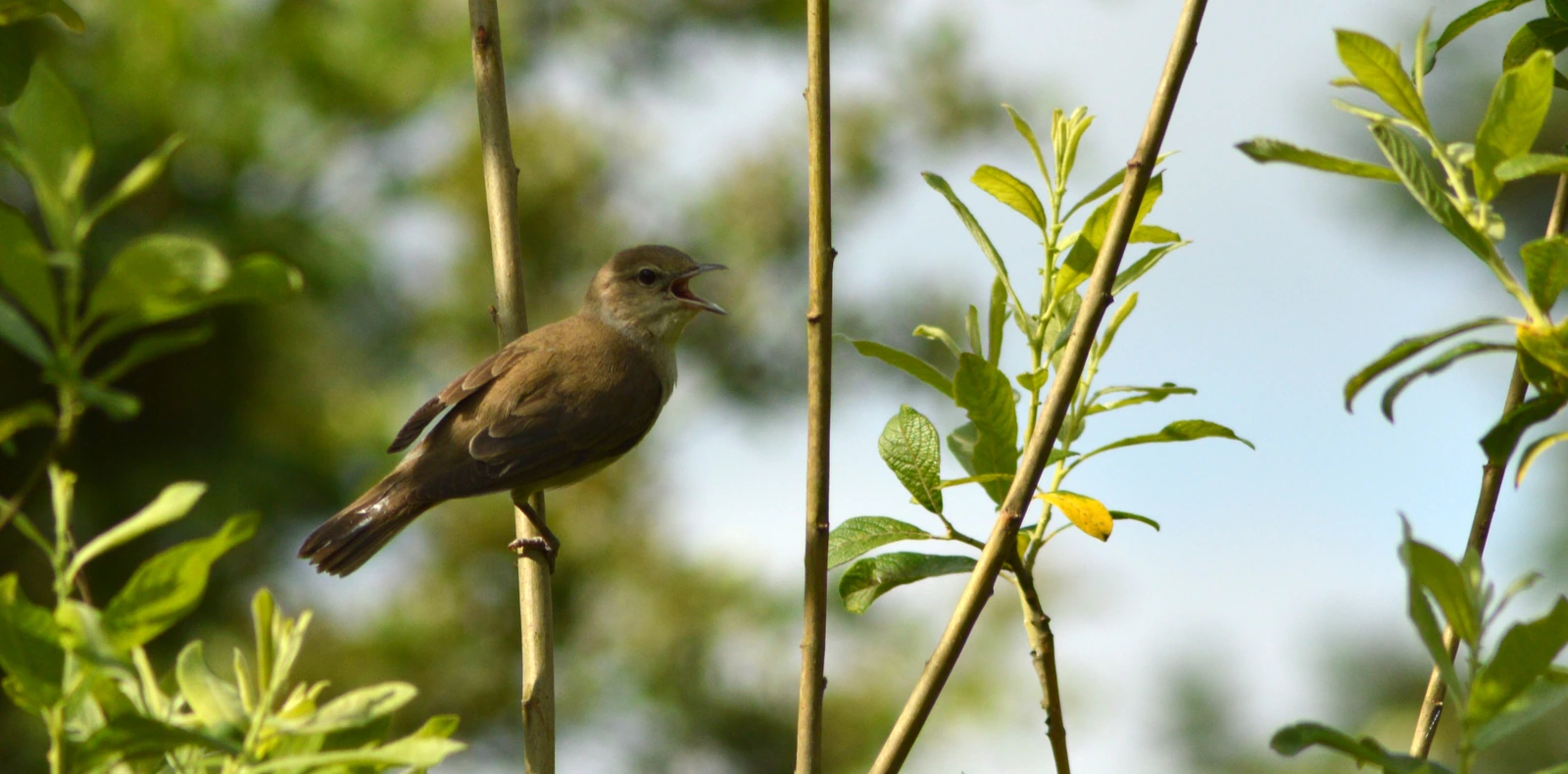
The RSPB describes a rather plain brown bird, slightly larger than a Robin, with a broad tail. An excellent song does not promise an obvious view. Keep that mismatch in mind before judging an encounter: listening to a concealed singer can be the main experience, while a clear visual appearance is an extra. Do not let photographs set an expectation that the bird will emerge on an exposed perch for you.
If it does appear from a public view, enjoy the proportions and movement without following it through the scrub. Binoculars may help for a brief look, while a telescope can be awkward when a bird is close to dense vegetation and continually hidden. Leave the camera down if looking through it makes you lose the actual encounter. There is no need to turn a memorable song into a prolonged photographic search.
Playback is not part of a Nightingale visit
Do not play song, whistle an imitation or ask another visitor to trigger a response. The BTO Birders' Code explains why breeding-season playback can consume a bird's energy and distract it from ordinary activity. A response obtained that way is not a better experience than a quiet wait. Keep devices silent near singing habitat and explain the reason politely if a companion expects an identification recording to be used outdoors.
Do not trim vegetation, enter cover or press closer when a bird falls silent. Silence can be the moment to continue your permitted walk or end the visit, rather than increase pressure. Report an unusual concern through the operator and keep sensitive details out of public posts. Sharing the reserve and general season is enough to describe the outing without exposing a particular breeding patch.
Build a visit that is worthwhile without a sighting
Set a modest aim: walk a suitable public route, practise separating the birds you hear and give a plausible listening area enough quiet time. Bring the layers and water needed to make a pause comfortable. Check the route back before settling down, and leave while you can complete it confidently. These decisions make patience possible without turning the bird's absence into a problem you must somehow solve.
Afterwards, keep your notes clear about what was heard, seen or uncertain. Record the date and broad public-route context, and use the appropriate local reporting channel where your observation could help. Return if you enjoyed the landscape, not because a silent first visit must be corrected. Over time you can understand the difference between a good listening plan and a guaranteed performance, while leaving the habitat peaceful enough for both birds and people.
Where to see nightingales by month
The months below come from each reserve’s local birding guide. They describe typical presence or a preferred watching season; national occurrence can be broader. Reports show past observations and cannot promise an encounter. Sensitive birds have no published watching position.
| Species | Reserve guide | Typical or preferred months |
|---|---|---|
| Nightingale | RSPB Pulborough Brooks | April, May, June |
| Nightingale | RSPB Northward Hill | April, May, June |
| Nightingale | RSPB North Warren | April, May, June |
| Nightingale | Lackford Lakes | April, May, June, July |
| Nightingale | Abberton Reservoir | April, May, June |
| Nightingale | Paxton Pits Nature Reserve | April, May, June |
Reserve guides for nightingales
- RSPB Pulborough Brooks · England
- RSPB Northward Hill · England
- RSPB North Warren · England
- Lackford Lakes · England
- Abberton Reservoir · England
- Paxton Pits Nature Reserve · England
Sources and review
Reviewed 2026-10-19.