
Trips · Practical UK birdwatching
Speyside and Cairngorms birdwatching trip
Give the forests and wetlands four unhurried days, with Loch Garten and Insh Marshes at the centre. Add Loch Ruthven only when officially open, and use Culbin for an optional coastal contrast.
Who this Speyside birding holiday suits
Our choice is a four-day visit for people who enjoy listening in woodland, scanning open wetlands and learning a place through repeat walks. This is a rewarding area for patient observation, but a poor fit for a checklist built around chasing elusive breeding birds. Choose official routes and staffed advice, give common woodland birds the same attention as rarer species and leave a generous amount of time between the named destinations.
Spring into early summer is our preferred starting period for song and varied activity. Autumn and winter can make a fine alternative when you adapt the plan to shorter days, weather and seasonal visitor arrangements. Pick the month first, then read the linked guides for the experience available at that time. A visitor centre's seasonal operation and a reserve's wider walking access are different questions; establish both before arranging a first-light arrival or assuming indoor facilities will be available.
Day 1: Loch Garten and an attentive woodland walk
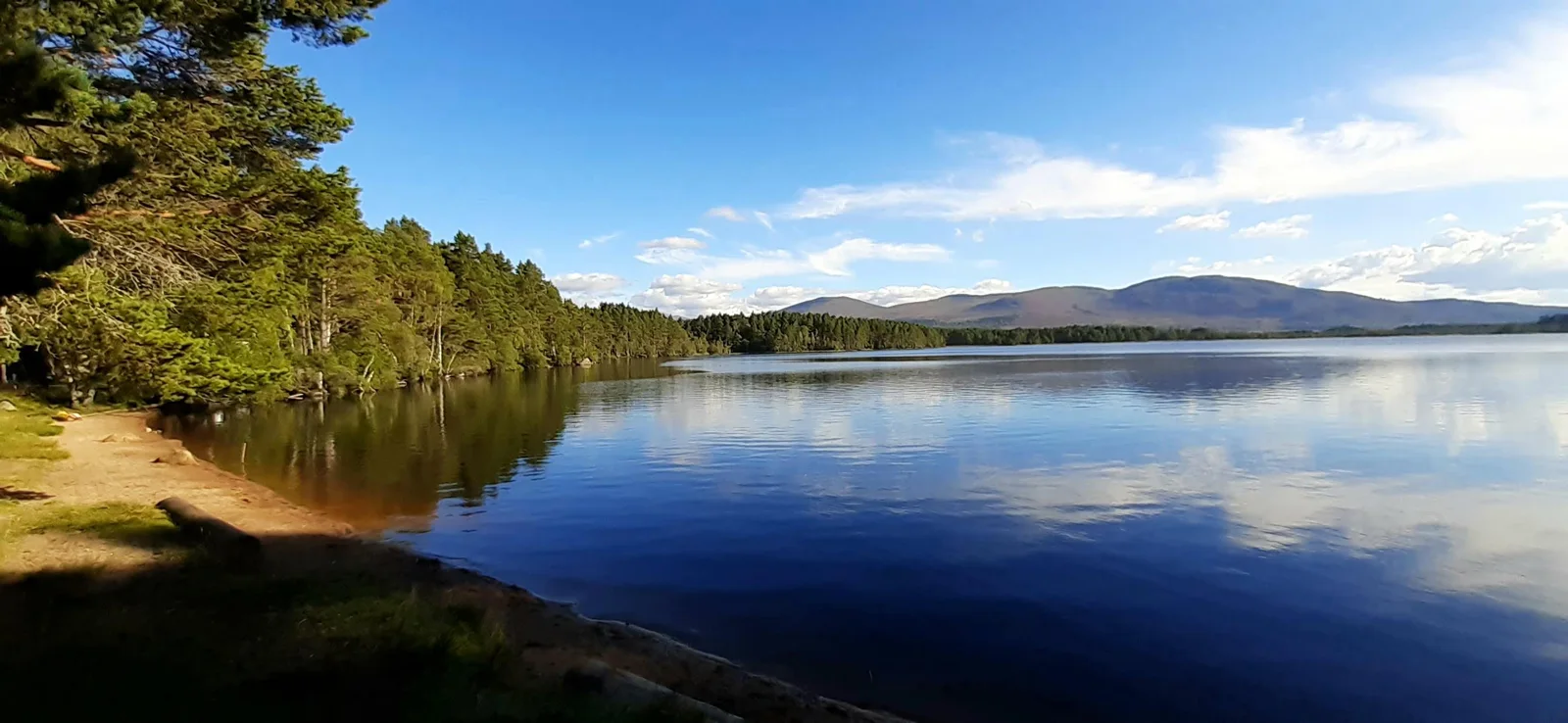
Begin at RSPB Loch Garten, using the current official information to choose a public route and confirm which visitor facilities are operating. Pause frequently enough to distinguish the quieter woodland calls from background sound. When a small flock passes, remain still, look ahead of its movement and let several birds come into view. Write down a few useful comparisons rather than turning an uncertain glimpse into an emphatic identification.
Give the loch and surrounding woodland the whole first day if travel has already taken several hours. An easy local evening leaves time to review the next day's forecast and adjust the route. Follow any fire, forestry or access restrictions announced by the operator; familiar photographs cannot establish that every path is currently usable. Discuss sensitive-species questions with staff and avoid independent searches around suspected nests or display areas. A satisfying forest visit can come from learning the calls and habits of birds close to an ordinary public path.
Day 2: Insh Marshes and a different scale of view
Move to RSPB Insh Marshes for the second day. OSRM measured 32 minutes between the mapped Loch Garten and Insh locations on 18 October 2026. Allow additional time for the particular arrival area, your chosen trail and any stop for provisions. Make the transfer once, then spend the rest of the day understanding the marsh landscape instead of dividing attention between road journeys and hurried viewpoints.
Begin with a broad scan before looking through a telescope. Note the areas of open water, taller vegetation and shorter wet grass, then watch which birds favour each. A careful comparison of movement and habitat can make identification more secure than a distant colour impression. Stay on official approaches and respect any seasonal restrictions. If weather interrupts the watch, use a sheltered break and return to the same viewpoint; the change in light and bird positions can make the second session feel surprisingly different.
Day 3: Loch Ruthven only after access is confirmed
Make RSPB Loch Ruthven conditional on the reserve and car park being open. The latest operator notice fetched on 18 October 2026 gives a maintenance closure through 23 October and says reopening is planned for 24 October. Confirm that access has resumed before travelling. Choose another public woodland or wetland visit if the closure remains. Spring is especially worth considering, when the operator highlights viewing Slavonian Grebes from the official hide.
The measured road journey between the mapped Insh Marshes and Loch Ruthven locations was 64 minutes through OSRM on 18 October 2026. That is enough travelling to justify giving Ruthven a proper share of the day, rather than calling it a quick detour. Read the guide's description of the path and facilities, and plan food and toilets independently where needed. Use the permitted viewing place, keep your distance and leave sensitive breeding detail out of public directions or posts.
Day 4: choose Culbin or a repeat inland day
For a change of habitat, consider RSPB Culbin Sands on the final day, using its guide to understand the actual arrival and permitted route. The OSRM road estimate between the mapped Loch Ruthven and Culbin locations was 43 minutes, measured on 18 October 2026. This is a separate coastal extension, so assess the combined travelling and walking against the time you need for the journey home.
A repeat visit to Loch Garten or Insh Marshes is equally worthwhile if the coast would make the day rushed. Think about what you most enjoyed learning: woodland sound, waterbird behaviour or the broader marsh landscape. Returning with that purpose often produces a clearer memory than a new stop chosen only because it completes an itinerary. If you choose Culbin, watch from public routes and read the coastal conditions before committing to a long exposed walk. Avoid shortcuts into tidal ground or unfamiliar channels.
Weather fallback and responsible forest birding
Keep a sheltered lower-level woodland option for a windy day and an open wetland view for calmer conditions. Change the route when rain, poor visibility or an access notice makes the original choice unsuitable. Mountain weather is a separate planning problem: none of these reserve days requires turning a poor woodland watch into an improvised upland search. Use an ordinary rest afternoon if the forecast is severe.
The strongest conduct rule is to let sensitive birds remain undisturbed. Keep to authorised paths, use official viewing facilities and avoid sharing precise breeding locations. Leave playback out of your approach; listening carefully is a more useful lesson than trying to pull a bird into view. When walking with a dog, read the particular reserve's rules and heed seasonal signs. A bird that repeatedly alarms or moves away is telling you to increase distance, even if another observer says the location is well known.
A realistic car-free Speyside version
A rail-based holiday can work well with one settled base and fewer reserves. Start with Aviemore or another appropriate arrival, use the transport sections in the guides and check the current outward and return services. Where a taxi supplies the final connection, book the return as part of the same arrangement. Rural signal and a vague meeting description are a poor combination when the day has turned wet.
For the simplest version, give separate full days to the main inland reserves and omit the longer Ruthven and Culbin extension unless the transfer is properly arranged. Some organised wildlife outings may include transport, but read the product rather than assuming it. Discuss mobility equipment and walking needs directly with the provider. Public transport can create a slower and very enjoyable trip, provided the itinerary follows the service available instead of expecting buses to mimic a flexible touring car.
Where to stay and what to arrange before travel
Aviemore is our first comparison for a broad Speyside stay; Boat of Garten suits a Loch Garten emphasis, while Grantown-on-Spey provides another base to assess against your planned journeys. Choose one room for the main inland days so that a changed forecast does not also require moving luggage. Compare breakfast, evening food, drying space and the actual transport approach before deciding which property offers the easiest stay.
Reserve any guided activity or special visitor experience that matters, and confirm seasonal centre access through the linked reserve guides. Keep the road estimates separate from walking time and allow for slower local travel. Finish with a short set of field notes about the habitats and calls you learnt, then use those interests to choose your next Scottish visit.
Other reserves to compare for a longer birding holiday
For a longer Scottish wetland holiday, compare Loch of the Lowes Wildlife Reserve and RSPB Loch of Kinnordy as additional destinations with their own travel days. Loch Leven National Nature Reserve gives another independent option. Read the visitor guides to decide whether the route and viewing experience add something you want beyond the main Speyside days.
RSPB Loch of Strathbeg is a further comparison for a broader northern Scotland itinerary. Choose extra nights and a suitable base before adding these reserves to the map, and keep their strongest seasons in view. An extension should let you settle into a new place; otherwise another morning in familiar woodland may offer a more satisfying use of the holiday.
Reserve guides for this visit
Sources and review
- Confirmed: RSPB Loch Garten operator visitor information
- Confirmed: RSPB Insh Marshes operator visitor information
- Confirmed: RSPB Loch Ruthven operator visitor information
- Confirmed: RSPB Culbin Sands operator visitor information
- Confirmed: Loch of the Lowes Wildlife Reserve official visitor information
- Confirmed: RSPB Loch of Kinnordy official visitor information
- Confirmed: Loch Leven National Nature Reserve official visitor information
- Confirmed: RSPB Loch of Strathbeg official visitor information
- Confirmed: OSRM road estimate measured 18 October 2026 — RSPB Loch Garten to RSPB Insh Marshes
- Confirmed: OSRM road estimate measured 18 October 2026 — RSPB Insh Marshes to RSPB Loch Ruthven
- Confirmed: OSRM road estimate measured 18 October 2026 — RSPB Loch Ruthven to RSPB Culbin Sands