
Fieldcraft · Practical UK birdwatching
How to scan a reedbed for birds
Work the edges, openings and air above the reeds in a repeatable order. A reedbed rewards patient watching of small changes more than constant movement between viewpoints.
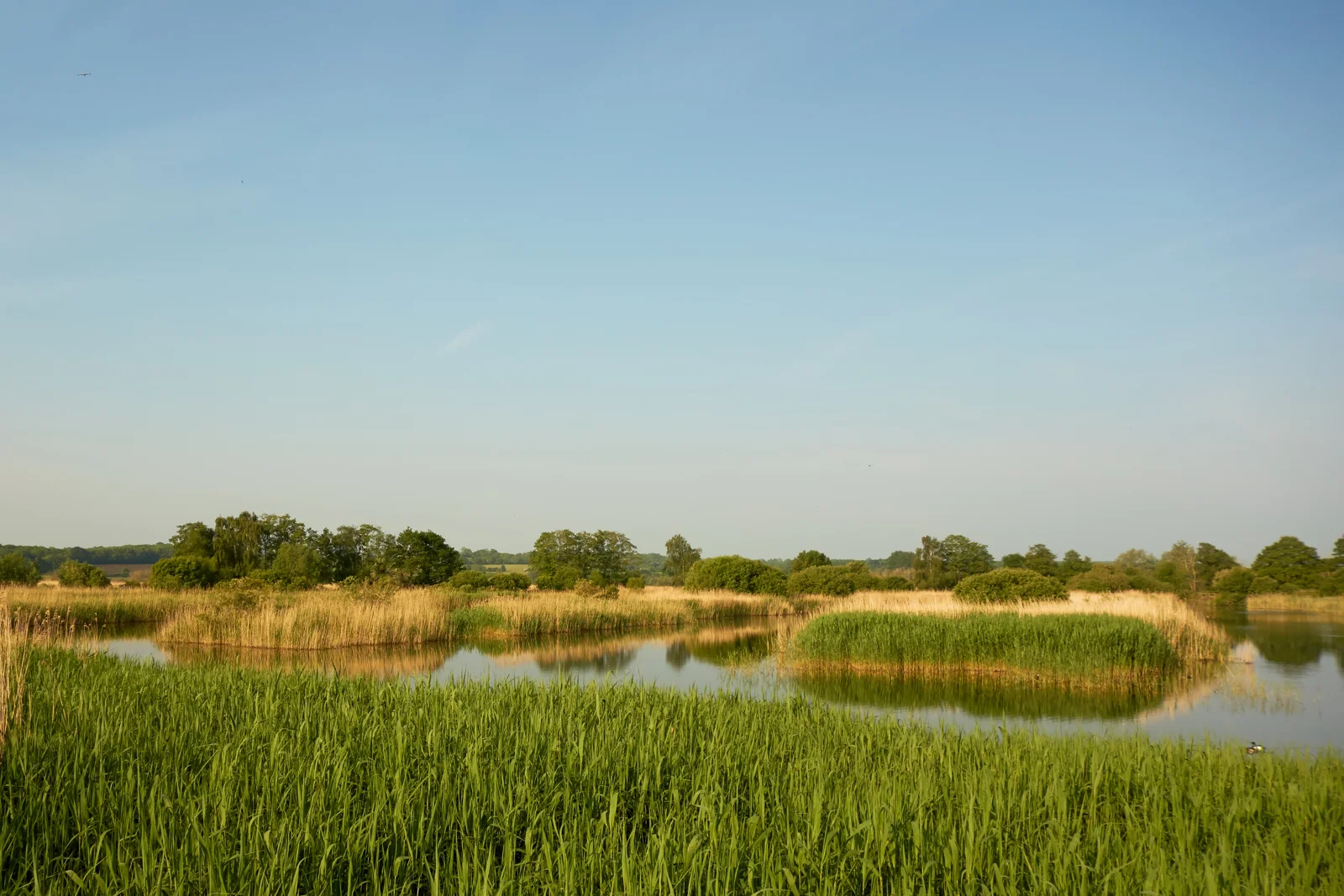
Where to look for birds in a reedbed
Begin by drawing the scene mentally. Mark the open water, the front reed edge, the taller stems behind it and the sky above. A pale cut edge or gap between clumps can be a useful reference point. Choose a comfortable authorised viewpoint with enough room for other people to pass. You are building a search pattern, so seeing every part of the reserve is less important than having one section you can watch properly.
Scan the nearest visible waterline first. Follow it slowly, pausing at gaps, fallen stems and small channels. Then look farther back and finally above the reeds. Finish by lowering the binoculars for a broad view. This sequence reduces the temptation to stare through one tiny opening for the whole visit. Our choice for an introductory session is a manageable pool edge where common waterbirds offer enough activity to practise following movement.
How to spot movement without chasing it
Watch for a stem bending differently from the wind, a ripple that begins beside cover or a brief change of colour at an opening. Give the area time to settle before deciding what happened. Wind can move an entire clump while an individual bird shifts just one stem. Keep possible explanations separate: movement in reeds is a reason to look, not evidence for a particular species. A clear view may never follow, and that is a normal part of this habitat.
When a bird appears, keep watching while you describe its action. Is it climbing, swimming, flying low or landing upright? Compare its size with a nearby bird only when both are at a similar distance. If it disappears, remember the last visible point and widen the search slightly. Rushing along the path to get beside it can lose the useful angle and disturb wildlife. Often the better choice is to remain still and watch the next gap.
How listening improves a reedbed watch
Allow a few quiet listening periods between visual scans. Describe a sound’s direction and rhythm before attaching a name. Reedbed voices can be hidden behind several layers of vegetation, making precise distance difficult to judge. Use a visible bird as confirmation when possible. If identification stays uncertain, keep the description and move on. You can learn a great deal about the habitat without converting every call into a species on a list.
Give flying birds a separate scan. Raise your gaze above the reed tops and check the broader sky before returning to the waterline. A bird crossing the reserve may be visible for longer against the sky than among stems. Follow it comfortably without stepping away from the safe route or blocking a hide window. Avoid treating flight direction as a clue to a nest location. The lesson is to understand the movement through a habitat, not to find concealed breeding places.
Practise it here: patient reedbed exercises
At RSPB Ham Wall, choose an official public viewpoint and sketch three visible reed edges. Spend a short session comparing which edges produce movement, then write a reason for the difference that you can test on a return visit. RSPB Leighton Moss provides another setting for watching the boundary between open pools and cover. Use the guide to choose a route that suits your mobility and time; the nearest convenient viewpoint is often sufficient.
At RSPB Minsmere, compare a reedbed watch with a more open wetland view later in the day. Notice how your scanning speed changes when birds have fewer places to disappear. RSPB Newport Wetlands is another regional option for working the reed line and the air above it. Read each reserve guide for current arrangements and seasonal context. None of these exercises needs a named target bird or access to a less-used path.
How long should you stay at one viewpoint?
Give yourself a definite, comfortable session rather than waiting indefinitely for a famous species. For example, complete two careful scans and one listening pause, then decide whether the view is still teaching you something. If glare obscures the edge or wind makes the optics unstable, another authorised angle may be more productive. Moving thoughtfully is different from constantly abandoning a viewpoint because the first few minutes seem quiet. Warmth, seating and attention all affect how useful the watch becomes.
Record what you actually observed: a bird crossing a gap, a call from behind the reeds, or a group using one open pool. Keep interpretation alongside the observation so you can revisit it. Follow site notices, stay out of reed cover and never use playback to pull a bird into view. Finish with a drawing of the most useful opening and a note of the light. Next time, compare the same patch before deciding the reedbed has changed.