
Journal · Practical UK birdwatching
UK birdwatching without a car
Start with a reserve whose entrance works from public transport, then build the watching around a comfortable return journey.
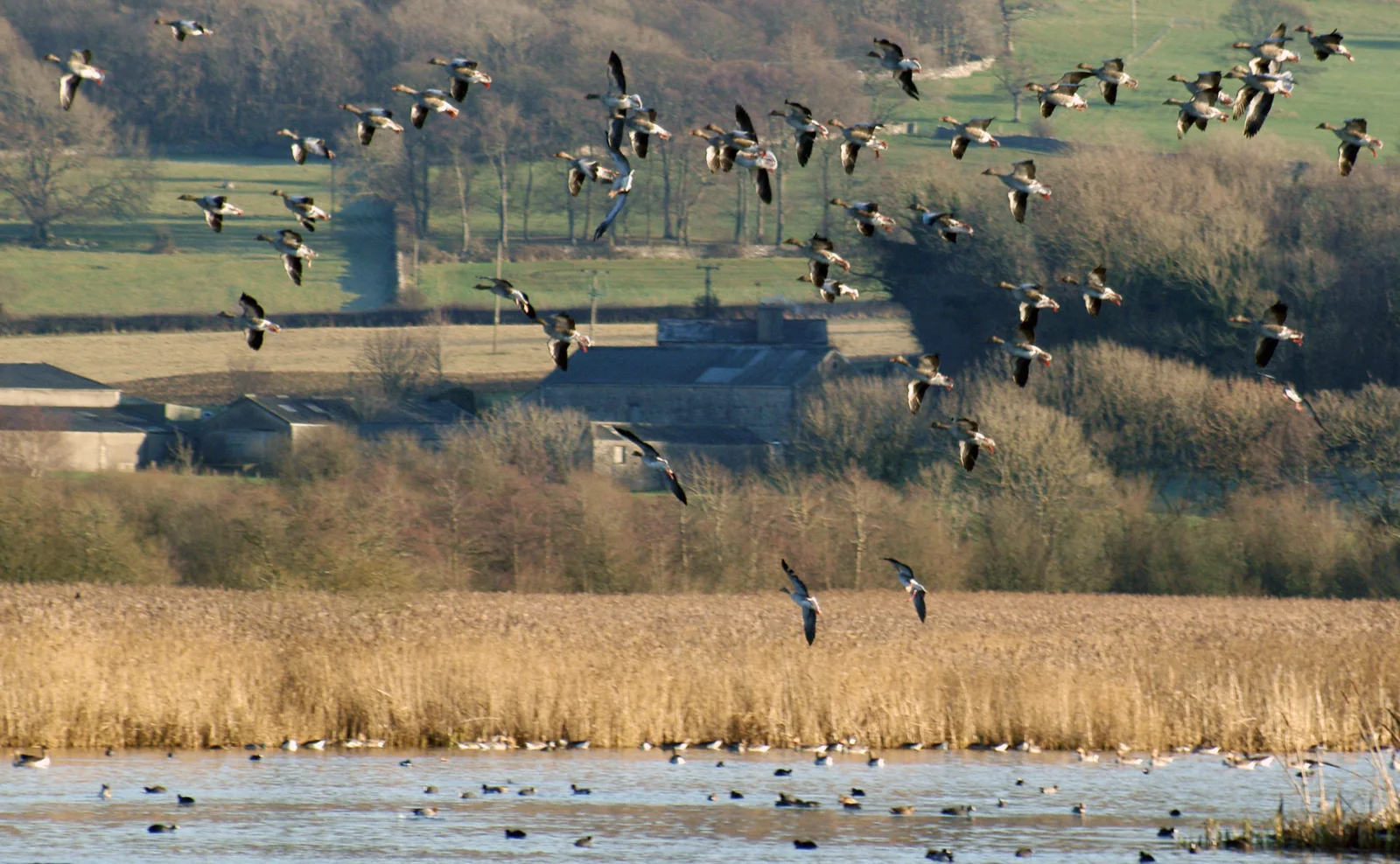
The best car-free birding starts at the entrance
Our choice for a first car-free birding day is a reserve with a short, clearly described station approach. RSPB Leighton Moss, RSPB Lochwinnoch and Attenborough Nature Reserve are good places to begin comparing journeys. Read each full guide for the final walk and the relevant transport links. A train stopping near a wetland on a map is useful only when the route from its platform reaches the entrance you actually need.
Choose the destination around the complete outing: travel from home, walking, time with birds, food, rest and the return. Car-free travel can encourage a more satisfying day because you settle into one landscape. Avoid importing a driving itinerary that expects several scattered reserves. One well-chosen site, visited without pressure to keep moving, can offer more worthwhile watching than a complicated chain of connections.
Rail-friendly reserves in England
RSPB Radipole Lake makes an English town-and-wetland choice, with the reserve close to Weymouth station. Attenborough Nature Reserve is another option when the rail network suits your starting point. Their guides explain the actual approach and distinguish reaching the reserve boundary from reaching its main facilities. Use that distinction when deciding how much walking the day involves. A short arrival walk can still be a substantial part of the outing for somebody carrying a telescope or travelling with children.
At RSPB Leighton Moss, plan the main reedbed reserve as the focus of a first visit. The coastal hides are a separate walking or transfer decision, rather than an automatic extension of a station arrival. Follow the car-free Morecambe Bay trip if you want a longer stay. Give each habitat enough time to become familiar before deciding that another destination would improve the day.
Car-free birdwatching in Scotland
RSPB Lochwinnoch is our Scottish starting choice for readers using rail. The RSPB places its station a short walk from the visitor centre, so the journey can end in a manageable approach rather than an uncertain rural connection. Check the current ScotRail journey for your own date, including engineering work and the return service. The reserve guide carries the detailed transport information; keep this editorial choice focused on whether that trip shape suits you.
A more remote Scottish reserve may still work with a booked transfer, but compare the effort honestly. RSPB Loch Lomond is an example where the last part of the journey needs more thought than simply finding the nearest railway station. Consult its guide before choosing a walk from a bus stop. Decide whether a prearranged taxi gives you a more comfortable, useful visit. Shared transport is worth planning well rather than treating as a compromise.
Welsh reserves by train and bus
RSPB Conwy is a useful Welsh rail choice because the operator describes an approach from Llandudno Junction. Follow the guide’s signed route and allow time for the road crossings rather than improvising from a map pin. Check the railway journey as well as the reserve opening arrangements. A relaxed arrival is worth more than reaching the first hide a few minutes earlier after an uncomfortable road approach.
RSPB Newport Wetlands offers a bus-based alternative from Newport. The reserve and bus operator publish information, but individual journeys and service days matter. Use the live timetable linked from its guide; a service carrying the reserve name does not make every departure suitable for your visit. Plan the outward and return legs together before settling on a birding finish. For an evening watch, check whether the public service still gives you a sensible way home.
Northern Ireland: distinguish a bus from a doorstep arrival
RSPB Belfast Window on Wildlife and WWT Castle Espie are both worth considering, but their public-transport arrangements require different decisions. At Belfast WOW, the weekday harbour-area bus pattern matters. At Castle Espie, a bus to Comber still leaves a final transfer. Open the relevant guide and work from its actual arrival advice. A city or village name on a bus destination display says little about the remaining walk.
Our choice when a rural approach lacks a comfortable pavement is a prebooked taxi transfer. Arrange both directions and give the precise entrance, not just the name of the nearest wetland. If travelling with a mobility aid, ask the provider about a suitable vehicle before buying inflexible tickets. A clear plan for that short connection can make a day enjoyable; leaving it until arrival can turn a simple outing into a demanding one.
How to assess the final mile
Look for surfaces, road crossings, gradients and the amount of walking after the station. Check whether the entrance you found is the one with toilets or a staffed welcome. A riverside path may be appealing in daylight yet awkward with luggage or after rain. Save the operator’s directions before travelling, together with an offline map showing the station, entrance and return stop. If the route remains unclear, choose a reserve with a better documented approach.
RSPB St Aidan's is a bus-oriented English alternative to compare through its guide. RSPB Fairburn Ings can suit a rail-and-taxi plan when walking from a rural stop is inappropriate. Keep these descriptions distinct: a station walk, a scheduled bus and a booked transfer have different costs, effort and resilience. The best choice is the one that remains comfortable when a shower arrives or somebody wants to finish sooner.
Plan the return before the first hide
Save the return departure, boarding point and a later backup while you still have reliable reception. Leave enough time to walk from the furthest planned viewpoint without hurrying. The last useful connection is more important than the last advertised service if missing it would strand you between trains. Check the correct day of the week, particularly around weekends and public holidays, and look again before leaving home.
Tell companions when you need to turn back. A visible time limit is easier to manage than a sudden announcement when birds are showing well. Keep a separate return margin rather than repeatedly spending it on another quick look. If a delay makes the original plan unrealistic, shorten the watching or use the fallback you arranged. Changing the route early is usually more comfortable than racing a heavy bag along an unfamiliar lane.
Carry less and watch for longer
Choose the equipment you will use, then test carrying it for a short walk at home. Binoculars, waterproofs, water, food and a charged phone form a manageable starting point. A telescope adds reach on open water, but its weight may change how far you want to walk. Read the spotting-scope guide before making it the centre of a first public-transport outing. A comfortable bag leaves more attention for the birds.
Wear footwear suitable for the approach as well as the reserve. Keep tickets, a payment card and essential medication easy to reach. An extra dry layer can matter during a long platform wait after the watching has finished. Where a café is important to the day, check its arrangements in the reserve guide and still bring something small to eat. Your birding schedule should remain workable if the lunch queue is longer than expected.
Build a weekend around one transport base
For a short break, choose accommodation near the railway or bus hub you will actually use. Compare the car-free favourites collection and London without a car trip for different trip shapes. Staying close to the interchange may be more useful than staying nearest the reserve boundary if it simplifies arrival with luggage and the journey home. Keep day bags light and leave unnecessary possessions at the base.
Give yourself a main reserve and a weather alternative instead of an ambitious checklist. Repeat a favourite viewpoint on the second day if it suits the conditions. Learning how light and bird activity change across a familiar scene is part of good fieldcraft. Finish with listening before looking and make the journey another chance to notice birds from public spaces, without leaning from vehicles or entering restricted railway areas.
Reserve guides for this visit
Sources and review
- Confirmed: RSPB Lochwinnoch — station approach
- Confirmed: RSPB Conwy — signed station approach
- Confirmed: WWT London — public transport directions
- Confirmed: Newport Bus — date-specific Wetlands timetable
- Confirmed: RSPB Leighton Moss — operator arrival advice
- Confirmed: Attenborough Nature Reserve — operator arrival advice
- Confirmed: RSPB Radipole Lake — operator arrival advice
- Confirmed: RSPB Loch Lomond — operator arrival advice
- Confirmed: RSPB Belfast Window on Wildlife — operator arrival advice
- Confirmed: WWT Castle Espie — operator arrival advice
- Confirmed: RSPB St Aidan's — operator arrival advice
- Confirmed: RSPB Fairburn Ings — operator arrival advice