
Responsible wildlife guide
Where to hear Nightjars in the UK
Our choice for a first Nightjar evening is an operator-led walk or a clearly permitted public route you already know in daylight. Aim to hear the churring and perhaps see a bird cross the fading sky. A daylight search for a camouflaged resting bird is neither necessary nor the experience this guide recommends.
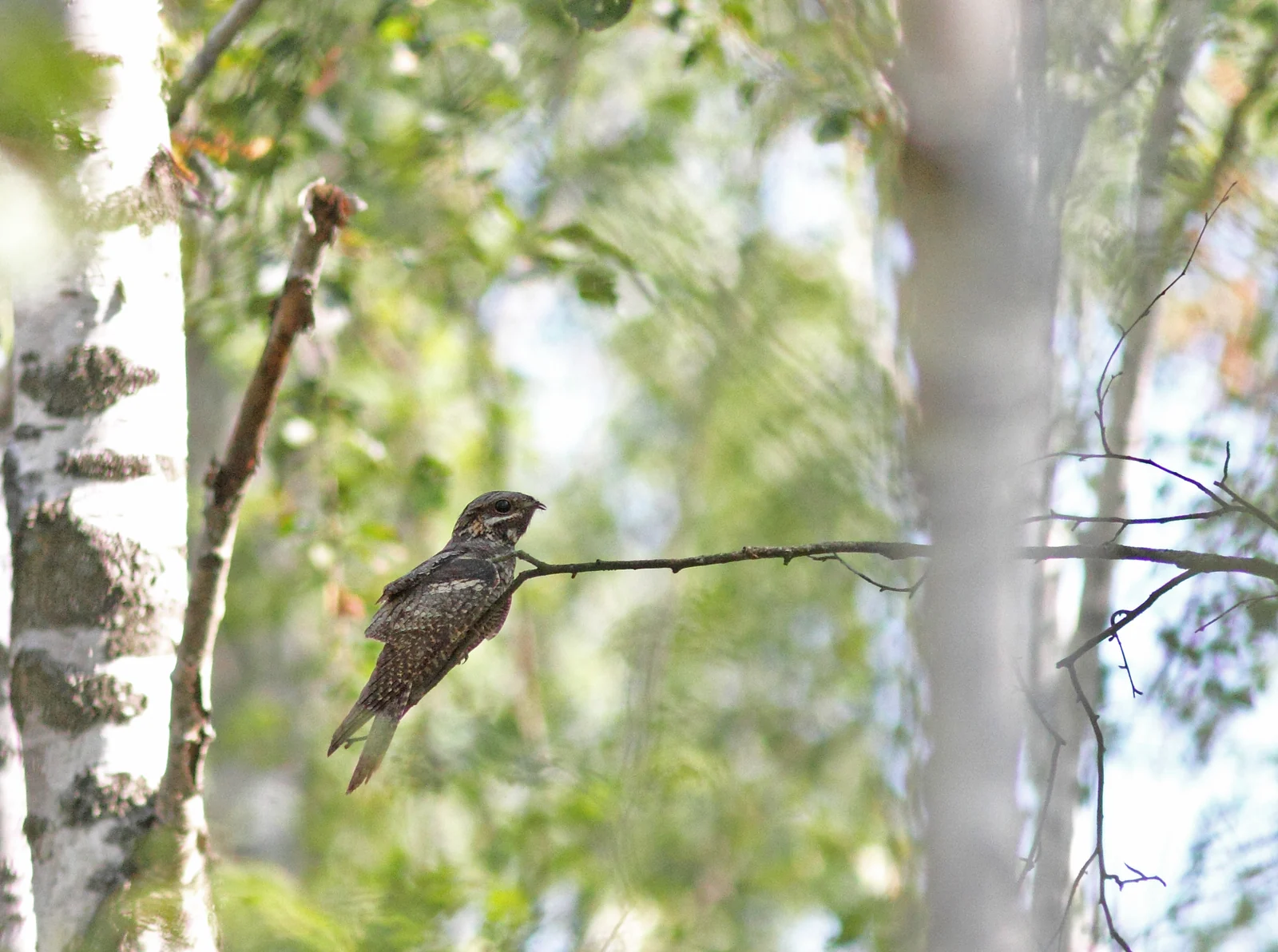
When is the best time to hear Nightjars?
Choose the season before the reserve. BTO describes Nightjars as summer visitors present from May to mid-August; RSPB includes arrival in late April and May, with most birds departing by late August and September. Those descriptions overlap on a useful core season while differing at its edges. Our planning choice is a permitted June or July evening, rather than a trip built around an early arrival or late straggler.
The national month table is a broad guide, not a reservation system for singing birds. A local operator may describe a shorter season or restrict which routes are available in the evening. Check those details before arranging travel. If a date is fixed, choose somewhere whose wider habitat you would enjoy in daylight and regard the Nightjar encounter as an opportunity that can remain entirely beyond your control.
Choose an official evening walk or a familiar public route
An operator-run walk is our first recommendation for a beginner because the route, timing and group behaviour can be managed together. Check the actual listing for the current year, meeting place and booking arrangements; this page does not turn an old event into an annual promise. Use the reserve guides below for the practical details and the operator link for a particular event.
An independent visit can be appropriate when evening public access is explicitly allowed and the route suits your experience. Walk it in daylight first, identify the return junctions and decide where you can pause without blocking the path. A general woodland opening description does not necessarily establish late access to a car park. Resolve the whole return journey before the light fades rather than trying to solve a locked gate beside the car.
What does a Nightjar sound like?
The male's sustained churring is the most useful starting point. Listen to a reputable recording at home through headphones, then put the phone away at the reserve. Concentrate on its continuous texture and changes in pitch rather than memorising a poetic description. The RSPB also describes wing-clapping sounds, but you do not need to hear every possible sound for an encounter to count.
Once you hear churring, remain on the route and let your ears settle. Do not triangulate a bird by leaving the path or walking into cover to reach the exact source. The impression of direction can be misleading, and finding the tree or patch is unnecessary. A quiet listening experience from a legitimate public position is a complete encounter even when the bird never becomes visible against the sky.
How to look for a flying Nightjar
Watch the open sky visible from the permitted path, keeping your head up between listening periods. RSPB describes pointed wings and a long tail, a combination that can give a falcon-like impression. At dusk a shape may pass too quickly for a firm identification. Note what you genuinely saw rather than deciding that any dark moving object beside a churring bird must belong to the same species.
Use binoculars if they help, but keep the field of view manageable and avoid spending the whole watch searching through a camera screen. Agree a simple landmark description with your companion so that you can share an ordinary flypast quietly. Do not run after it or position people around the habitat to intercept another pass. The public route sets your watching area, however tempting the next clearing looks.
Heathland or forestry: understand the habitat choice
BTO links the breeding distribution with lowland heathland and recently felled or newly planted conifer areas, among other habitats. RSPB also describes heathland, moorland and woodland clearings. Use that information to understand why a reserve supports the species, rather than as permission to explore every apparently suitable open patch. Forestry operations, habitat management and visitor boundaries all remain relevant after sunset.
Choose a named public route from the individual guide and check its current status with the operator. The fact that a site was productive several years ago does not mean the same clearing will remain suitable or open. Vegetation and management change. A recent official recommendation is more useful for planning than a collection of old photographs, and it still gives no guarantee that a bird will churr on your evening.
Prepare for standing still and returning after dusk
Bring layers that suit a period of quiet standing, rather than dressing only for the outward walk. Organise binocular straps, water and a path light before the watch begins so that bags need not be searched repeatedly in the dark. Keep your phone available for navigation or the return journey, with unnecessary sounds silenced. Any light belongs on the walking surface when needed, never on the birds.
Think about access needs honestly. A short path may include awkward roots, uneven ground or a surface that feels different after dusk. An organised walk can help explain the route but cannot remove those features. Ask the operator specific questions in advance and choose an alternative when the approach or return is unsuitable. A successful evening begins with a plan that everyone in the group can complete comfortably.
Why playback and close approaches spoil the watch
The BTO Birders' Code advises against breeding-season playback because a response can divert a bird's time and energy. For a Nightjar visit, leave all imitation and recordings at home regardless of whether someone says it will produce a better view. You came to observe ordinary activity, not to manufacture a territorial response. Explain that calmly if another visitor proposes playing a call beside the route.
Keep pets under the operator's rules and do not wander off the track to inspect bare ground or concealed cover. A hidden bird's position is not an invitation to investigate. If you encounter unexpected activity close to the path, pause or retreat as appropriate and let the bird continue. Follow staff instructions, particularly where a group needs to move through a sensitive section without stopping.
What if you hear nothing?
A quiet evening does not prove that you have chosen the wrong reserve or that the species has disappeared. The useful conclusion may simply be that nothing was detected during your particular watch. Record the date, broad conditions and time spent on the permitted route, keeping that distinction between presence and detection clear. Avoid supplying an invented explanation for silence when you have no evidence for it.
End at the planned time and return carefully instead of extending the walk through unfamiliar habitat. On another visit you can make a better comparison because you know the route, skyline and ordinary background sounds. Use the linked listening lesson to practise before you go and the reserve guide to confirm access again. A patient, unobtrusive evening leaves the opportunity intact for birds and visitors alike.
Where to see nightjars by month
The months below come from each reserve’s local birding guide. They describe typical presence or a preferred watching season; national occurrence can be broader. Reports show past observations and cannot promise an encounter. Sensitive birds have no published watching position.
| Species | Reserve guide | Typical or preferred months |
|---|---|---|
| Nightjar | RSPB Arne | May, June, July, August |
| Nightjar | RSPB Pulborough Brooks | June, July |
| Nightjar | RSPB The Lodge | May, June, July, August |
| Nightjar | RSPB Aylesbeare Common | May, June, July, August |
| Nightjar | RSPB Sherwood Forest | May, June, July, August, September |
Reserve guides for nightjars
- RSPB Arne · England
- RSPB Pulborough Brooks · England
- RSPB The Lodge · England
- RSPB Aylesbeare Common · England
- RSPB Sherwood Forest · England
Sources and review
Reviewed 2026-10-19.