
Journal · Practical UK birdwatching
Share bird sightings responsibly
Share observations that help people understand birds while protecting feeding, resting and breeding wildlife from avoidable disturbance.
What to include in a useful bird sighting
A useful sighting says what you observed, when, at which broad site and under what conditions. Add the behaviour and identification features you actually noticed. Keep guesses separate from those details. If the bird was too distant or briefly seen, record that honestly. A careful uncertain note can be more useful than a definite label added after reading somebody else’s report. Your observation is valuable because it records what happened, not because it produces an impressive name.
Begin with the intended audience. A reserve team, a county recorder and a public social-media group have different needs. The first two may need information privately that should never appear in a public post. BTO’s BirdTrack provides a structured way to submit bird observations; follow its own guidance and any sensitive-species arrangements. Think about who needs a location before deciding how widely to share it.
Keep the first version of a field note if an identification later changes. It preserves the observation that prompted your thinking and helps a recorder understand the evidence. Add a correction clearly instead of silently rewriting what you originally saw. That habit builds confidence through better observation, rather than through defending an uncertain name.
When a location should stay private
Keep nest, lek and vulnerable roost locations out of public directions. Avoid giving field corners, approach paths, tree descriptions or map pins that allow people to reconstruct the same information. A broad place name can also be too revealing when a sensitive bird has only one plausible patch of habitat there. Follow suppression requests from reserve staff and relevant recorders. Their local understanding matters more than whether an earlier visitor has already posted a pin.
Breeding birds are particularly vulnerable to repeated approaches. If you discover a concerning situation, contact the operator privately and stop drawing attention to it. Do not lead others to the bird while asking them to be discreet. The BTO Birders’ Code puts the welfare of birds ahead of observers’ interests. Apply that principle before publishing, rather than trying to repair the consequences after a location has spread.
Official viewpoints make sharing simpler
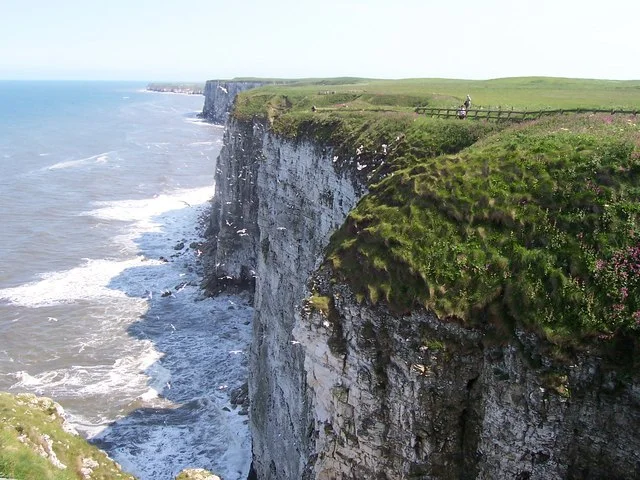
RSPB Bempton Cliffs and RSPB South Stack show how a managed viewpoint can be a better public recommendation than an improvised close approach. Share the reserve guide and the authorised viewing arrangements, then let visitors choose a route suited to their abilities. A general description of the seabird spectacle is useful without identifying particular ledges, burrows or nests. Staff can explain any current restrictions when people arrive.
Skomer Island and Isle of May National Nature Reserve are further examples where an operator-managed visit should shape the experience. Link the guide rather than offering your own shortcut or a precise place to intercept a bird. Breeding colonies need space even when birds appear accustomed to people on the path. A photograph showing a close bird can encourage imitation, so captions should reinforce the permitted route and considerate behaviour.
Resting and feeding birds need space too
Responsibility continues outside the breeding season. A flock pushed from a feeding area or resting place loses time and energy. On a rising tide, the remaining ground may be especially limited. At RSPB Snettisham and RSPB Lough Foyle, use the designated public viewpoints described in the guides and give birds room to move naturally. A long lens or telescope should help you keep your distance rather than justify another step forward.
Read behaviour as well as distance. Repeated alert postures, birds walking away or a flock bunching before flight are reasons to stop and retreat. You may be the latest of many visitors, so the fact that your own approach was brief tells you little about the total pressure. Resist arranging a photograph by flushing birds. The best observation allows them to continue feeding or resting after you leave.
How to write an honest identification note
Describe size against a bird or object you could compare directly. Note shape, bill, leg length, plumage pattern, movement and call where you heard it clearly. Add viewing conditions: distance, light, duration and whether the bird was partly hidden. A rough sketch can preserve proportions better than a sequence of uncertain adjectives. Write those details before consulting identification material, so that later expectations do not become part of the original observation.
When sharing a photograph, say whether it shows the same features you saw through binoculars. Cropping, brightening and sharpening can make an image easier to inspect, but they can also create misleading impressions. Keep the original file if you intend to submit a record. Welcome a careful alternative identification, and correct a public post if the evidence supports a change. Accuracy is a shared interest rather than a competition.
When to tell the reserve team first
Tell staff promptly about injured wildlife, apparent disturbance, unsafe behaviour or an access issue affecting birds and visitors. Give a clear broad location, what is happening and whether the situation is continuing. Follow their instructions and avoid putting yourself at risk. A crowded comment thread is rarely the quickest way for the people responsible for a reserve to understand a developing problem.
If you suspect a wildlife crime, use the police and specialist reporting guidance linked below. Share precise evidence privately with the appropriate authority, preserving original images and notes. Avoid publishing an accusation against an identifiable individual or confronting somebody when it could become unsafe. Distinguish what you witnessed from what you inferred. The RSPB provides guidance about reporting crimes against wild birds, including the information that can help an investigation.
Better photographs and quieter groups
Before joining others, look for room to stand without blocking a path, hide opening or accessible viewing position. Keep conversation low, allow people to pass and ask before touching another person’s optics. A large group can change the atmosphere even when every individual behaves politely. Agree the route and stopping places with the organiser, and move back together if wildlife shows signs of disturbance.
Use the lens you have from the permitted position and accept the picture available there. Avoid playback, flash or intrusive lighting around sensitive birds. Keep a phone screen and conversation from distracting other people during a quiet watch. When posting, think about the behaviour the image may encourage. You can praise an enjoyable encounter without describing how to approach closer or implying that a good birding day requires a frame-filling portrait.
A useful checklist before pressing publish
Read your post once for evidence and once for consequences. Does the species name fit the features you observed? Is the date correct? Have you separated an operator’s current notice from your personal experience? Could the location attract people to private land, a fragile route or sensitive wildlife? Link the reserve guide when practical arrangements matter, and remove details that create pressure without adding public value.
For your next outing, use watching waders without flushing, responsible photography and keeping better notes. Explore the seabird collection through managed viewpoints instead of individual-bird directions. A useful sighting leaves the birds able to carry on and gives the next reader a better way to observe, record and enjoy the wider place.
Reserve guides for this visit
Sources and review
- Confirmed: BTO Birders’ Code — disturbance, access and sharing sightings
- Confirmed: BTO BirdTrack — submitting observations
- Confirmed: RSPB — reporting crimes against wild birds
- Confirmed: RSPB — sensitive grouse-watching advice
- Confirmed: RSPB Bempton Cliffs — official public visiting arrangements
- Confirmed: RSPB South Stack — official public visiting arrangements
- Confirmed: Skomer Island — official public visiting arrangements
- Confirmed: Isle of May National Nature Reserve — official public visiting arrangements
- Confirmed: RSPB Snettisham — official public visiting arrangements
- Confirmed: RSPB Lough Foyle — official public visiting arrangements
- Confirmed: RSPB Loch Garten — official public visiting arrangements
- Confirmed: RSPB Insh Marshes — official public visiting arrangements
- Confirmed: RSPB Portmore Lough — official public visiting arrangements
- Confirmed: RSPB Newport Wetlands — official public visiting arrangements