
Trips · Practical UK birdwatching
Yorkshire coast seabird birdwatching trip
Give Bempton and Flamborough the first two days, then choose a separate Spurn extension. Our choice is late spring or early summer for breeding seabirds, with an autumn version built around migration and weather.
Who should choose a Yorkshire seabird break?
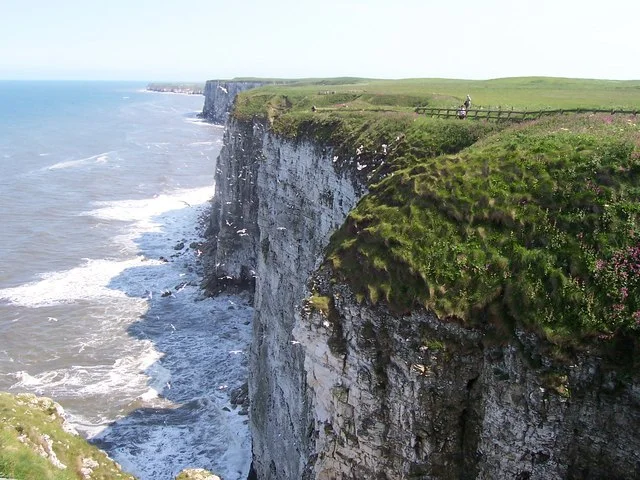
This trip suits visitors who want impressive seabird landscapes without making a boat landing the centre of every day. Bempton provides the principal colony visit, Flamborough expands the headland experience and Spurn makes a distinct southern extension. Beginners can work on a few characteristic flight shapes; more experienced observers can spend a long session following movement offshore. Choose a clear purpose for each day so that the coast becomes more than a series of hurried stops.
Our first choice is May or June for a breeding-season visit, with the official Bempton guidance recommending April to mid-July for Puffins. Later summer and autumn require different expectations, and the route can be reshaped around migration. If a particular seabird is the reason for travelling, use the species guide and the operator's seasonal information together. A photograph from peak season tells you little about what will be present during a later holiday.
Day 1: Bempton Cliffs and careful colony watching
Begin at RSPB Bempton Cliffs and give the public viewpoints the bulk of the day. Ask about the route that suits your mobility and the current conditions, then settle at a safe viewing place. Watch the larger patterns first: where birds cross the cliff, how they approach a ledge and how the appearance changes between a bird overhead and one passing against the sea. Those comparisons make later identification much easier.
Move between viewpoints slowly enough to keep watching. An unfamiliar bird does not have to be named immediately; describe its shape, wing action and behaviour, then compare notes with the guide or another considerate observer. Share the viewing area, keep equipment from blocking the path and step back from exposed edges. A shorter comfortable visit is better than staying until every member of the group is cold. Save a little time near the end for the viewpoint that gave the clearest light.
Day 2: Flamborough and a different headland view
Spend the second day at Flamborough Head and Flamborough Bird Observatory, selecting the official public approaches described in the guide. Bempton and Flamborough are close enough for a shared base but deserve separate substantial watches. The OSRM road journey between their mapped locations measured 15 minutes on 18 October 2026. Add parking and walking time, and avoid turning that short road link into repeated shuttling whenever a report arrives.
Use Flamborough to practise more systematic sea observation. Choose a fixed area of water, scan it in an orderly direction and pause to follow something interesting before resuming the sweep. Keep a separate note of birds confidently identified and those whose views were insufficient. Light and wind affect how much detail you can see, so adjust the length of the session to the conditions. A public headland walk can be enjoyable even when a prolonged offshore watch feels too demanding or the distant birds remain unresolved.
Day 3: Spurn is a separate extension
Choose Spurn National Nature Reserve only when you have a full additional day and enough energy for the transfer. OSRM measured 97 minutes between the mapped Flamborough and Spurn locations on 18 October 2026. That makes Spurn a different day's destination rather than an extra stop after a full seabird walk. If the travelling would consume too much of your holiday, return to Bempton or Flamborough and save Spurn for a dedicated visit.
Read the Spurn guide for the current public route, tide considerations and operator advice. The shape of the visit should follow the conditions, with attention to the coast and wider estuary rather than a promise of a rare migrant. Follow any restrictions around vulnerable ground or nesting birds, keep clear of private areas and allow time to get back from the chosen walking route. A quieter Spurn day still offers the chance to learn how weather, shoreline and habitat affect the birds you encounter.
A Filey-area stay and the shorter version
Filey is worth considering as a base for visitors who also want a coastal town break alongside the birdwatching. Use it to simplify accommodation and evening food, rather than treating every nearby stretch of shore as another reserve stop. The named guides in this itinerary remain Bempton, Flamborough and Spurn. Check the actual journey from your chosen room and decide how much driving belongs in a day whose main purpose is watching.
For a two-day visit, omit Spurn and spend one full day on each of the first two headland experiences. That version is our choice for families, beginners or anyone who prefers a leisurely pace. It also reduces the pressure created by a poor-weather morning, because you can swap the order of the local days. Keep a warm indoor break available and use the evening to compare the birds you saw, with a few drawings or written observations if photographs were distant.
Weather fallback and the autumn alternative
Move the most exposed watch to the clearer, more comfortable forecast day. Strong wind can make a telescope difficult to use and leave a cliff walk unpleasant even when the path remains open. Choose a shorter public route, find a safer sheltered stopping place or return later. Do not move close to an edge because a camera angle seems promising, and keep children and loose equipment under close control.
An autumn version gives more weight to headland movement and Spurn, but it should still follow the forecast and the available daylight. Recent sightings may help explain what has been moving; they cannot establish what will appear during your watch. Set simple fieldcraft aims, such as recognising a handful of common silhouettes or recording movement direction consistently. If conditions defeat offshore identification, pay attention to the nearer coast or take a proper break. Constant strain through poor light rarely makes a rewarding holiday.
Car-free Yorkshire coast birdwatching
A car-free break is most realistic with one base and a limited set of day trips. Start from the current transport details in the Bempton and Flamborough guides, check the date-specific rail and bus choices and identify the complete walking approach from the final stop. A nearby station on a regional map does not mean the reserve entrance is beside the platform. Allow enough time for that walk in both directions.
For Spurn, arrange a separate public-transport or booked-transfer day using the operator's directions. An onward taxi may help where a bus leaves an impractical final connection, provided the return is reserved too. Do not copy the measured driving time into the car-free timetable. If the third day becomes complicated, keep the visit on the northern headland and enjoy a repeat watch. A manageable route with a confirmed ride home is far more useful than a theoretical coast-wide circuit.
Where to stay and what to book in advance
Bridlington is our first comparison for a Bempton-led stay with practical town facilities. Flamborough suits visitors who prefer a headland emphasis, while Filey is another option to assess against the actual journeys and evening plans. Choose one of those bases for the northern part of the trip. If Spurn becomes a longer extension, review accommodation afresh instead of assuming the same base will remain convenient.
Reserve accommodation and any guided activity or special experience you want through the provider linked in the relevant guide. For accessible equipment, ask about booking requirements before travelling. Keep food, warm clothing and the return journey arranged independently of a café opening. Finish each day with the birds and behaviours you learnt clearly, then choose tomorrow's pace around what remains enjoyable.
Other reserves to compare for a longer birding holiday
For a longer Yorkshire holiday, compare RSPB Blacktoft Sands and RSPB Fairburn Ings as independent wetland days. RSPB St Aidan's and RSPB Dearne Valley – Old Moor offer additional choices when you want to follow the coastal visit with a different setting. Plan the transfer and a suitable base before adding them to the holiday.
Potteric Carr is another inland comparison to read alongside those guides. Select the extra reserve for the habitat, walking and visitor experience that appeal, then give it enough attention to become more than a stop on the road home. These alternatives are particularly useful when a longer trip needs some variety after several days watching open coast and offshore movement.
Reserve guides for this visit
Sources and review
- Confirmed: RSPB Bempton Cliffs operator visitor information
- Confirmed: Flamborough Head and Flamborough Bird Observatory operator visitor information
- Confirmed: Spurn National Nature Reserve operator visitor information
- Confirmed: RSPB Blacktoft Sands official visitor information
- Confirmed: RSPB Fairburn Ings official visitor information
- Confirmed: RSPB St Aidan's official visitor information
- Confirmed: RSPB Dearne Valley – Old Moor official visitor information
- Confirmed: Potteric Carr official visitor information
- Confirmed: OSRM road estimate measured 18 October 2026 — RSPB Bempton Cliffs to Flamborough Head and Flamborough Bird Observatory
- Confirmed: OSRM road estimate measured 18 October 2026 — Flamborough Head and Flamborough Bird Observatory to Spurn National Nature Reserve