
Fieldcraft · Practical UK birdwatching
How to watch waders without flushing them
Choose the viewing position early, use the reserve’s hides and give feeding or resting birds room. A useful wader watch lets the flock continue its day while you learn its shape and behaviour.
How to approach a wader viewpoint
Read the reserve’s route and viewing instructions before leaving the arrival area. Choose an official hide or viewpoint that keeps people in a predictable place, then approach quietly along the marked route. Keep optics ready before you reach an open window so that you can settle without unpacking everything beside the birds. Leave enough room for visitors using mobility aids and avoid placing a tripod across a narrow entrance.
From the viewpoint, begin with a wide scan. Find where birds are feeding and where they are standing more tightly together. Consider whether your outline is exposed above a bank or against the sky. Use the shelter provided, but do not climb into vegetation to create a private screen. Our choice is a slightly more distant comfortable view that allows the birds to remain settled and other visitors to share the same experience.
How to recognise disturbance in waders
Watch for a change that coincides with your movement: heads lifting together, feeding stopping or birds walking away. Pause and give more room rather than continuing until they fly. Different species and situations produce different responses, so a fixed distance is a poor substitute for observation. A bird that stays on the ground may still be responding to you. Keep checking its behaviour instead of treating the absence of flight as permission to get closer.
Avoid repeated small approaches. Each may seem minor in isolation, while the cumulative effect leaves the flock with little uninterrupted time. BTO’s Birders’ Code explains the importance of feeding and recovery, especially in cold weather and after migration. Let that guide the viewing choice. If another visitor is approaching too closely, a calm suggestion to use the established viewpoint may help; seek a reserve team member when the situation needs their support.
How tides affect where you should watch
Consult the local tide information and the reserve’s interpretation of it. As feeding ground changes, birds may move towards established resting areas. Use only the public viewpoints and operator-led arrangements intended for those watches. Do not walk towards a gathering flock to find your own angle. A public spectacle is possible because access and viewing are managed; the same crowd in the wrong place can remove the conditions that make it possible.
Leave resting groups undisturbed. Birds crowded onto remaining space may have few convenient alternatives, and a flight interrupts the watch for everyone. Keep dogs within the reserve’s rules and avoid playing calls or making sudden noises. If the tide or weather makes the route unsafe, abandon the viewing plan. RNLI advises checking both weather and tides and carrying a way to call for help. Soft mud and narrow channels also make apparently short approaches unsuitable.
Practise it here: four considerate wader watches
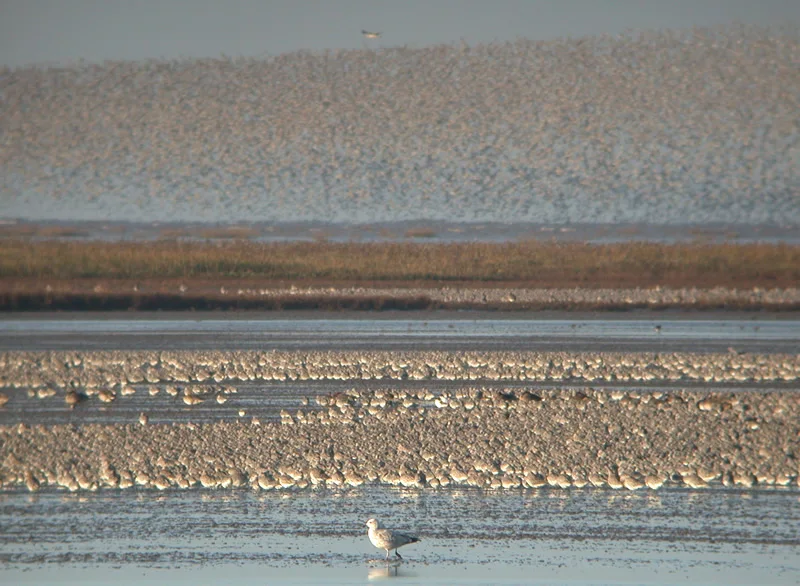
At RSPB Snettisham, follow the official arrangements and tide advice in the guide, concentrating on how flocks use the authorised viewing landscape. Describe a settled group’s posture without trying to produce a flight photograph. At RSPB Titchwell Marsh, compare feeding actions from a suitable public view. Pick two birds at a similar range and watch how each uses the waterline. Bill shape becomes easier to understand when you can connect it with movement.
Use RSPB Conwy for an exercise in scanning separate sections of a pool or tidal view while remaining in one position. RSPB Lough Foyle provides another regional option through its official access arrangements. Write down what you can describe comfortably at the available distance. If a small feature remains invisible, leave that part of the identification open. The reserve guides hold practical details and seasonal context; this exercise works with the birds actually present.
How to count and photograph waders responsibly
Count settled birds in overlapping sections, marking a landmark between groups so that you can check for gaps or double-counting. If the birds move, pause the count and decide whether to restart. When a flock flies naturally, enjoy the movement from where you are rather than pursuing the landing place. A camera can help record a distant group if used unobtrusively, but it should support the observation instead of becoming a reason to narrow the distance.
Finish with a description of behaviour, approximate numbers where necessary and the viewing conditions. Keep sensitive location details out of public posts and follow suppression requests from the operator or recorder. A short note explaining that birds stayed feeding throughout your watch is a useful personal measure of fieldcraft. On your next outing, repeat the same approach and look for earlier warning signs, rather than testing how close you can stand before a bird finally leaves.
Try describing a whole scene before choosing an individual. Note where the flock has space to feed, where other visitors are standing and which route lets people pass without approaching the birds. This makes the welfare of the group part of your observation from the start, rather than an afterthought once something takes flight.