
6. Foulshaw Moss
Watch Osprey, Tree Pipit.
Best season: April–September; winter wildfowl also listed
- Hides: A viewing platform is reached by boardwalk.
- Parking: Small, limited car park; minibuses may drop off but cannot…
 the ai birderBirding near me
County birdwatching · England
To combine coastal watching with a managed reserve visit, compare South Walney’s coastal pools and permitted viewpoints before deciding how long to stay.
Birding near a town or postcode →
Dark green pins are full guides; orange pins are short entries. Numbers match the site lists below. The links show public destinations.
| Site | Our best months | Habitat |
|---|---|---|
| 1. RSPB Geltsdale | April, May, June | Blanket bog, upland heath, grassland, woodland and tarn |
| 2. South Walney Nature Reserve and Observatory | April, May, November | Shingle, saltmarsh, gravel pools and maritime grassland |
| 3. RSPB Campfield Marsh | November, January, April | Saltmarsh, wet grassland, farmland and raised peat bog |
| 4. RSPB Hodbarrow | May, June, July | Coastal lagoon, limestone grassland, scrub and estuary |
| 5. RSPB Haweswater | April, May, June | Upland woodland, reservoir, heath, moorland and working farmland |
2 short entries · tiers are our editorial assessment; each entry gives its reason and source.
Watch Osprey, Tree Pipit.
Best season: April–September; winter wildfowl also listed
Watch for Fulmar and Guillemot.
Best season: spring and summer
1 short entries · tiers are our editorial assessment; each entry gives its reason and source.
A short peatland visit with Snipe, Teal and open-moss birds.
Best season: April–August; winter Snipe and Teal
RSPB Geltsdale: The RSPB identifies Brampton Junction on the Carlisle–Newcastle line as the rail approach, about two miles from the reserve. Read the complete transport and return plan.
South Walney Nature Reserve and Observatory: Barrow-in-Furness is the rail gateway. Read the complete transport and return plan.
Lancashire · 3 days · October–May; year-round alternatives
Cumbria and the Lake District · 3 days · April, May, June
Some links earn us a small commission at no extra cost to you. Bases are geographical suggestions, with no claim of property inspection or availability.
Compare RSPB Geltsdale and RSPB Campfield Marsh from Brampton.
Compare RSPB Geltsdale and RSPB Campfield Marsh from Carlisle.
Compare RSPB Geltsdale and RSPB Campfield Marsh from Haltwhistle.
RSPB Geltsdale: Free entry and parking. South Walney Nature Reserve and Observatory: Non-member adult £3, child £1; members free; separate parking tariff not published.
RSPB Geltsdale: Dogs are welcome on a lead because Geltsdale remains a working farm as well as a nature reserve. South Walney Nature Reserve and Observatory: Only assistance dogs are permitted at South Walney.
RSPB Geltsdale: Spring breeding waders and upland birds; year-round landscape walks. South Walney Nature Reserve and Observatory: Year-round coastal wildlife; spring migrants and winter wildfowl.
RSPB Geltsdale: The setting is not equivalent to a surfaced wetland circuit, and anyone choosing a route for a wheelchair or pushchair should discuss the specific ground and gradients with the reserve team in advance. South Walney Nature Reserve and Observatory: Contact the Trust about the particular route, hide entrances and current surface conditions before bringing a wheelchair or other mobility aid.
RSPB Geltsdale: The RSPB identifies Brampton Junction on the Carlisle–Newcastle line as the rail approach, about two miles from the reserve. South Walney Nature Reserve and Observatory: Barrow-in-Furness is the rail gateway.
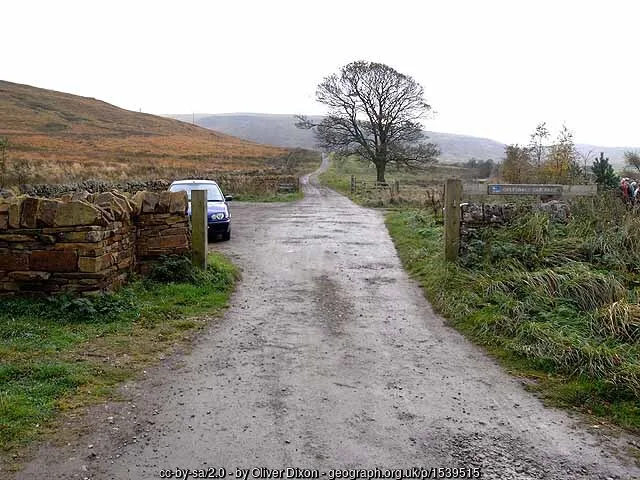
Social preview photograph: Visitor entrance and countryside at RSPB Geltsdale. Oliver Dixon; converted to WebP · CC BY-SA 2.0. Resized and converted for the preview.