
Regional birdwatching guide
Birdwatching in Shetland: seabirds, migration and island travel
Choose summer for Shetland’s breeding seabird cliffs, or autumn for a migration holiday whose interest depends on changing weather. Our first-visit choice is a settled Mainland base with Sumburgh Head and time for one carefully planned island extension. Fetlar, Hermaness, Noss and Fair Isle each need their own travel and access decisions.
Map of the region’s birdwatching sites
Numbered links locate the reserve destinations. Use each guide’s official arrival directions for the entrance and its watching table for public viewpoints.

Best birdwatching sites in Shetland
| Site | Our strongest months | Specialities | Public access |
|---|---|---|---|
| RSPB Sumburgh Head | May, June, July | Puffin | Dawn access available; check route restrictions. Watching places and access details |
| Hermaness National Nature Reserve | May, June, July | Gannet, Puffin | Dawn access limited to specified routes. Watching places and access details |
| RSPB Fetlar | May, June, July | Patient watching from the official Mires of Funzie hide is the right way to enjoy this sensitive island reserve. | Dawn access limited to specified routes. Watching places and access details |
| Fair Isle Bird Observatory | May, September, October | Puffin | Dawn access limited to specified routes. Watching places and access details |
Where should I start birdwatching in Shetland?
Start with RSPB Sumburgh Head if a summer seabird day is the main ambition. The RSPB describes Puffins, Guillemots, Fulmars and Shags around the cliffs, with a public lookout offering an alternative to the more uneven coastal paths. Choose the viewing approach that suits your group before adding another stop. Our preference is to spend enough time learning one cliff view rather than immediately setting off for another distant colony because it appears larger on a map.
For a longer holiday, decide whether you want to concentrate on Mainland or include the northern islands. Hermaness National Nature Reserve on Unst is a substantial outing in its own right. RSPB Fetlar is another distinct island visit, not a small diversion on the same walk. The regional map helps place the reserves, but the complete journey includes ferry connections, onward travel, watching time and the return. Keep the first plan comfortably within that whole day.
When is the best time to visit Shetland for birds?
Summer is the straightforward choice for a trip centred on occupied seabird cliffs. Compare the local species months and the public visiting season before choosing dates, especially if Puffins matter. The Sumburgh operator’s summer account should shape the expectation; a dramatic winter photograph of the lighthouse describes a different experience. Longer daylight can make a visit feel flexible, but a ferry timetable or a reserve’s operating hours can still create a firm endpoint to the useful day.
Autumn suits someone who enjoys uncertainty, careful identification and repeated visits to familiar public places. Fair Isle Bird Observatory publishes actual daily reports that show how the mix changes, including common migrants as well as occasional rarities. Read those reports for context without assuming the same birds will remain. Our autumn preference is several days in one area, learning its ordinary birds and weather, rather than spending each morning travelling farther after an observation made the previous afternoon.
How to plan a Sumburgh Head seabird day
Give the official lookout and the lighthouse-side public views time to develop. Begin by identifying the common auks and the larger flying birds, then watch how they use the cliff and sea. The reserve guide distinguishes the public facilities and their access demands. Bring binoculars even if the photographs suggest every bird will be close: the interesting activity may be on distant water, in flight or briefly hidden behind the shape of the coast.
Keep the lighthouse visitor facilities separate from reserve access when making plans. The Shetland Amenity Trust runs the lighthouse attraction, while the RSPB manages the reserve; one opening arrangement should not be substituted for the other. Choose a short version of the outing for poor weather and avoid making an exposed coastal circuit compulsory. A comfortable session at an appropriate viewpoint can be a better introduction than arriving at the lighthouse tired, cold and already thinking about the return journey.
Is Hermaness the right northern-islands outing?
Choose Hermaness National Nature Reserve when you want the walk across moorland as well as the seabird spectacle. NatureScot describes a substantial approach to the cliffs and an official route designed around fragile habitat. This is a landscape day, with exposed walking and time needed for the return, rather than a quick roadside view. Our recommendation is to allow it a generous part of the itinerary and decide against the longer circuit when the forecast or your energy makes that sensible.
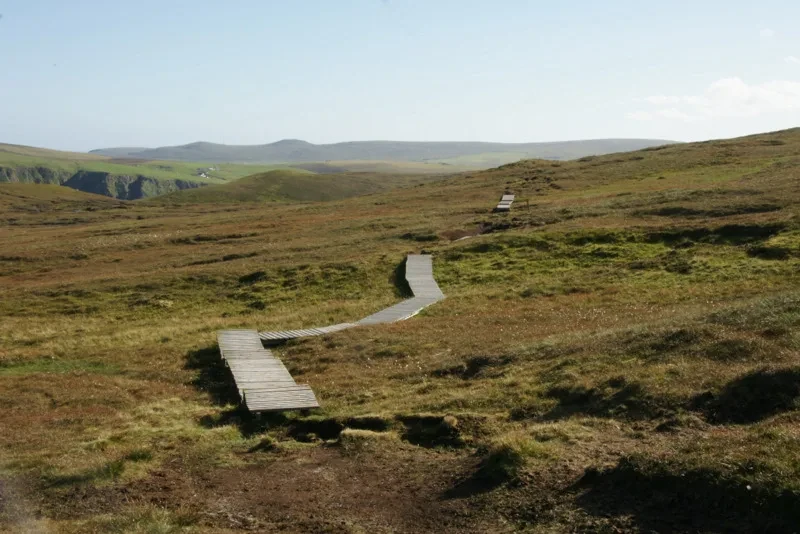
Use the boardwalk and signed cliff route exactly as intended. Breeding birds and peatland benefit when visitors remain on the public line, and the most tempting shortcut is rarely the right birding decision. Keep well back from unprotected edges and give other walkers space without stepping into cover. The view towards Muckle Flugga is part of the experience; attempting to approach every visible bird would add disturbance and risk while removing time for simply watching the colony from safe ground.
What makes Fetlar a different birdwatching choice?
RSPB Fetlar fits a visitor who wants to settle into an island landscape and use the reserve’s authorised watching places. Red-necked Phalarope is a sensitive headline species, so the official hide and current operator guidance govern the visit. Keep any breeding location outside those public facilities private. A photograph or report from another year cannot establish present access, and a bird hidden beyond the view is a reason for patience rather than for following a path into protected ground.
Build a wider island day around that visit, leaving room for other locally supported birds, a meal and a relaxed return. Check the actual ferry sequence and onward travel before booking accommodation on a different island. If your main interest is a short colony watch, Sumburgh may be the simpler decision; if you enjoy a slower island stay, Fetlar offers a different style of trip. Choose the experience first instead of comparing destinations solely by their rarest species.
Can I visit Noss in any season?
Noss National Nature Reserve is governed by its current NatureScot visiting instructions. These list the reserve closed from September to April, with the ferry normally operating during May to August on specified days and subject to weather. Read the guide and the operator’s daily message before travel. A ferry to Bressay is only one stage of the journey and does not mean a Noss crossing will operate, nor does reaching the shore create permission for an independent landing.
For an operating-season visit, decide whether the short Inbye route or the longer Gannet Trail fits the available time and conditions. Leave a clear margin for the return crossing and any queue. The wildlife can absorb attention very quickly, so agree a turning point before walking away from the landing. Clean footwear as instructed, follow the staff’s landing and lifejacket advice, and accept cancellation. The reserve will still be valuable when the sea permits another visit.
Should Fair Isle be a day trip or a stay?
Treat Fair Isle Bird Observatory as a separate island commitment, with accommodation and transport arranged together. The operator describes air and sea links that depend on weather and publishes its guesthouse seasons. The island and the observatory accommodation have different access arrangements, so check the guide for the form of visit you intend. Our preference is a stay with room for delay and time to understand the public walking places, rather than an itinerary whose success depends on an exact same-day return.
The new observatory opened in May 2025, according to its own current information. Use the current booking pages for available stays rather than old rebuilding notices or photographs of previous buildings. On the island, join ranger-led activities when appropriate and respect private crofts, gardens and research work. Looking for migrants from public ground can be absorbing without entering every patch of cover. A rarity report is an observation to understand, not an invitation to cross a boundary.
How many island journeys should a Shetland holiday include?
Choose one major extension first: Unst for Hermaness, Fetlar for its reserve, Noss for a managed summer crossing, or Fair Isle for a stay. Give it enough space before adding another. Connections can turn an apparently compact map into a tiring day, and wildlife watching has no reliable finishing time. A good plan lets you remain at a productive public viewpoint without immediately sacrificing the last practical return or the next accommodation check-in.
Keep at least one day free to repeat a favourite Mainland visit or respond to the forecast. This makes the holiday more comfortable and helps when a crossing is cancelled. Travelling without a car can work with suitable accommodation, booked transfers or a guided arrangement, but confirm the full final connection for every outing. A bus reaching an island settlement does not answer how you will reach a reserve entrance, complete its walk and get back afterwards.
What should I do when wind or rain changes the plan?
Choose the alternative while you are still comfortable, rather than waiting until an exposed walk becomes unpleasant. A shorter official viewpoint session, a locally suitable sheltered route or a rest day may be the useful decision. Keep warm, waterproof clothing and enough food available for the outing you actually undertake. Scope work becomes frustrating when the image shakes or mist removes the sea, so judge conditions honestly instead of trying to recover the cost of travelling by staying out longer.
Keep the last day particularly simple if a major onward journey matters. Weather can affect transport as well as viewing, and a holiday packed to its final hour leaves little room to adapt. Check the operator’s service information, keep booking references accessible offline and follow local advice. The linked Scottish island planning guide helps organise the decisions; each reserve guide supplies the destination-specific details that should determine what you book.
How to watch Shetland’s wildlife responsibly
Follow marked paths, biosecurity requirements and current wildlife-distance instructions at every site, even after visiting another reserve with different rules. Keep dogs under the stated control and leave sick or dead birds untouched. Photograph from the public place available to you, letting birds pass freely. Avoid publishing nest, lek or roost positions, and send sensitive records privately through the appropriate local route. Responsible behaviour is especially important when several people arrive to see a recently reported bird.
End each day with notes on the habitat, common birds and something you understood better. This keeps migration watching rewarding during quiet spells and makes repeat visits meaningful. Compare the seabird collection with the reserve guides before the next outing, then choose a manageable route and a realistic season. Shetland rewards attention and time: a familiar cliff or shore watched in changing light can be more memorable than reaching every famous name in a single holiday.
Trips and related reading
Sources and review
Reviewed 2026-10-19. Practical details remain in the linked reserve guides.