
Fieldcraft · Practical UK birdwatching
How to identify birds by shape and structure
Look at the whole bird before chasing small markings. Body proportions, bill, wings, legs and posture give you a framework that still helps when light makes colour difficult.
What structure means in bird identification
Structure is the relationship between the bird’s parts: the length of its body, the size of its head, the shape of its bill and the proportions of wings, tail and legs. Begin with a plain description such as compact body with a long tail or upright bird with a deep bill. The words are useful because they require you to look. A species name can arrive later, once several observed features support it.
Our choice for learning is to compare common birds at a comfortable distance. Familiarity supplies a reference point for the next encounter. Watch one individual turn, stretch and settle, noticing what changes with posture and what stays consistent. A hunched bird may appear short-necked until it reaches forward. A tail can vanish behind a branch. Keep the description open long enough to see whether the first impression survives a second angle.
How to compare bird size without being misled
Use another bird as a scale only when the two are at roughly the same distance. A small nearby individual can appear larger than a distant one, while a bird flying towards you may seem unusually broad. Avoid assigning an exact size from a fleeting distant view. Write an ordinary comparison when it is useful, then record the conditions that made the judgement uncertain.
Compare proportions within the same bird as well as between birds. How long is the visible bill relative to the head? Does the tail project well beyond the folded wings? Are the legs long compared with the body? These questions remain useful when absolute size is hard to judge. Take care with feathers puffed out in cold conditions and with parts hidden by water or cover. The visible outline is a view of the bird, not a permanent measurement.
How bills, legs and posture help identification
Look at the bill from more than one angle if the bird permits. A bill pointed towards you may look much shorter than it does in profile. Note whether its outline is fine, deep, straight or curved, keeping the description as simple as the view requires. Then add the way the bird uses it. Picking, probing and diving can support the structural impression, although behaviour alone rarely settles every identification.
For standing birds, watch the posture and the amount of leg visible. Water depth can hide a useful feature. For flying birds, compare wing shape, body bulk and the balance of flapping and gliding. Keep colour and markings as supporting evidence rather than ignoring them altogether. The strongest identification uses several features that agree, with enough room for age, season and viewing angle to affect the appearance.
Practise it here: compare four kinds of bird
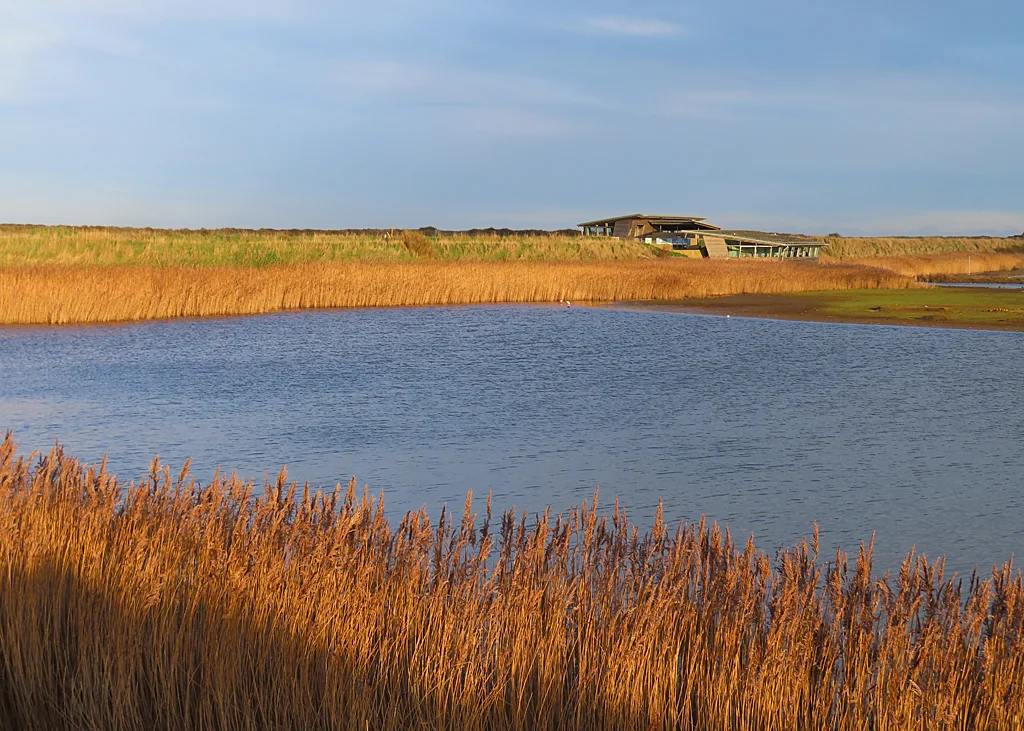
At RSPB Titchwell Marsh, select two visible waterbirds at similar range and sketch their bills and body outlines before consulting a guide. At RSPB Nagshead, concentrate on tail proportions and movement in an ordinary woodland encounter. Do not try to force a full description from a brief glimpse through leaves. Use the reserve guide to choose a suitable route and give yourself time for another view from the public path.
RSPB Bempton Cliffs offers an opportunity in the appropriate season to compare seabird outlines from official viewpoints. Keep safely within the barriers and choose birds close enough to judge without leaning. At RSPB Leighton Moss, compare a swimming bird with one standing or moving at the edge of cover. Watch how the same individual’s neck and body seem to change. These exercises teach the limits of an outline as well as its value.
How to turn a structural impression into a sound identification
Write a short account before checking the likely answer: outline, bill, tail, legs, action and the clearest marking. Look up the combination rather than hunting for one attractive match. If a feature contradicts the first idea, return to it and consider whether angle, posture or a different species explains the observation. An identification that survives this comparison is more useful than one based on a single colour seen in poor light.
Keep unresolved birds at the level your evidence supports. There is no need to turn every distant shape into a species or to replace uncertainty with somebody else’s confidence. Ask a companion what feature they used, then see whether you can observe it yourself. Finish by choosing one proportion to notice next time. Repeated comparisons with familiar birds will gradually make the whole shape quicker to recognise, while your notes preserve the reasons for accepting or questioning the name.
A useful home exercise is to draw a familiar bird’s outline from memory, then compare it with a licensed reference photograph or a field-guide illustration. Mark the proportions you exaggerated. Take that question outside next time and look again at a real individual, allowing for its posture rather than expecting a perfect silhouette.