
EN 17 · RSPB reserve guide
RSPB Dee Estuary - Burton Mere Wetlands
Puddington Lane, Burton, Neston, Cheshire, England · CH64 5SF
Avocets, Lapwings and Redshanks breed around the pools, reedbeds hold Bitterns and wetland warblers, and autumn or winter can bring passage sandpipers, egrets, harriers and large wildfowl flocks across the wider Dee Estuary.
Decide if the visit fits.
RSPB Dee Estuary - Burton Mere Wetlands at a glance
Last checked 18 October 2026.
- Best time
- Spring breeding waders and warblers · autumn passage · winter wildfowl and raptors
- Opening & entry
- Hours, admission and parking: see Entry below.
- Trails & visit length
- The Reception viewpoint gives an immediate overview of the central wetland; Bunker Hide overlooks the scrape and grassland, while Marsh Covert offers…
- Accessibility
- The visitor centre has level, step-free entry.
- Facilities
- The café serves hot and cold food and drinks, while the small shop offers RSPB optics and wildlife products.
- Dogs
- Pet dogs are not permitted at Burton Mere Wetlands because the habitats and birds are sensitive to disturbance.
- Public transport
- The council's current bus-service list identifies Al's Coaches 22A between Chester and West Kirby via Burton Village, Neston, Parkgate and Heswall.
Reserve overview
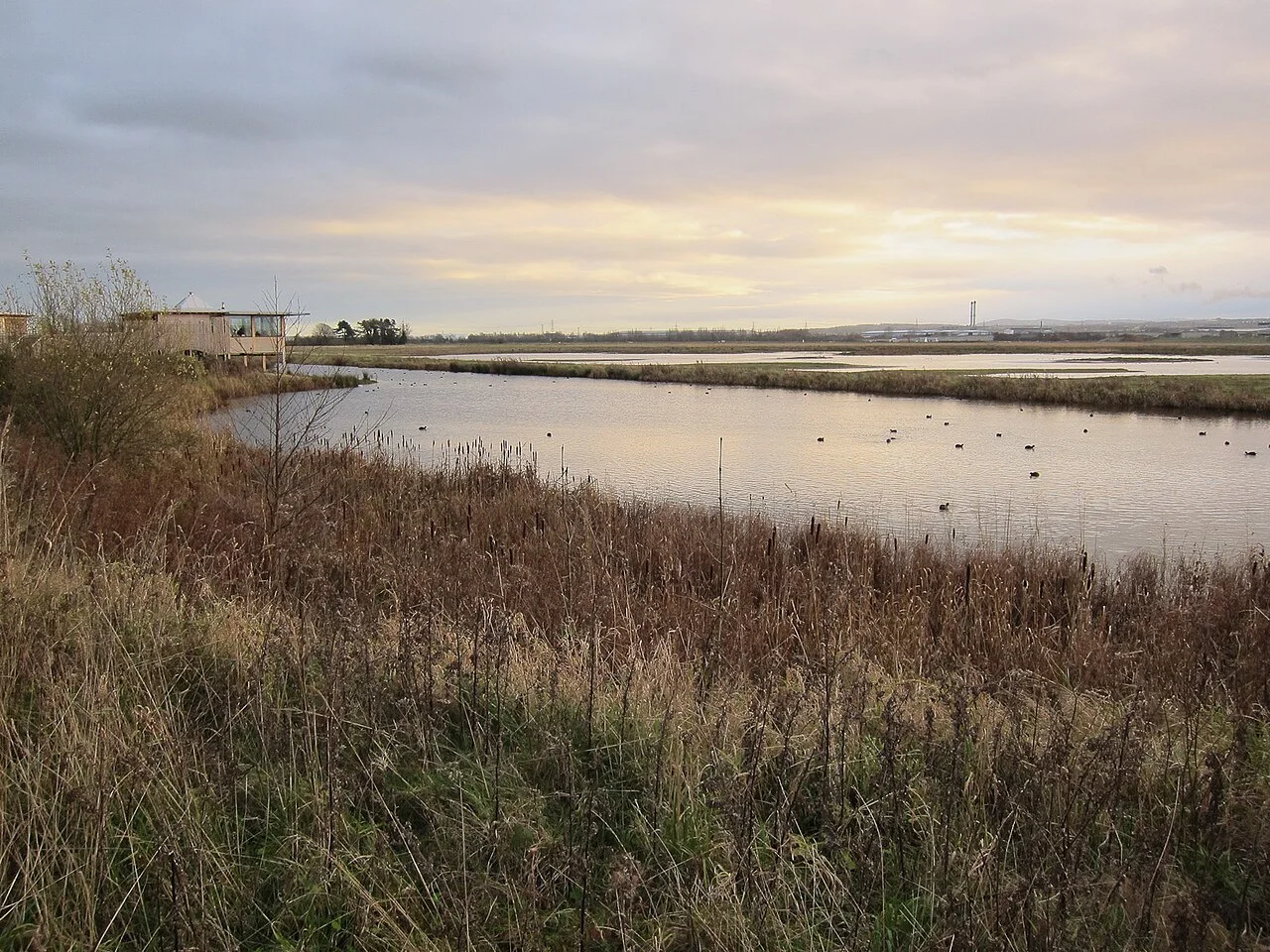
RSPB Dee Estuary - Burton Mere Wetlands reserve and habitat
Avocets, Lapwings and Redshanks breed around the pools, reedbeds hold Bitterns and wetland warblers, and autumn or winter can bring passage sandpipers, egrets, harriers and large wildfowl flocks across the wider Dee Estuary.
Eight checks for a smoother visit.
Planning your visit to Dee Estuary - Burton Mere Wetlands
Conditions change: check the operator and transport notices before travelling.
Dee Estuary - Burton Mere Wetlands best time to visit and seasonal birds
January: start at Bunker Hide or the Reception viewpoint for Wigeon, Pintail and Lapwing. Burton Point viewpoint provides the broader Pink-footed Goose and Peregrine scan, with a scope useful for distant birds. February: Marsh Covert Hide usually offers sheltered alternatives for Gadwall, Shoveler and Water Rail. The Mere Trail adds a patient Kingfisher watch without needing to approach the bank. March: returning Avocets give Bunker Hide and Border Hide a spring focus. From Marsh Covert Hide watch Marsh Harriers over the reeds while keeping attention away from any nesting location. April: Reedbed Screen usually adds Reed Warbler and Cetti’s Warbler song. Redshank and Lapwing can be watched from Bridge Screen, with the established screen protecting wet-grassland birds. May: compare Bunker Hide and Border Hide for Avocet and Redshank. From the public Mere Trail, look for Kingfisher in ordinary feeding habitat without seeking a nest bank. June: Marsh Covert Hide suits a longer Marsh Harrier watch. Reedbed Screen usually remains useful for Reed Warbler; Little Egret and Grey Heron can be watched from Bridge Screen. July: begin at Border Hide for Little Egret and Avocet, then compare the Scrape from the Reception viewpoint for Black-tailed Godwit. Water management determines the best mud margins. August: passage brings chances of Ruff and Green Sandpiper, checked from the Reception viewpoint and Bridge Screen. Cattle Egret is worth scanning for from Border Hide where current reports support a visit. September: Reception viewpoint and Border Hide usually reward wader comparison, including Ruff and Black-tailed Godwit. Marsh Covert Hide adds Water Rail and Kingfisher as reed cover changes. October: Wigeon and Pintail typically return in strength, visible from Bunker Hide and Border Hide. Burton Point viewpoint can add Pink-footed Geese over the estuary; do not infer their position from an old report. November: choose Marsh Covert Hide for Gadwall, Shoveler and Water Rail, with a shorter Bunker Hide session for winter ducks. Earlier gates constrain the final walk; finish before the car park is locked. December: the Reception viewpoint gives a compact Lapwing, Teal and Pintail watch. If light and the remaining opening time allow, add Burton Point viewpoint for Pink-footed Geese, keeping to the signed route.
Best conditions: Usually choose lighter winds for the open Marsh Trail and Burton Point, and use Marsh Covert’s several viewing directions when glare makes one pool difficult. After rain, expect mud on the woodland route. Managed freshwater levels matter more than sea tide for the Scrape; distant estuary watching is best in clear visibility. Light and scope values are editorial.
RSPB Dee Estuary - Burton Mere Wetlands opening times, entry and facilities
October 2026 charges checked 18 October: non-member entry is £7 adult, £5 student with valid identification and £3.50 child aged 5–17, with the first child free. Members, people aged 16–24, under-fives and carers enter free. The October visitor-centre/shop calendar is 09:30–17:00 and café 10:30–15:30. No overnight parking or camping is permitted. No additional ordinary-car parking fee is listed on the reserve’s admission page. The site has eighty spaces and is unsuitable for coaches or large motorhomes without prior advice. Ordinary entry need not be booked in advance, but groups of ten or more should arrange their visit. Binocular hire is available at equipment-dependent prices, listed in Facilities.
Access times: Reserve: 09:00–17:00 in October; November–January closing is 16:30. · Hides: Use the hides and screens within the gated reserve’s opening period; visitor-centre building opens 09:30. · Car park: 09:00–17:00, except November–January closes 16:30; locked outside these hours. · Dawn access: no. Operator opening information.
Dee Estuary - Burton Mere Wetlands trails, hides and visit length
The Reception viewpoint gives an immediate overview of the central wetland; Bunker Hide overlooks the scrape and grassland, while Marsh Covert offers views across reeds towards Bridge Pool. Border Hide serves Centenary Pool and Border Pool. The Reedbed and Bridge screens add less enclosed watching positions. Obtain the current map rather than assuming older hide names or route descriptions still match every junction. RSPB's trail list includes a half-mile Woodland out-and-back, a short Wetland route, a 0.4-mile Mere circuit, a 2.2-mile Marsh out-and-back and a 0.6-mile Hillfort route. Published walking times are starting points, not limits on how long to watch. Two-hour plan: begin at Reception, make a slow visit to a nearby hide and add the Mere circuit or a manageable reedbed section. Give one pool enough time to reveal feeding behaviour rather than trying to tick every hide. Full-day plan: take the longer Marsh route in the morning, pausing at the wetland viewpoints and keeping time for a proper Border Hide session. Return to the hub for lunch, then choose woodland or revisit the most productive scrape under different light. If combining the reserve with Parkgate, reduce the walking ambition and plan the road transfer separately. Water levels redistribute birds between pools, so an apparently quiet first hide is a reason to compare habitats rather than abandon the visit immediately. Remain on signed paths and leave machinery, livestock and management gates clear. Give feeding flocks room and let a bird come into view instead of approaching ditch edges or entering wet grassland for a photograph.
Where to watch at Dee Estuary - Burton Mere Wetlands
Use the linked reserve map and directions with current access notices. Species are typical seasonal targets. Light and telescope advice reflects our choice of viewpoint.
| Spot | Overlooks | Key species by season | Best light | Scope | Tide |
|---|---|---|---|---|---|
| Reception viewpointUse the visitor-centre viewing area; building access can differ from reserve gates. | Main Scrape and wet grassland in front of the visitor centre | Winter: Wigeon, Teal, Pintail, Lapwing Spring: Avocet, Lapwing, Redshank Summer: Avocet, Little Egret Autumn: Black-tailed Godwit, Ruff, Spoonbill | either | useful | — |
| Bunker HideAn alternative view of the same wetland as the visitor centre. | The Scrape and adjacent wet grassland | Winter: Teal, Wigeon, Pintail Spring: Avocet, Redshank Summer: Avocet, Little Egret Autumn: Black-tailed Godwit, Ruff, Snipe | either | useful | — |
| Marsh Covert HideShort ramp into the hide; fixed and opening windows. | Reedbed, Bridge Pool and wet grassland on several sides | Winter: Water Rail, Shoveler, Gadwall Spring: Marsh Harrier, Cetti’s Warbler Summer: Marsh Harrier, Reed Warbler Autumn: Kingfisher, Water Rail, Great White Egret | either | useful | — |
| Border HideUse the current Marsh Trail; old Inner Marsh Farm directions are not the current route. | Centenary Pool, Border Pool and grazing marsh | Winter: Teal, Pintail, Lapwing Spring: Avocet, Redshank, Lapwing Summer: Little Egret, Avocet Autumn: Cattle Egret, Black-tailed Godwit, Ruff | either | useful | — |
| Reedbed ScreenPublic screen on the signed trail. | The large reedbed pool | Winter: Water Rail, Gadwall Spring: Cetti’s Warbler, Reed Warbler Summer: Reed Warbler, Marsh Harrier Autumn: Kingfisher, Water Rail | either | not needed | — |
| Bridge ScreenUse the signed screen rather than approaching pool margins. | Bridge Pool and adjacent wet grassland | Winter: Teal, Snipe, Shoveler Spring: Redshank, Lapwing Summer: Little Egret, Grey Heron Autumn: Black-tailed Godwit, Ruff | either | useful | — |
| Burton Point viewpointUse the signed Hillfort/Headland route; do not descend onto private saltmarsh. | Panoramic estuary, saltmarsh and reserve wet grassland | Winter: Pink-footed Goose, Peregrine Spring: Little Egret, Marsh Harrier Summer: Little Egret, Marsh Harrier Autumn: Pink-footed Goose, Great White Egret | either | essential | The broad estuary view changes with water level; freshwater pools remain a separate watch. |
| Mere TrailStay on the signed circuit and public picnic areas. | The Mere and its wooded margins | Winter: Kingfisher, Little Grebe Spring: Kingfisher, Tufted Duck Summer: Kingfisher, Grey Heron Autumn: Kingfisher, Goldcrest | either | not needed | — |
Target species at Dee Estuary - Burton Mere Wetlands
Month chips show typical presence or our preferred viewing season. Choose birds that suit the time of your visit.
Headline birds
- AvocetBunker HideMarAprMayJunJulAug
- JanFebMarAprMayJunJulAugSepOctNovDec
- Black-tailed GodwitReception viewpointJanFebMarAprMayJunJulAugSepOctNovDec
Regular birds
- WigeonReception viewpointJanFebMarOctNovDec
- TealBunker HideJanFebMarOctNovDec
- PintailBorder HideJanFebMarOctNovDec
- ShovelerBridge ScreenJanFebMarAprMayJunJulAugSepOctNovDec
- GadwallMarsh Covert HideJanFebMarAprMayJunJulAugSepOctNovDec
- ShelduckReception viewpointJanFebMarAprMayJunJulAugSepOctNovDec
- Tufted DuckMere TrailJanFebMarAprMayJunJulAugSepOctNovDec
- LapwingBorder HideJanFebMarAprMayJunJulAugSepOctNovDec
- RedshankBridge ScreenJanFebMarAprMayJunJulAugSepOctNovDec
- SnipeBridge ScreenJanFebMarAugSepOctNovDec
- JanFebMarAprMayJunJulAugSepOctNovDec
- JanFebMarAugSepOctNovDec
- JulAugSepOctNovDecJanFeb
- JanFebMarAprMayJunJulAugSepOctNovDec
- Water RailReedbed ScreenJanFebMarSepOctNovDec
- Cetti’s WarblerReedbed ScreenJanFebMarAprMayJunJulAugSepOctNovDec
- Reed WarblerReedbed ScreenAprMayJunJulAugSep
- Grey HeronMere TrailJanFebMarAprMayJunJulAugSepOctNovDec
- Little GrebeMere TrailJanFebMarAprMayJunJulAugSepOctNovDec
- Pink-footed GooseBurton Point viewpointJanFebMarOctNovDec
- JanFebMarOctNovDec
- GoldcrestMere TrailJanFebMarSepOctNovDec
Scarce but regular birds
- AprMayJulAugSepOct
- Spotted RedshankBorder HideAprMayJulAugSepOct
- Green SandpiperBridge ScreenJulAugSepOct
- AprMayJunJulAugSepOct
Tide planning
The Scrape, Bridge Pool and Centenary Pool are managed freshwater: use their exposed margins rather than timing them as tidal mudflats. For the estuary panorama from Burton Point consult Hilbre Island predictions and the weather, and remain on the signed landward route. High-water drama elsewhere on the Dee does not establish a Burton Mere tide threshold.
Dee Estuary - Burton Mere Wetlands accessibility and step-free routes
The visitor centre has level, step-free entry. Six Blue Badge spaces and a drop-off point are approximately thirty metres from Reception Hide; the approach lane is tarmac with speed bumps and the car park is compact gravel. For the longer walk, follow the current map’s Marsh Trail towards Marsh Covert and Border hides, rather than treating older Inner Marsh Farm directions as a current itinerary. Marsh Covert has a short entrance ramp. The current facilities page describes the Mere circuit and Wetland route separately from the longer Marsh and Hillfort routes; their distance alone does not establish an equivalent surface or gradient. The woodland path can become muddy. Viewpoints have seating at intervals, with a mixture of designs rather than guaranteed backs and armrests. Some hide windows are heavy to operate, while fixed windows still provide views. Accessible toilets are beside the visitor centre and behind the café, and three picnic tables have wheelchair spaces. If a particular surface, slope or window arrangement determines whether a visit is possible, establish the named current route with the reserve before travelling. The hub and Mere circuit make a shorter outing; choose the route by its surface and gradients as well as its length.
Dee Estuary - Burton Mere Wetlands visitor facilities
The café serves hot and cold food and drinks, while the small shop offers RSPB optics and wildlife products. Two toilet blocks provide ordinary facilities and baby changing. Bring a picnic if preferred, and take litter away. October 2026 binocular-hire listings range from £3 for Puffin Juniors to £5 Puffins, £7 Avocets and £10 Harriers, with last hire an hour before closing. A woodland Wild Play area includes den building, balance beams and tree stumps; bicycle racks are available. Barbecues are not permitted at RSPB Dee Estuary - Burton Mere Wetlands. These services form a useful hub, but the distant trails remain outdoor birdwatching away from refreshment facilities.
Dee Estuary - Burton Mere Wetlands dog rules
Pet dogs are not permitted at Burton Mere Wetlands because the habitats and birds are sensitive to disturbance. Visitors with assistance dogs are welcome at RSPB Dee Estuary - Burton Mere Wetlands, including throughout its visitor routes. Choose another outing if bringing a pet is essential; do not leave a dog unattended in a vehicle or at a gate while visiting the hides. The rules for other parts of the wider Dee Estuary should not be assumed to apply here.
Dee Estuary - Burton Mere Wetlands public transport and getting there
The council's current bus-service list identifies Al's Coaches 22A between Chester and West Kirby via Burton Village, Neston, Parkgate and Heswall. The 22 follows a different route via Willaston, so check the letter suffix and selected journey rather than boarding any bus with 22 on the display. RSPB describes the village stop on The Village as approximately 0.8 mile from the entrance, a fifteen-minute walk along Puddington Lane past the school and through woodland. Confirm a safe walking route and the return departure for your date. Neston station is on the Borderlands Wrexham–Bidston line, about 3.4 miles from the reserve, while Hooton on Merseyrail's Wirral network is about 4.3 miles away. A booked taxi from either station avoids an unplanned long road walk; arrange the return as well. Cyclists can use the Burton Marsh Greenway connection from Chester and Wales, linking towards the Wirral Way. Drivers use the signed Puddington Lane approach from the A540.
Useful bases for an early start.
Where to stay near Dee Estuary - Burton Mere Wetlands
Booking.com links are affiliate links: we may earn a commission at no extra cost to you. How these links work.
- 01
Neston
About 3.5 miles by road, roughly 15 minutes’ drive from the mapped town centre to the reserve point; OSRM/OpenStreetMap estimate measured 18 October 2026, excluding live traffic.
Measured driving route · 2026-10-18. Map estimates exclude live traffic.
A nearby rail-connected town.Find places to stay in Neston on Booking.com - 02
Chester
About 9.3 miles by road, roughly 22 minutes’ drive from the mapped town centre to the reserve point; OSRM/OpenStreetMap estimate measured 18 October 2026, excluding live traffic.
Measured driving route · 2026-10-18. Map estimates exclude live traffic.
A city base with regional rail and the22A bus connection.Find places to stay in Chester on Booking.com - 03
Heswall
About 7.2 miles by road, roughly 21 minutes’ drive from the mapped town centre to the reserve point; OSRM/OpenStreetMap estimate measured 18 October 2026, excluding live traffic.
Measured driving route · 2026-10-18. Map estimates exclude live traffic.
A Wirral town for combining Burton with other Dee viewpoints.Find places to stay in Heswall on Booking.com
Dee Estuary - Burton Mere Wetlands official sightings, safety and contact
Contact deeestuary@rspb.org.uk or 0151 353 2720 for reserve-specific advice and arrangements. Before travelling, check current access information, the date-specific opening calendar and your bus or rail connection. The visitor page still carried a notice specifically for 12 October about the centre and scooter hire when reviewed on 18 October; that past dated notice is not evidence of an ongoing closure. Contact the team in advance if equipment hire is essential. Use the dated sightings report to see what was recorded in that week.
Recent sightings
Reports show what has been seen, not what will be.
- RSPB Burton Mere weekly wildlife reportsoperator · updated weekly-style updates; newest visible report week ending 3 October when checked
- CAWOS Bird News: published county bird records, July 2022county club or recorder · updated historical county bulletin; not a current feed
Birding sources
- RSPB Burton Mere habitats and weekly sightings
- RSPB named hides, screens and current trails
- RSPB opening calendar
- RSPB current trail map
- Cheshire and Wirral Ornithological Society Bird News 120, July 2022
- CAWOS county bird report directory
- RSPB High Peak group: December 2024 Burton Mere field report
- RSPB High Peak group: September 2023 Burton Mere field report
- UKHO station catalogue: Hilbre Island 0461
Follow the BTO Birders’ Code and give wildlife space.
Best months for this reserve
Nearby complete guides.
Bird reserves near Dee Estuary - Burton Mere Wetlands
Stops with a purpose: use one as a contrasting habitat or weather-proof Plan B. Distances are straight-line estimates, not road journeys.
- About 4 miles away · A useful habitat changeRSPB Dee Estuary – ParkgateWinter wildfowl and spring-tide watches; raptors through autumn and winter
- About 12 miles away · A useful habitat changeHilbre Island and Bird ObservatoryWinter shorebirds; spring and autumn migrants; seals throughout the year
- About 15 miles away · A familiar habitatSeaforth Nature ReserveYear-round · spring gull passage · winter wildfowl